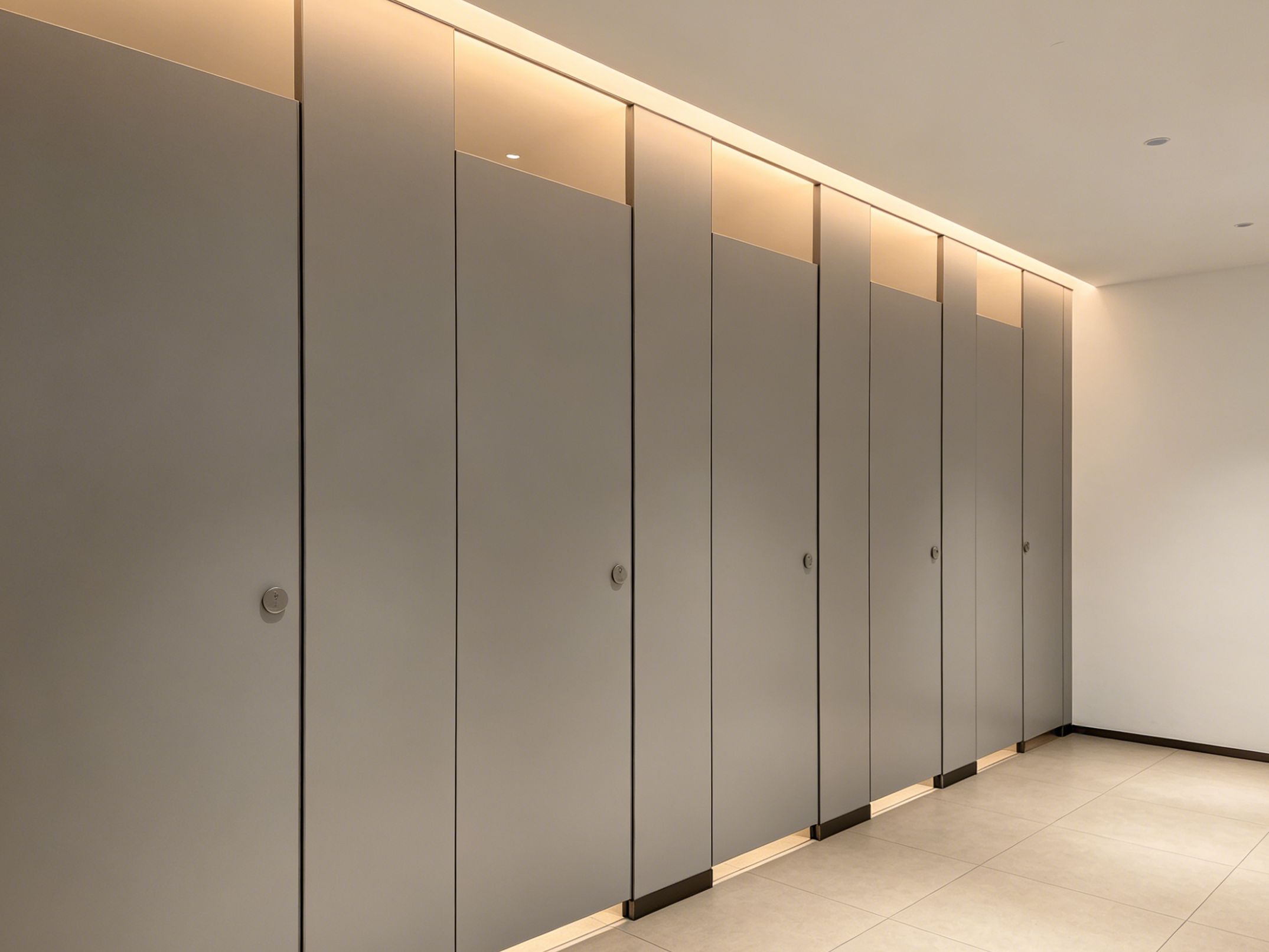
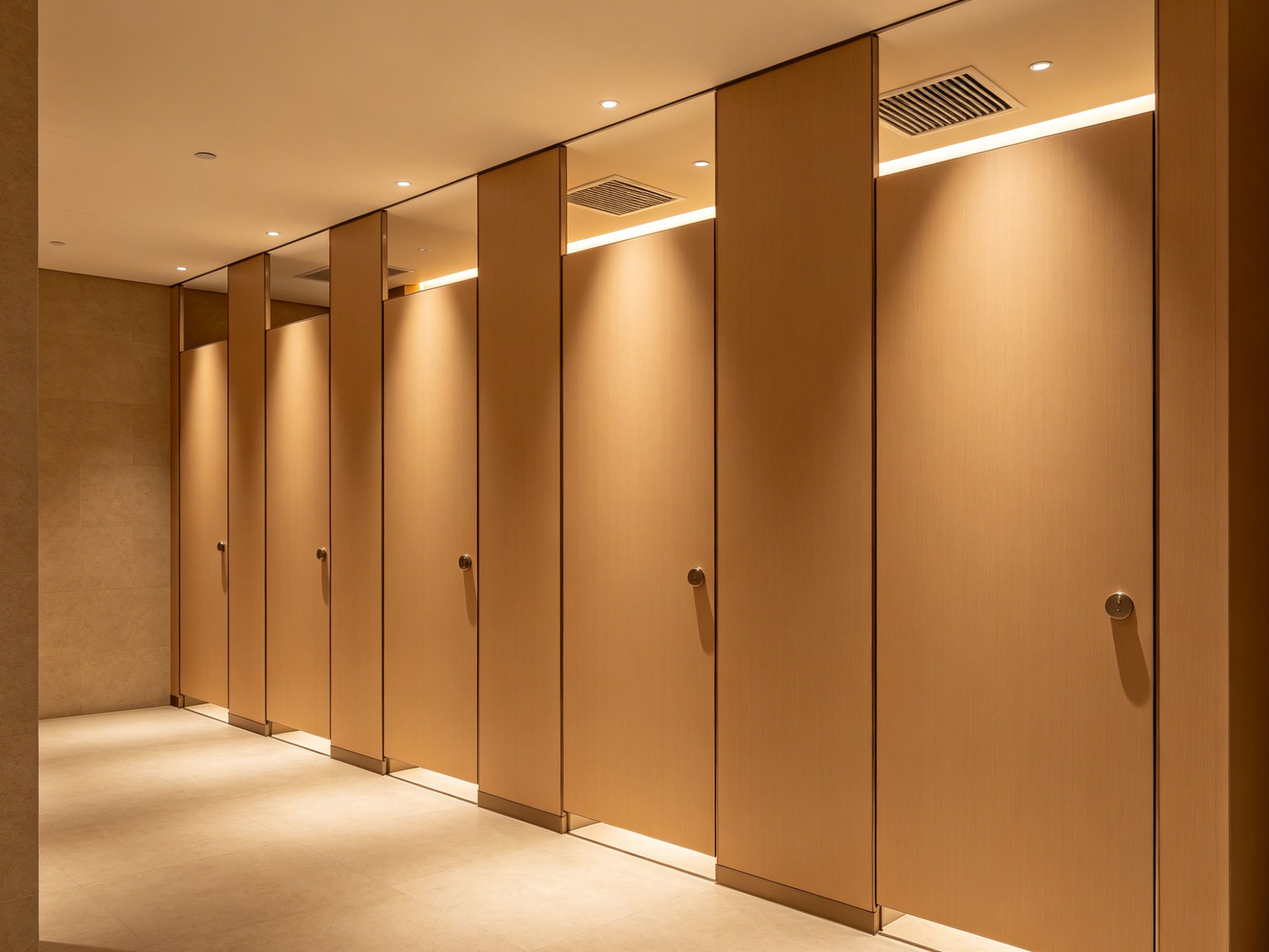
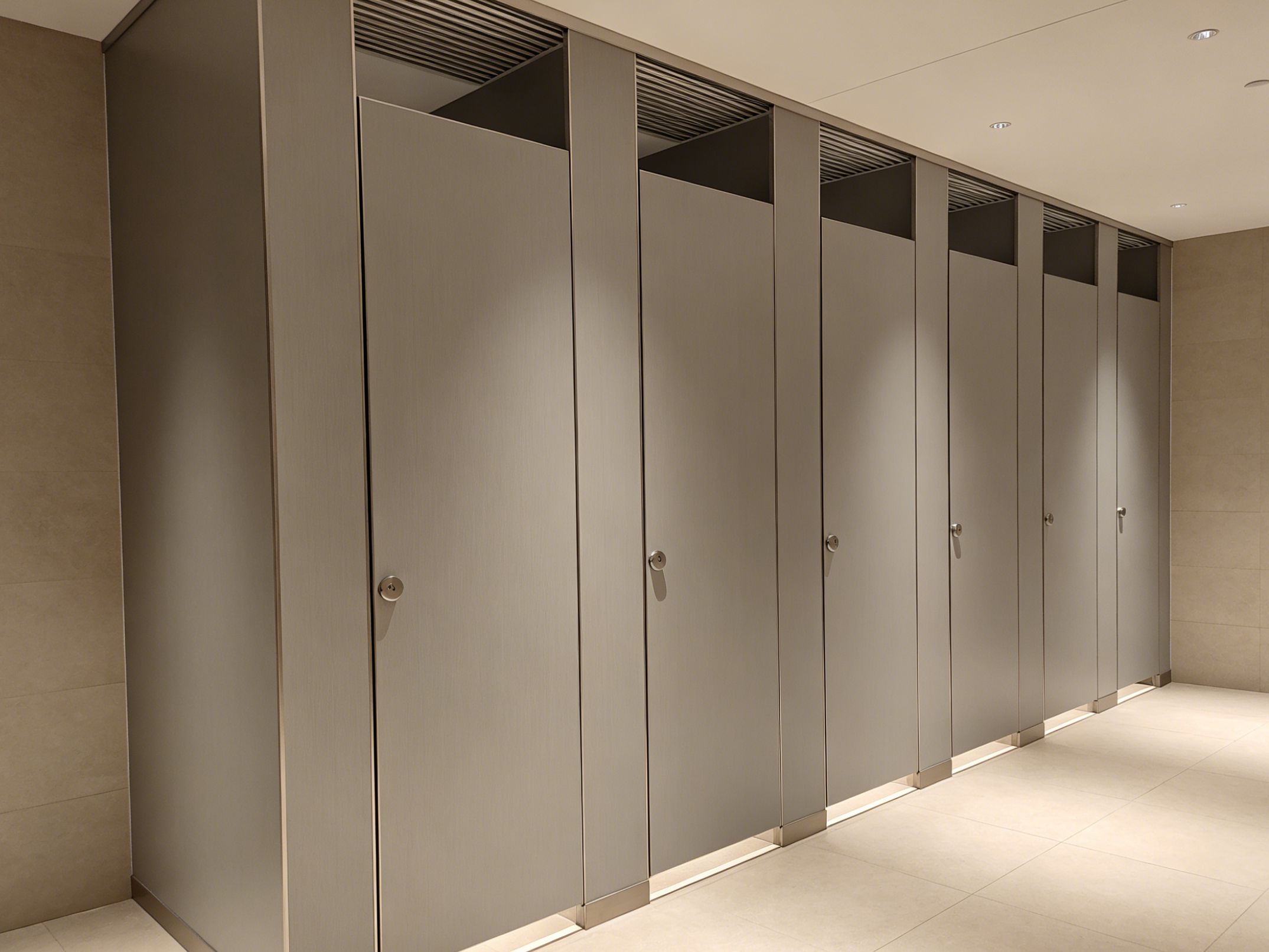
Guide d'achat des cloisons de toilettes HPL pour les projets en Malaisie
HPL Toilet Partitions Buying Guide for Malaysia Commercial Projects
Choosing the right HPL toilet partitions is an important decision for contractors, architects, and project developers working on commercial projects in Malaysia. While appearance and initial price are easy to compare, factors such as panel structure, humidity resistance, hardware compatibility, customization, and installation efficiency can have a much greater impact on long-term project performance.
For commercial office buildings and public schools, restroom partitions must withstand frequent daily use, regular cleaning, and Malaysia's humid environment. A suitable system should therefore be evaluated as a complete project solution rather than simply as individual panels.
This buying guide explains the main factors B2B buyers should consider before ordering HPL toilet partitions and how to avoid common specification and installation problems.
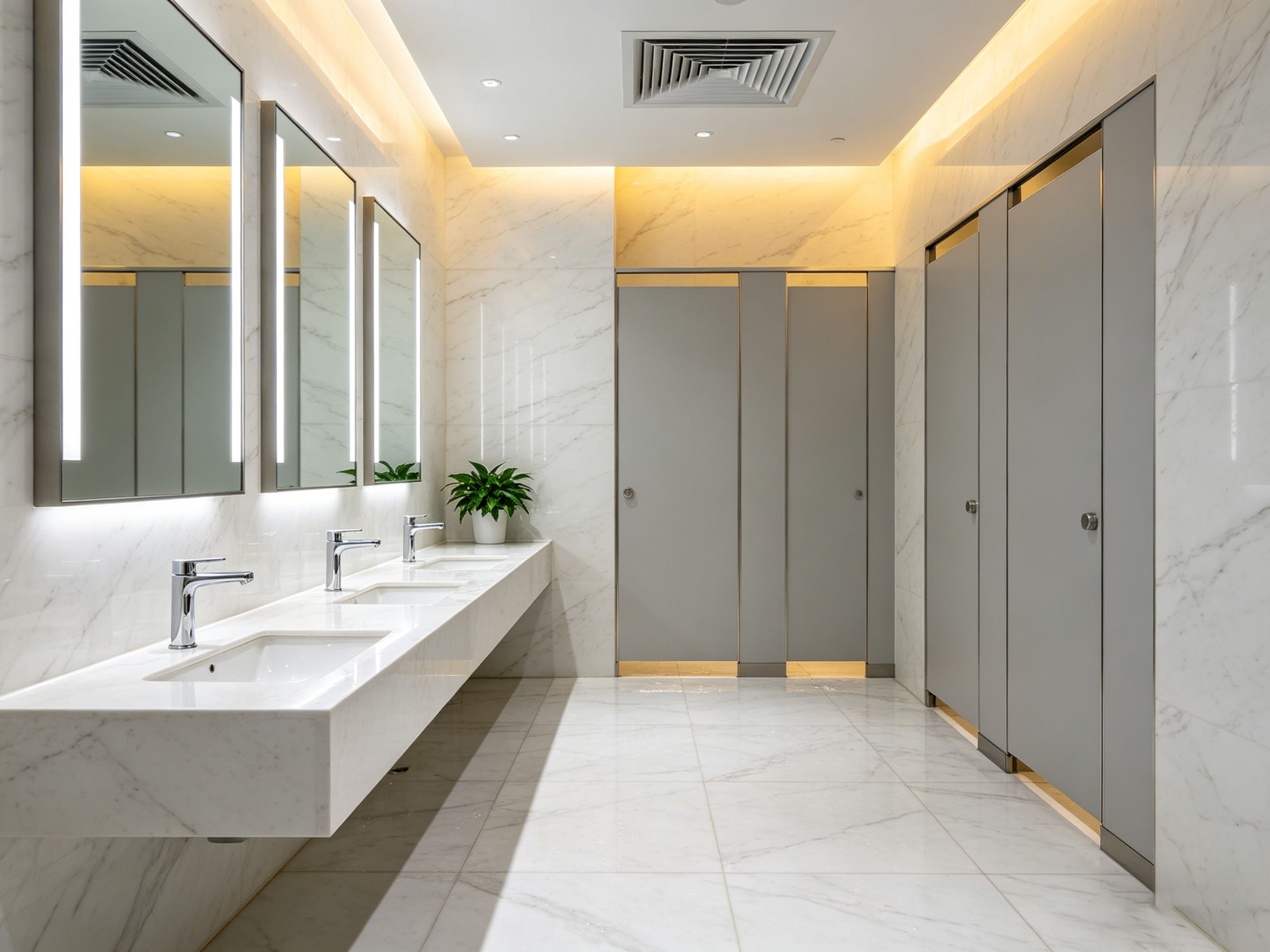
Start With the Project Requirements
Before requesting quotations, project teams should define the actual requirements of the restroom. The number of cubicles, restroom layout, expected traffic, operating environment, and installation conditions can all affect the final specification.
For example, a public school restroom may require stronger impact resistance and easy maintenance because of intensive daily use. A commercial office may place greater emphasis on architectural appearance, customized colors, and coordination with the overall interior design.
Providing these details at the beginning allows manufacturers to recommend a more appropriate partition configuration instead of quoting a generic product.
1. Evaluate the Panel Structure
The internal structure of a partition panel is one of the most important factors affecting durability. Buyers should not evaluate HPL toilet partitions only by their decorative surface because the core construction, thickness, edge treatment, and manufacturing process also influence performance.
For high-traffic commercial environments, the panel should provide sufficient structural rigidity to withstand repeated door movement, accidental impacts, and daily physical contact. A stable structure can help reduce deformation and premature replacement.
When comparing suppliers, contractors should request clear technical information about panel construction and confirm that the proposed specification is suitable for the intended application.
2. Check Moisture and Humidity Resistance
Humidity should be a major consideration when specifying restroom partitions for Malaysia projects. Commercial restrooms are regularly exposed to water, cleaning chemicals, steam, and fluctuating humidity levels.
Poorly selected materials may experience swelling, deformation, edge deterioration, or surface damage over time. Buyers should therefore evaluate not only the surface material but also the core structure, edge protection, and installation method.
For projects in humid environments, moisture-resistant construction can contribute significantly to longer service life and lower maintenance requirements.
3. Select the Appropriate Panel Thickness
Panel thickness affects structural stability, appearance, hardware compatibility, and overall system performance. There is no single thickness that is ideal for every restroom because the appropriate specification depends on the partition configuration and project requirements.
Contractors should consider factors such as panel height, door size, fixing method, expected traffic, and hardware configuration when determining the appropriate thickness.
For larger commercial projects, confirming the thickness with the manufacturer during the drawing review stage can help prevent compatibility problems during production and installation.
4. Confirm Dimensions Before Production
Accurate measurements are essential for restroom partition projects. Incorrect dimensions can result in gaps, misaligned doors, difficult installation, or costly modifications at the project site.
Before production begins, project teams should confirm:
-
Overall restroom dimensions
-
Cubicle width and depth
-
Partition height
-
Door dimensions
-
Wall conditions
-
Floor conditions
-
Corner locations
-
Plumbing and fixture positions
-
Accessibility requirements
Providing CAD drawings or detailed project measurements allows the manufacturer to review the layout and identify potential conflicts before fabrication.
5. Consider Hardware as Part of the Complete System
HPL toilet partitions depend on compatible hardware for reliable daily operation. Hinges, locks, brackets, support feet, indicator bolts, and fixing components should therefore be considered during the initial specification stage.
Selecting panels first and trying to match hardware later can create unnecessary compatibility problems. Door weight, panel thickness, mounting conditions, and opening direction all need to be coordinated.
For the next stage of this content cluster, our toilet partition hardware accessories guide provides a more detailed explanation of the components contractors should consider when preparing a project specification.
6. Choose Colors and Finishes According to the Project
Restroom partitions are increasingly considered part of the overall architectural design rather than purely functional components. Color, texture, pattern, and finish can influence the visual quality of commercial interiors.
For office buildings, architects may want partition finishes that coordinate with corporate interiors. Schools may require practical colors that remain visually consistent despite frequent cleaning and daily use.
Custom colors and finishes also allow developers to create a more consistent design language throughout the project. Buyers should confirm available finishes and production capabilities before finalizing the architectural specification.
7. Consider Installation Speed and Labor Costs
Installation efficiency is particularly important when labor costs and project deadlines are tightly controlled. A partition system requiring extensive on-site cutting, drilling, adjustment, or modification can increase both labor requirements and installation time.
Factory fabrication based on approved drawings can reduce unnecessary site work. Accurate dimensions and coordinated hardware specifications also allow installation teams to work more efficiently.
For contractors managing multiple restroom areas, these improvements can contribute to more predictable project schedules and lower installation-related risks.
8. Compare Suppliers by Total Project Value
When comparing HPL toilet partition suppliers, unit price should not be the only evaluation criterion. A low quotation may become more expensive if the product requires additional site modification, replacement, or maintenance after installation.
A reliable B2B supplier should be able to provide:
-
Product specifications
-
Custom manufacturing
-
CAD and drawing review
-
Hardware coordination
-
Sample confirmation
-
Quality inspection
-
Protective packaging
-
Export documentation
-
Technical communication
-
Project delivery coordination
Evaluating these factors together provides a more realistic understanding of the total project value.
HPL Toilet Partitions for Different Malaysia Projects
The correct specification can vary according to the application.
For public schools, impact resistance, easy cleaning, durability, and moisture resistance are particularly important because restrooms may experience intensive daily use.
For commercial office buildings, architects and developers may place greater emphasis on appearance, customized finishes, installation efficiency, and long-term maintenance.
For larger commercial or public facilities, project teams may also need to coordinate partition layouts with accessibility requirements, plumbing positions, and other architectural elements.
This is why selecting a partition system based on the actual project environment is more effective than simply choosing a standard product.
What Information Should You Send to the Manufacturer?
To receive an accurate B2B quotation, buyers should provide as much project information as possible. A complete inquiry can help manufacturers evaluate technical requirements and avoid repeated specification changes.
Ideally, the inquiry should include the project location, application, quantity, dimensions, panel requirements, color or finish, hardware requirements, CAD drawings, BOQ, and expected delivery schedule.
For customized projects, early communication is especially important because design changes after production begins can increase cost and delay installation.
People Also Ask (FAQ)
Q1: What should I consider when buying HPL toilet partitions in Malaysia?
The main factors include panel structure, moisture resistance, thickness, dimensions, hardware compatibility, customization, installation requirements, and supplier capabilities. These factors should be evaluated according to the actual project environment.
Q2: Are HPL toilet partitions suitable for Malaysia's humid climate?
Yes. HPL toilet partition systems with appropriate moisture-resistant construction can be used in humid commercial restroom environments. Buyers should evaluate the complete panel structure, edge protection, hardware, and installation method.
Q3: Should I choose standard or customized HPL toilet partitions?
Standard configurations may be suitable for straightforward projects, while customized partitions are more appropriate when restroom layouts, dimensions, colors, finishes, or hardware requirements differ from standard specifications.
Q4: Can the manufacturer review my CAD drawings?
Yes. CAD and specification review can help verify dimensions, partition layouts, door positions, hardware requirements, and potential installation issues before production.
Q5: What is more important, price or product quality?
For B2B projects, total project value is more important than the lowest unit price. Product durability, installation efficiency, technical support, customization, packaging, and long-term maintenance can all affect the final project cost.
Project Planning & Engineering Support
Successful restroom partition projects begin with accurate planning. If you're developing specifications for commercial office buildings or public schools in Malaysia, our engineers can help review your layouts and recommend suitable HPL toilet partition solutions before production begins.
-
CAD & Specification Review: mrsalufcs@gmail.com
(Submit your drawings or BOQ for engineering verification.) -
Technical Consultation: +86 15207652902
(Consult our team on partition layouts, hardware selection, and project coordination.)
Cloisons de toilettes HPL vs cloisons phénoliques : guide pour les projets en Malaisie
Guide architectural des cloisons de toilettes HPL pour les projets en Malaisie