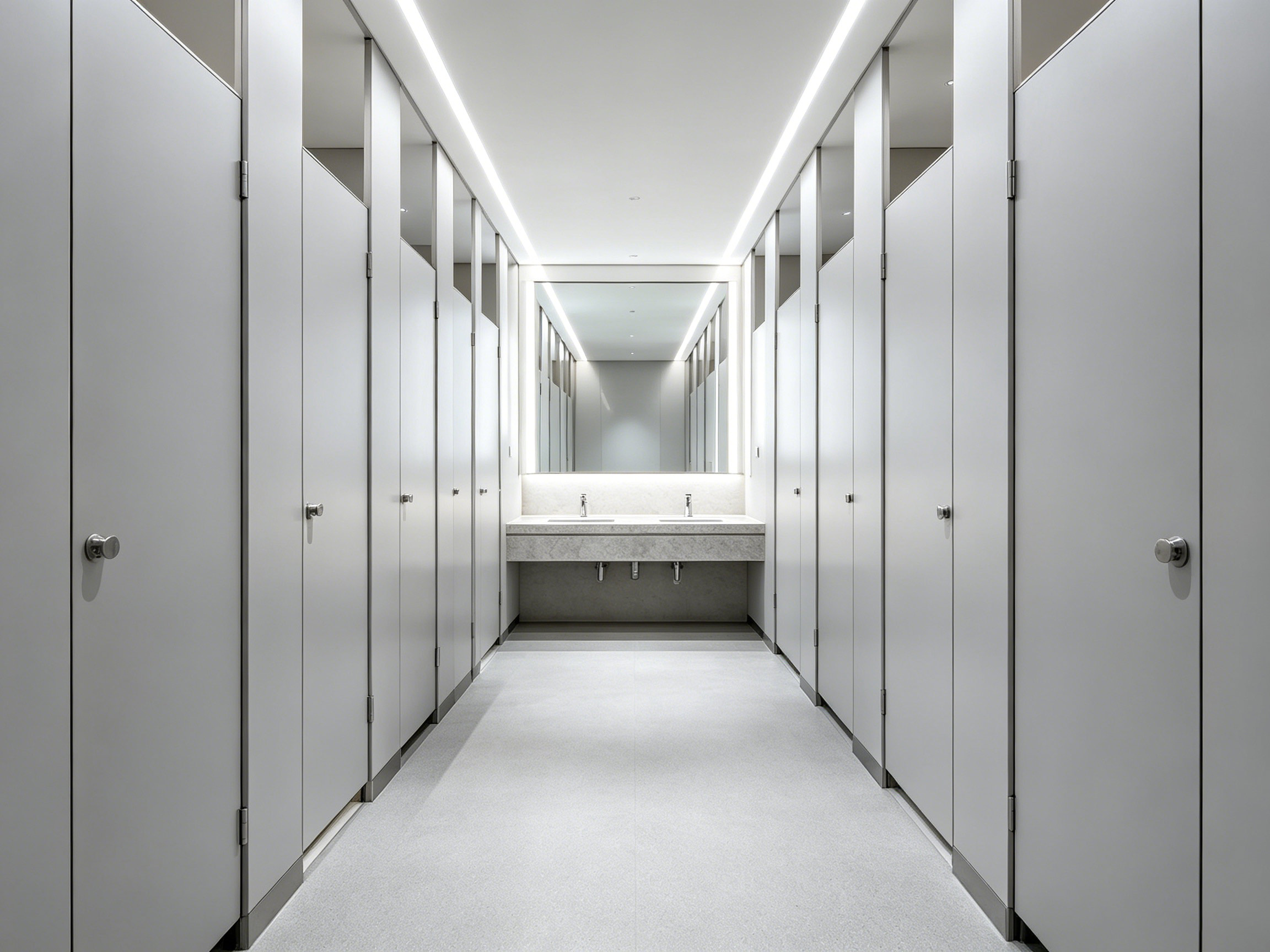
Aluminum Honeycomb for Airport Subway Projects
1. Demanding Benchmarks: Engineering Challenges in High-Traffic Public Buildings
Airports and subway stations represent some of the most demanding environments for commercial restroom partition systems. Unlike standard office or retail facilities, these transportation hubs operate continuously with thousands of users passing through every day. In the Philippines, where tropical humidity, frequent cleaning cycles, and high passenger volume create additional operational pressure, restroom materials must meet strict requirements for durability, hygiene, and long-term stability.
Public transportation facilities experience repeated mechanical impact from daily usage. Partition doors, hinges, and connection points are exposed to constant opening and closing cycles, accidental collision, luggage impact, and intensive cleaning procedures. Traditional lightweight partition solutions may experience problems such as edge damage, surface deterioration, hardware loosening, and dimensional instability after extended operation.
For airport terminals and subway stations, maintenance interruption is also a major engineering concern. Restroom areas are expected to remain operational with minimal downtime because temporary closure can affect passenger flow and facility management efficiency. Therefore, project specifications increasingly focus on materials that provide high structural rigidity, moisture resistance, and reduced maintenance requirements.
The Philippines climate introduces additional challenges. High humidity levels and seasonal rainfall can accelerate material degradation when unsuitable products are selected. Partition cores with poor moisture stability may absorb water, expand, or lose mechanical strength over time. For this reason, commercial bathroom systems require engineered materials designed for humid tropical environments.
Compliance requirements also influence material selection. Public facilities increasingly consider antibacterial performance, indoor environmental quality, and hygiene standards during project approval. Materials used in airports and subway stations must support cleaning protocols while maintaining surface integrity. ISO antibacterial standards and related hygiene requirements can become important evaluation factors during specification review.
For large-scale transportation projects, the correct restroom partition material is not only a decorative decision but also an engineering decision involving lifecycle cost, operational reliability, and facility management efficiency.
2. The Solution Array: Deep Dive into Aluminum Honeycomb Systems
Aluminum Honeycomb Panels: Lightweight Structure with High Rigidity
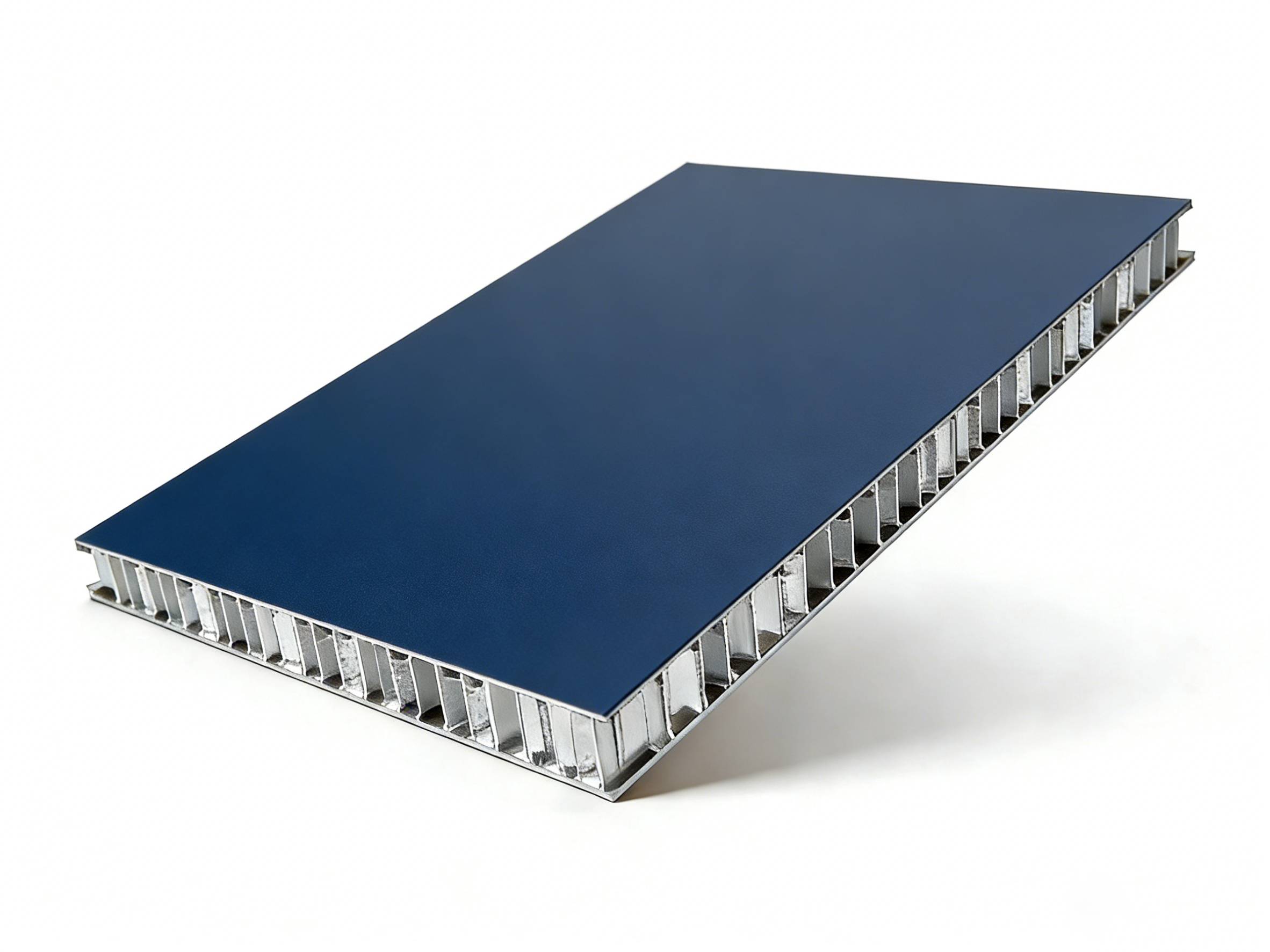
Aluminum Honeycomb systems are engineered composite panels designed to achieve high strength while maintaining reduced structural weight. The core technology uses a honeycomb aluminum structure positioned between surface layers, creating a lightweight panel with excellent rigidity and dimensional stability.
For airports and subway stations, this structural design provides several engineering advantages.
First, the honeycomb core improves resistance against bending deformation. Large restroom layouts often require wider partition spans, full-height designs, or architectural solutions with fewer visible support elements. Aluminum Honeycomb panels maintain flatness under these conditions because the internal honeycomb structure distributes mechanical stress efficiently.
Second, reduced panel weight helps optimize installation efficiency. Large public projects often involve hundreds or thousands of partition components. Lower structural weight can reduce transportation pressure, simplify handling during installation, and decrease load requirements on supporting systems.
Third, aluminum construction provides strong moisture resistance. Unlike organic core materials that may be sensitive to prolonged humidity exposure, aluminum honeycomb structures maintain stable performance in tropical environments. This makes them suitable for Philippines transportation infrastructure where long-term exposure to moisture is unavoidable.
For high-profile public buildings, aluminum honeycomb restroom partitions are often selected when project requirements emphasize:
- Full-height architectural appearance
- High rigidity with reduced weight
- Long service life
- Moisture-resistant performance
- Minimal deformation risk
HPL Panel Systems: Heavy-Duty Solid Core Performance
High Pressure Laminate (HPL) panels remain a widely applied solution for commercial restroom partitions because of their dense solid-core structure and strong surface resistance.
Typically available in 12mm or 15mm thickness options, HPL panels provide reliable impact resistance for high-use environments. Their compact structure performs well against daily abrasion, cleaning chemicals, and frequent user contact.
However, compared with aluminum honeycomb systems, HPL panels generally have higher self-weight. In projects requiring large-scale installation, transportation efficiency and structural loading considerations may influence the final selection.
HPL remains suitable for applications where:
- Strong surface durability is required
- Standard partition dimensions are sufficient
- Cost control is a primary consideration
SPC Honeycomb Systems: Moisture-Oriented Composite Alternative
SPC Honeycomb systems combine stone-plastic composite technology with honeycomb structural design. These panels provide a balance between moisture resistance, decorative flexibility, and project cost optimization.
For large-volume commercial developments, SPC Honeycomb can help contractors manage material budgets while maintaining stable performance in humid environments.
Its composite structure provides advantages including:
- Moisture resistance
- Lightweight construction
- Decorative surface options
- Efficient installation characteristics
However, final selection should depend on project specifications, expected traffic intensity, and required structural performance.
3. Cross-Comparison Matrix for Airports and Subway Stations
| Material Classification | Structural Weight (kg/m²) | Flexural Strength / Rigidity | Fire & Smoke Rating | Best-Fit Budget Allocation |
|---|---|---|---|---|
| Aluminum Honeycomb Panel | Low-Medium | Excellent rigidity, suitable for large spans and full-height designs | Depends on surface layer and certification system | Medium-High budget projects requiring lightweight engineering |
| HPL Solid Core Panel | Medium-High | High impact resistance with strong solid structure | Available with certified fire-rated options | Medium budget projects requiring durability |
| SPC Honeycomb Panel | Low | Moderate rigidity with moisture-focused performance | Depends on composite formulation | Cost-sensitive large-scale projects |
For airport and subway station applications in the Philippines, material selection should consider not only initial purchasing cost but also maintenance cycles, replacement frequency, installation efficiency, and expected operational lifespan.
4. Seamless Integration: Hardware System Selection for Maximum Lifespan
Material performance is closely connected with hardware engineering. Even a high-strength partition panel can experience premature failure if hinges, brackets, and connection systems are not properly matched.
For Aluminum Honeycomb restroom partitions, prefabricated inserts are recommended during factory production. These embedded reinforcement points allow hardware components to achieve stronger connections and reduce stress concentration around fixing areas.
In transportation facilities, where doors may operate thousands of times per month, factory-integrated hardware preparation helps improve installation accuracy and long-term reliability.
For HPL systems, heavy-duty stainless steel hinges or reinforced nylon hardware should be selected according to usage frequency. Without suitable hardware support, repeated opening and closing cycles may gradually damage connection points.
A complete partition system should therefore include:
- Engineered panel structure
- Compatible hardware selection
- Factory precision processing
- Installation guidance
- Long-term maintenance consideration
The combination of correct materials and hardware creates a restroom system capable of supporting demanding public infrastructure environments.
5. Professional Sourcing Advice from a 24-Year Factory Expertise
For airports and subway stations, restroom partition selection should begin with project requirements rather than material preference alone. Passenger volume, humidity conditions, maintenance strategy, architectural design, and compliance standards all influence the final specification.
Aluminum Honeycomb systems provide advantages when projects require lightweight structures, high rigidity, and long-term dimensional stability. HPL systems remain practical for applications requiring strong solid-core durability, while SPC Honeycomb solutions offer an alternative balance between moisture resistance and project economics.
For international contractors sourcing restroom partition systems from China, cooperation with an experienced manufacturer allows better coordination between material selection, engineering customization, and project delivery requirements.
A factory with complete production capability can support different project needs through integrated manufacturing, including panel fabrication, hardware preparation, surface finishing, and container-based supply solutions for overseas construction projects.
Selecting the correct partition system during the early design stage helps contractors achieve a balanced outcome between:
- Structural performance
- Hygiene requirements
- Installation efficiency
- Project budget
- Long-term operational reliability
Project Specification & Material Matchmaking Support
Different architectural layout designs for airports and subway stations command varied load-bearing and ISO antibacterial standard ratings. For precise coordination regarding how Aluminum Honeycomb systems perform under your specified structural criteria, please contact our project department.
- Project Advisory WhatsApp: +86 18816860474
(Send your required project specifications for localized engineering evaluation) - Specification Submission Email: mrsalucyd@gmail.com
(Submit your preliminary material requirements for an architectural baseline check) - Official Website: www.partitionfactory.com
Commercial Restroom Partitions: Choosing the Best Material for High-Traffic Public Buildings
The Specification Matrix: Choosing the Right HPL Toilet Partitions for Hospitals and Commercial Centers in Vietnam