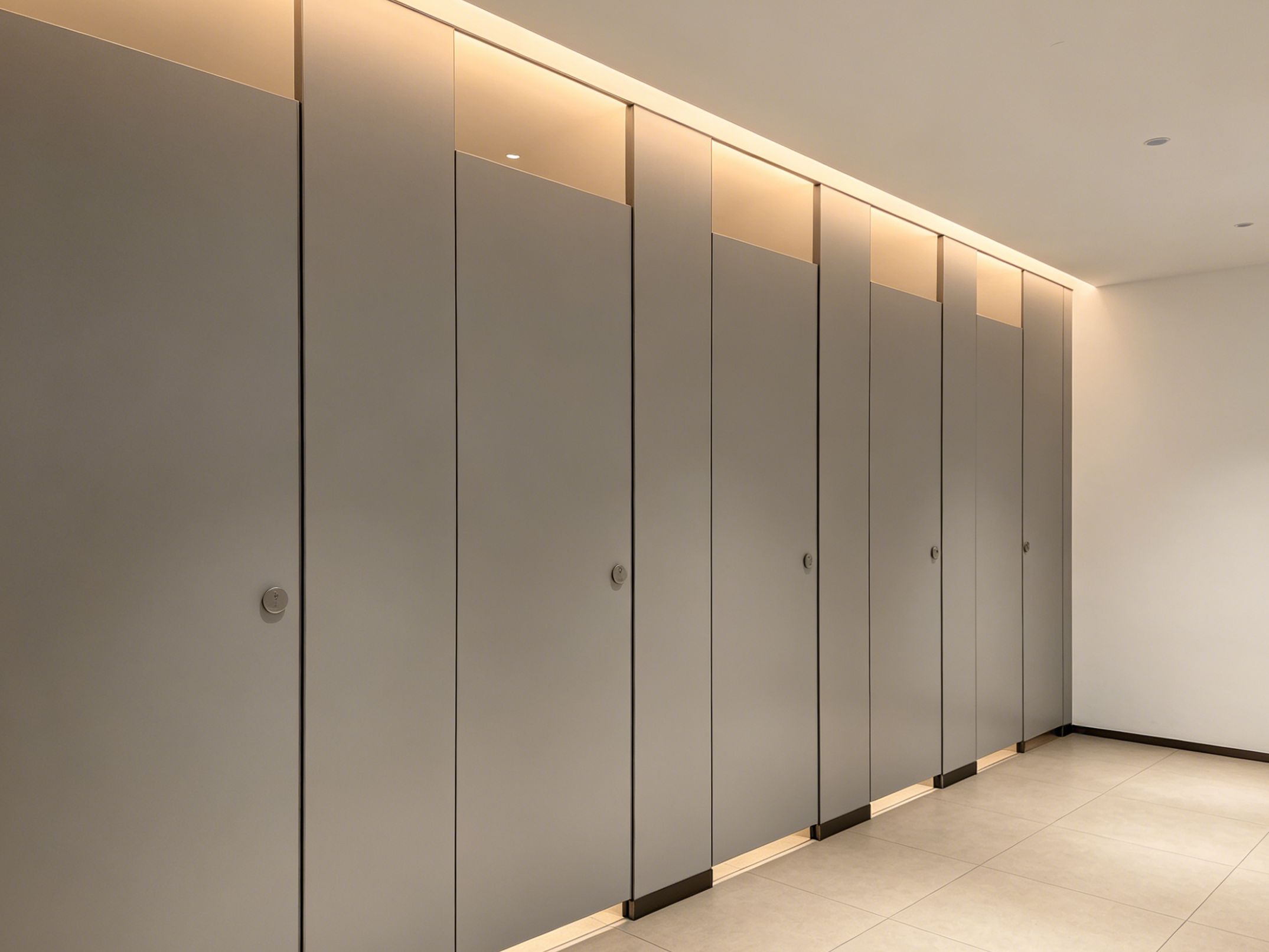
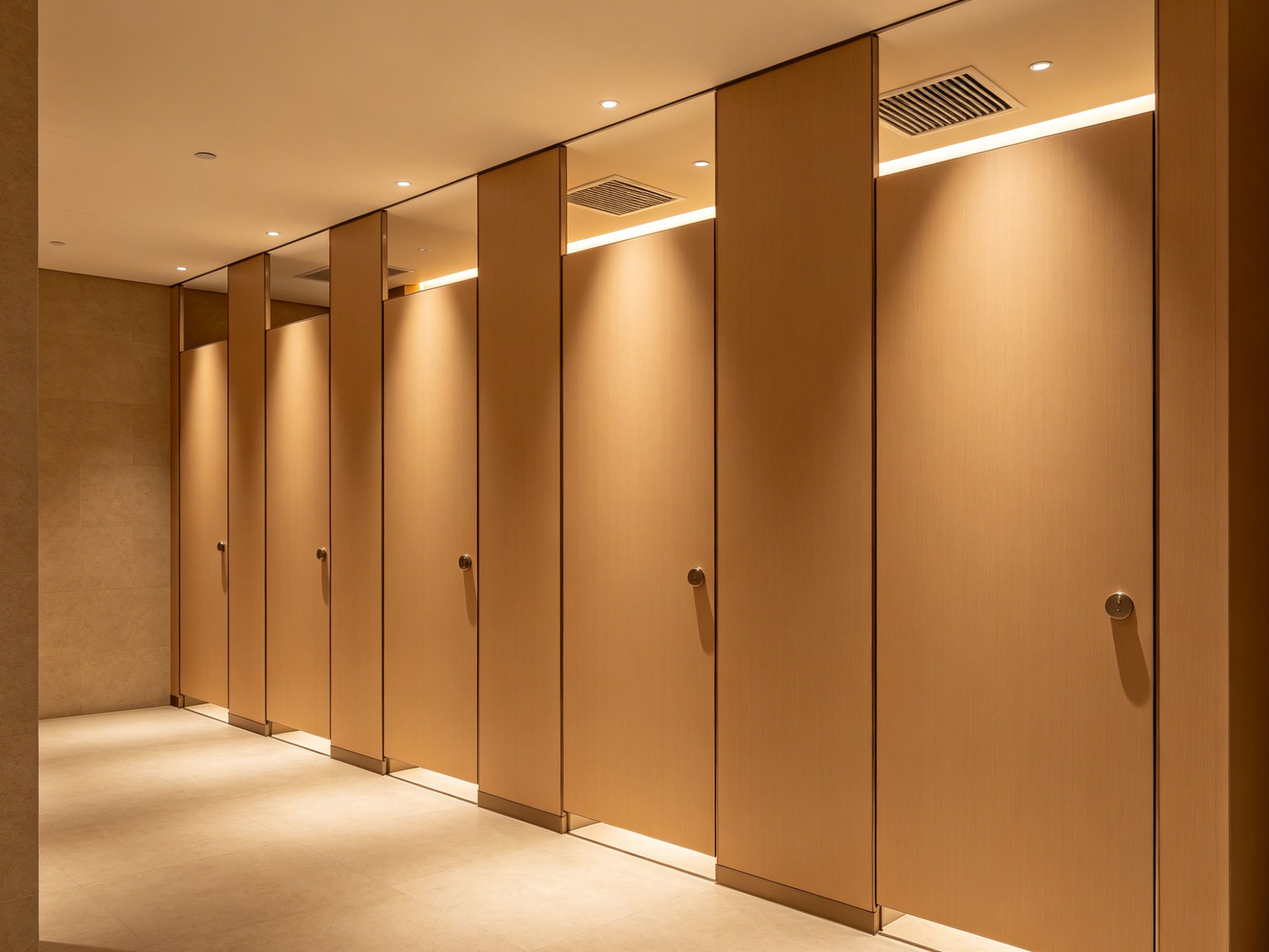
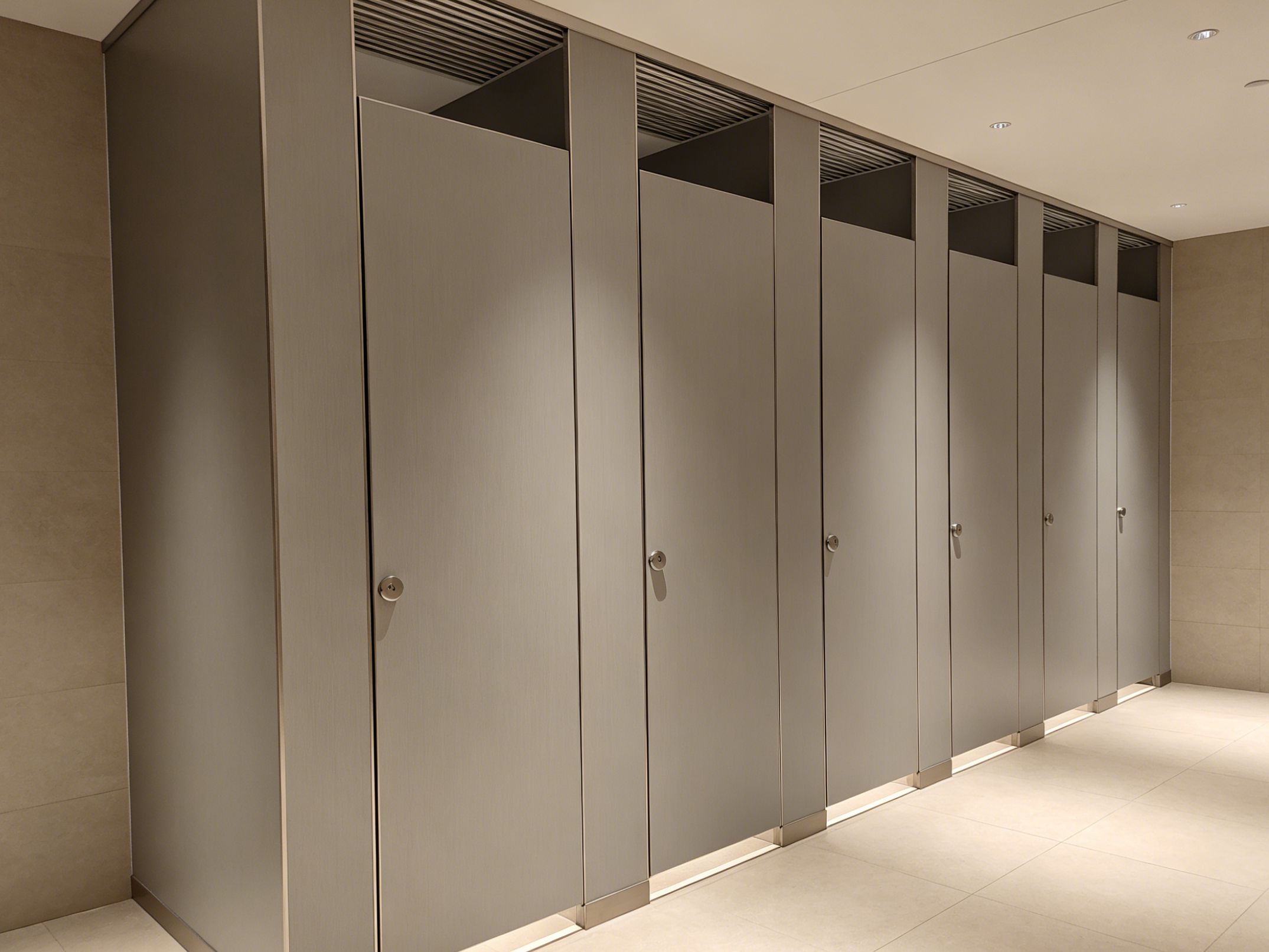
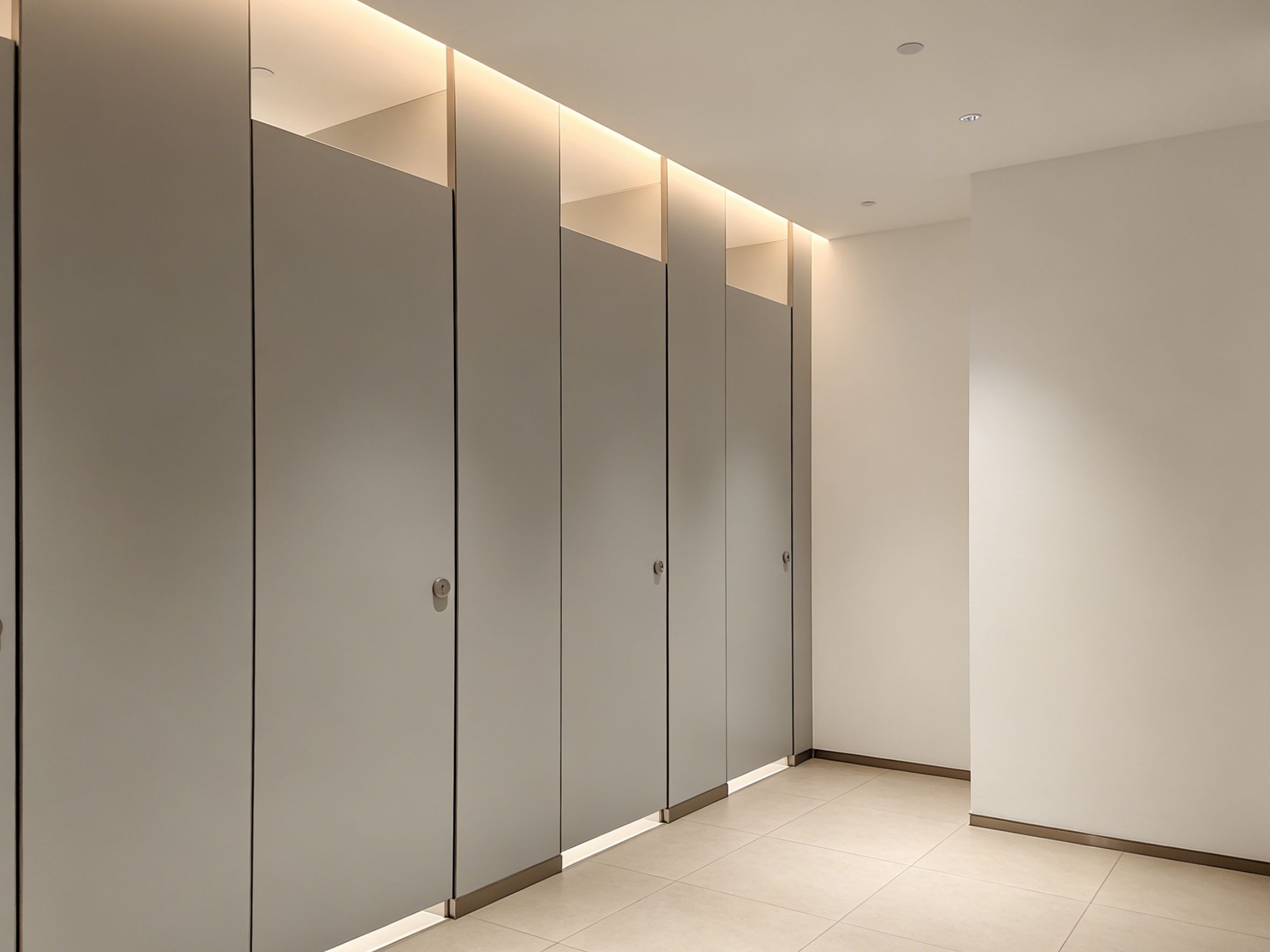
HPL Toilet Partitions Maintenance in Malaysia: Cleaning and Care Guide

HPL Toilet Partitions Maintenance in Malaysia
Proper HPL toilet partitions maintenance helps commercial facilities preserve partition appearance, hardware performance, and structural condition over the long term.
In Malaysia, commercial restrooms can experience frequent use, humidity, water exposure, and regular cleaning. Without appropriate maintenance, moisture-related damage, loose hardware, surface contamination, and door alignment problems can gradually increase operating costs.
For contractors, facility managers, architects, and project developers, establishing a practical maintenance plan from the beginning can reduce unexpected repairs and help maintain a professional restroom environment.

Why HPL Toilet Partitions Maintenance Matters
Toilet partitions are exposed to repeated daily use.
Doors are opened and closed continuously, hardware experiences mechanical stress, and cleaning teams regularly use water and cleaning products around the restroom.
A proper maintenance routine helps identify minor issues before they become larger problems.
For high-traffic facilities, preventive maintenance is generally more efficient than waiting until a partition or hardware component fails.
1. Establish a Regular Cleaning Routine
Regular cleaning is the foundation of HPL toilet partitions maintenance.
Cleaning teams should remove common restroom contaminants such as:
- Dust
- Dirt
- Soap residue
- Water marks
- Fingerprints
- Surface stains
- Other daily-use contamination
The exact cleaning method should follow the panel manufacturer's recommendations.
Routine cleaning also makes it easier for facility teams to identify scratches, swelling, loose fittings, or other abnormalities.
2. Control Moisture Exposure
Humidity is an important consideration for restroom facilities in Malaysia.
Although suitable HPL partition systems are designed for demanding commercial environments, excessive water exposure should still be avoided.
Facility teams should pay attention to:
- Standing water
- Water leakage
- Damaged plumbing
- Poor drainage
- Continuous water spray
- Wet floor conditions
- Water accumulation around fixing areas
Promptly resolving water-related problems can help protect the surrounding partition system.
3. Inspect Partition Panels Regularly
Panel inspections do not need to wait until visible damage becomes serious.
During routine facility inspections, check for:
- Surface damage
- Edge damage
- Cracks
- Swelling
- Delamination
- Scratches
- Loose panels
- Unusual movement
Any abnormal condition should be recorded and evaluated.
For large facilities, a simple inspection checklist can help maintenance teams monitor multiple restroom areas consistently.
4. Check Hinges and Door Alignment
Door hardware experiences repeated mechanical movement.
Over time, hinges may become loose or require adjustment.
Maintenance teams should check whether:
- Doors open smoothly
- Doors close correctly
- Door gaps remain consistent
- Hinges are securely fixed
- Doors rub against adjacent components
- Doors remain properly aligned
Early adjustment can prevent unnecessary stress on both the door and surrounding hardware.
5. Inspect Locks and Handles
Privacy locks and handles are among the most frequently used components in a restroom.
Maintenance teams should confirm that:
- Locks engage correctly
- Indicator mechanisms operate properly
- Handles remain secure
- Fixing screws are tight
- Components are not damaged
A malfunctioning lock should be repaired promptly because it directly affects restroom usability and user privacy.
6. Check Brackets and Support Feet
Partition stability depends partly on properly secured supporting components.
During maintenance inspections, check:
- Wall brackets
- Floor brackets
- Support feet
- Fixing points
- Connections between panels
- Signs of looseness
If movement is detected, the fixing system should be inspected before continued heavy use creates additional problems.
HPL Toilet Partitions Maintenance in High-Traffic Facilities
Commercial offices, public schools, shopping malls, hospitals, airports, hotels, and factories can experience very different usage levels.
High-traffic facilities may require more frequent inspections than low-traffic environments.
For example, schools and transportation facilities can have significant daily restroom usage, while office facilities may have more predictable traffic patterns.
Maintenance frequency should therefore be based on actual usage and site conditions.
Cleaning Products and Maintenance Practices
The cleaning products used on partition surfaces should be compatible with the manufacturer's recommendations.
Maintenance teams should avoid aggressive cleaning practices that may unnecessarily damage the surface.
Good practices include:
- Following manufacturer instructions
- Using suitable cleaning materials
- Avoiding excessive water exposure
- Removing spills promptly
- Keeping surfaces reasonably dry
- Inspecting areas after cleaning
A consistent cleaning procedure can help maintain both appearance and product performance.
How to Prevent Humidity-Related Damage
Humidity itself is not the only concern.
Long-term exposure to water, leakage, poor ventilation, or standing moisture can create more demanding conditions for restroom materials.
Facility managers can reduce moisture-related risks by maintaining:
- Proper drainage
- Functional plumbing
- Adequate ventilation
- Dry floor conditions
- Correct cleaning procedures
- Regular inspections
The surrounding restroom environment is therefore part of the overall partition maintenance strategy.
How Hardware Maintenance Affects Service Life
Partition panels may remain structurally sound while hardware begins to require attention.
Loose hinges, damaged locks, or unstable brackets can affect daily operation and may place additional stress on the partition system.
Replacing or adjusting a small hardware component early can be much simpler than repairing a larger system problem later.
For this reason, hardware inspection should be part of every routine maintenance schedule.
Maintenance Planning for Large Projects
Large commercial facilities may contain dozens or hundreds of cubicles.
A structured maintenance plan can help facility teams manage these areas efficiently.
Useful records can include:
- Restroom location
- Cubicle number
- Installation date
- Panel specification
- Hardware type
- Inspection date
- Repair history
- Replacement components
Keeping basic records can make future maintenance and spare-parts procurement easier.
When Should HPL Toilet Partition Components Be Repaired?
Not every visible issue requires replacing the entire partition.
Depending on the problem, maintenance may involve:
- Tightening hardware
- Adjusting hinges
- Replacing a lock
- Replacing a handle
- Replacing a bracket
- Correcting alignment
- Replacing an individual panel
- Replacing a damaged door
A professional inspection can help determine whether the issue is localized or requires a larger repair.
How Proper Maintenance Reduces Long-Term Costs
Preventive maintenance can help facility owners avoid unnecessary emergency repairs.
Regular inspections can identify small problems such as loose hardware or minor alignment issues before they affect daily restroom operation.
For B2B projects, the goal is not simply to minimize today's maintenance expense.
The better objective is to maintain reliable performance while reducing avoidable repair, replacement, and labor costs over the facility lifecycle.
Maintenance Considerations for Malaysia Projects
Local environmental conditions should be considered when establishing a maintenance program.
Commercial restrooms may experience:
- High humidity
- Frequent cleaning
- Heavy daily usage
- Water exposure
- Temperature changes
- Long operating hours
The maintenance schedule should therefore reflect the actual building environment rather than using the same inspection frequency for every facility.
Common HPL Toilet Partitions Maintenance Mistakes
Using Excessive Water During Cleaning
Unnecessary water exposure can increase moisture-related risks.
Ignoring Loose Hardware
Small hardware problems can develop into larger alignment or structural issues.
Waiting for Visible Failure
Preventive inspections are more effective than waiting until a component stops working.
Using Unsuitable Cleaning Products
Cleaning products should be compatible with the manufacturer's recommendations.
Neglecting Drainage Problems
Persistent standing water can create unnecessary environmental stress.
Replacing Complete Systems Too Early
Some problems can be solved by replacing individual hardware or damaged components.
HPL Toilet Partitions Maintenance Checklist
Facility teams can use the following checklist during routine inspections:
- Check panel surfaces
- Check panel edges
- Check for cracks or damage
- Check moisture exposure
- Check hinges
- Check locks
- Check handles
- Check brackets
- Check support feet
- Check door alignment
- Check door closing
- Check floor conditions
- Check wall fixing points
- Record repairs
- Schedule replacement when necessary
For large facilities, inspection records can help identify recurring problems and improve future procurement decisions.
People Also Ask (FAQ)
Q1: How often should HPL toilet partitions be maintained?
Maintenance frequency depends on traffic, cleaning frequency, humidity, water exposure, and facility type. High-traffic public facilities generally require more frequent inspection than low-traffic office environments.
Q2: How should HPL toilet partitions be cleaned?
Use cleaning procedures and products recommended by the manufacturer. Routine cleaning should remove dirt and stains while avoiding unnecessary water exposure or aggressive treatment.
Q3: Can humidity damage HPL toilet partitions?
Suitable HPL partition systems are designed for demanding restroom environments, but prolonged water exposure, leakage, standing water, and poor site conditions can still create maintenance problems.
Q4: What HPL toilet partition components need regular inspection?
Common inspection points include panels, edges, hinges, locks, handles, brackets, support feet, fixing points, and door alignment.
Q5: Can individual HPL toilet partition components be replaced?
In many cases, individual hardware, doors, or damaged panels can be replaced without replacing the complete restroom partition system. The appropriate solution depends on the type and extent of damage.
Project Planning & Engineering Support
Successful restroom partition projects should consider maintenance requirements from the beginning. If you're developing specifications for commercial offices, public schools, shopping malls, hospitals, hotels, factories, airports, or other projects in Malaysia, our engineers can review your drawings and BOQ and help select suitable HPL toilet partition configurations, hardware, and project specifications.
- CAD & Specification Review: mrsalufcs@gmail.com (Submit your drawings or BOQ for engineering verification.)
- Technical Consultation: +86 15207652902 (Consult our team on partition specifications, hardware selection, customization, installation, and long-term project coordination.)
HPL Toilet Partitions Specifications: Thickness, Size and Material Guide
HPL Toilet Partitions Installation Cost in Malaysia: Labor, Materials and Project Budget