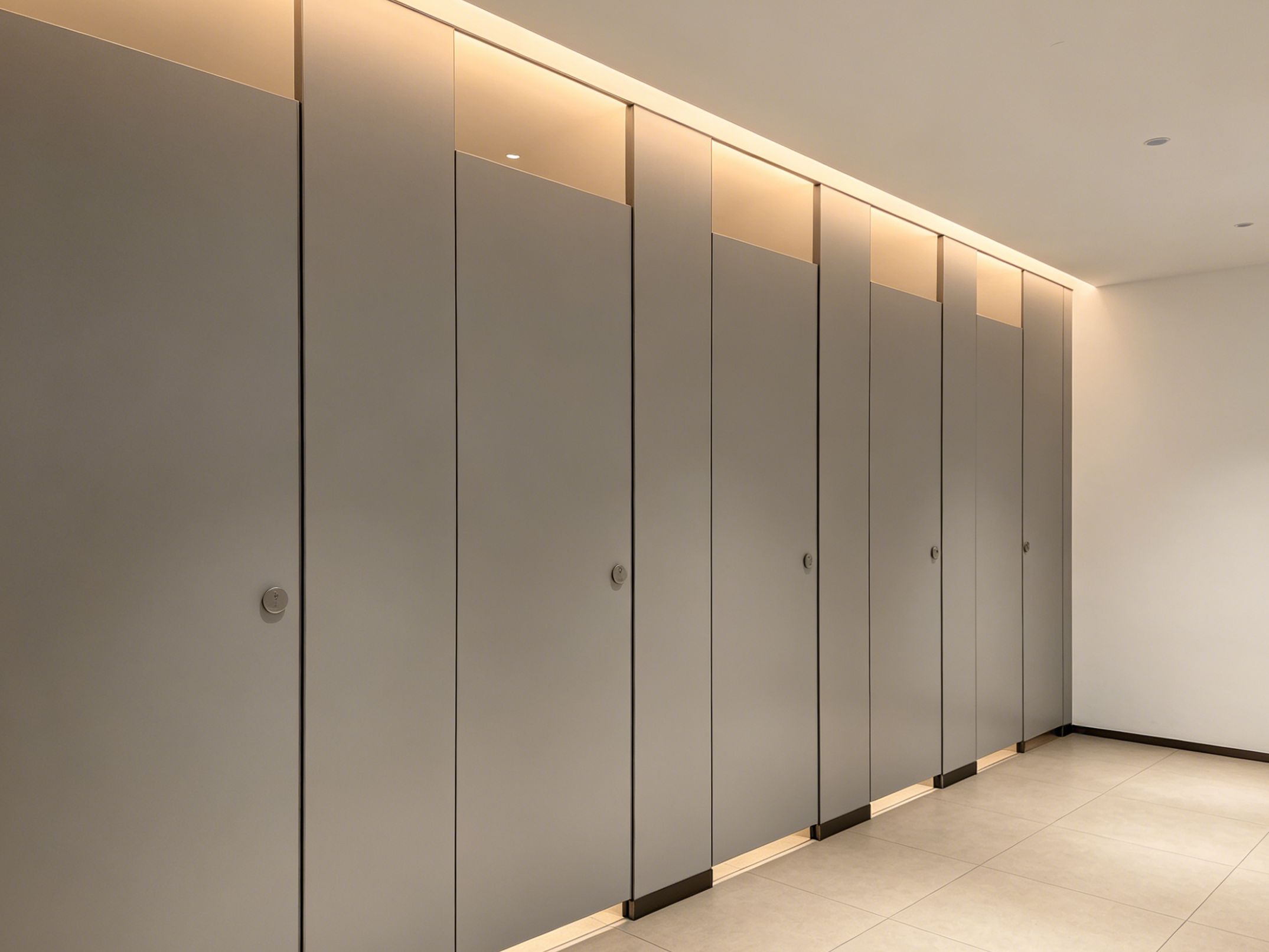
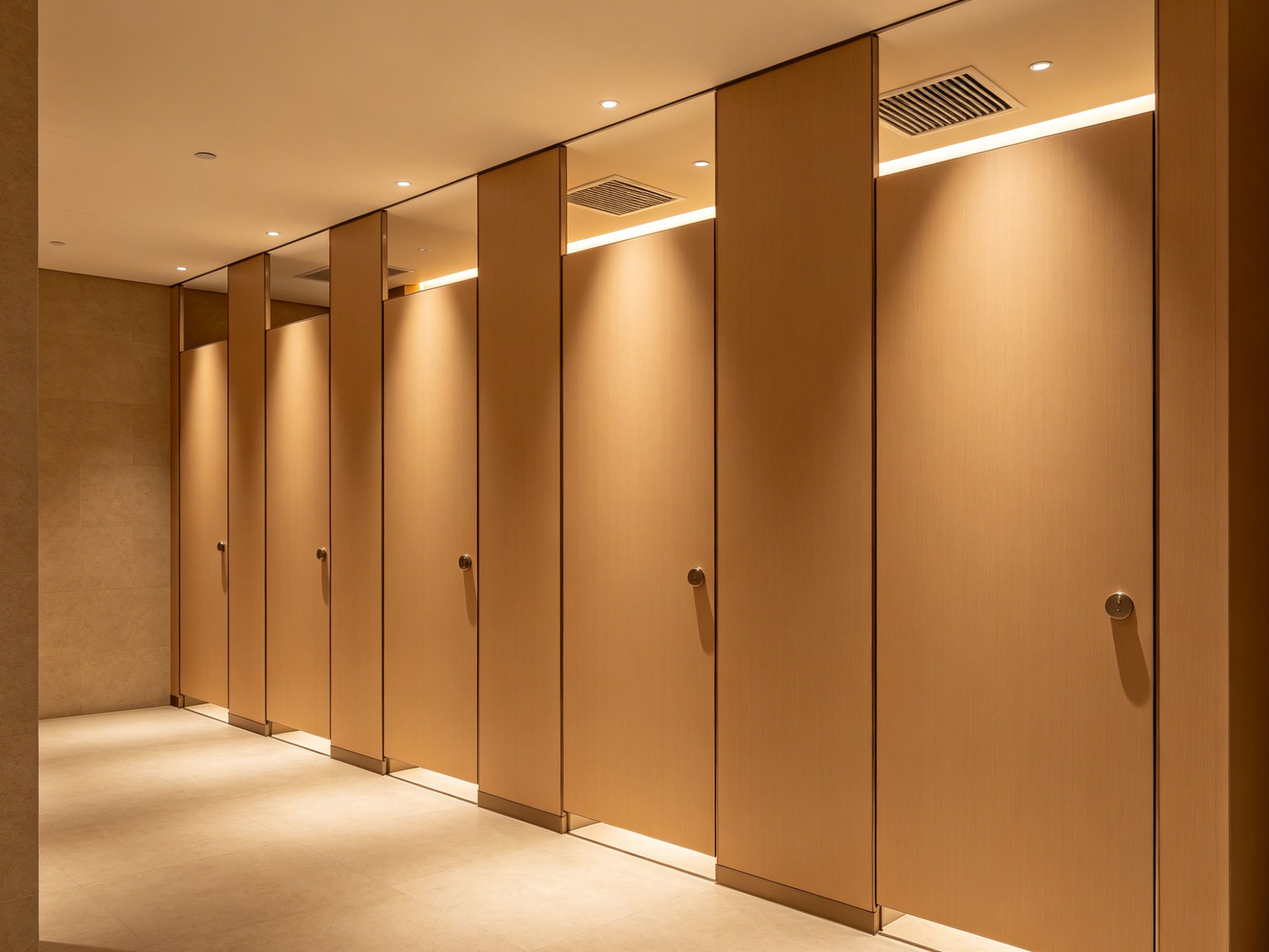
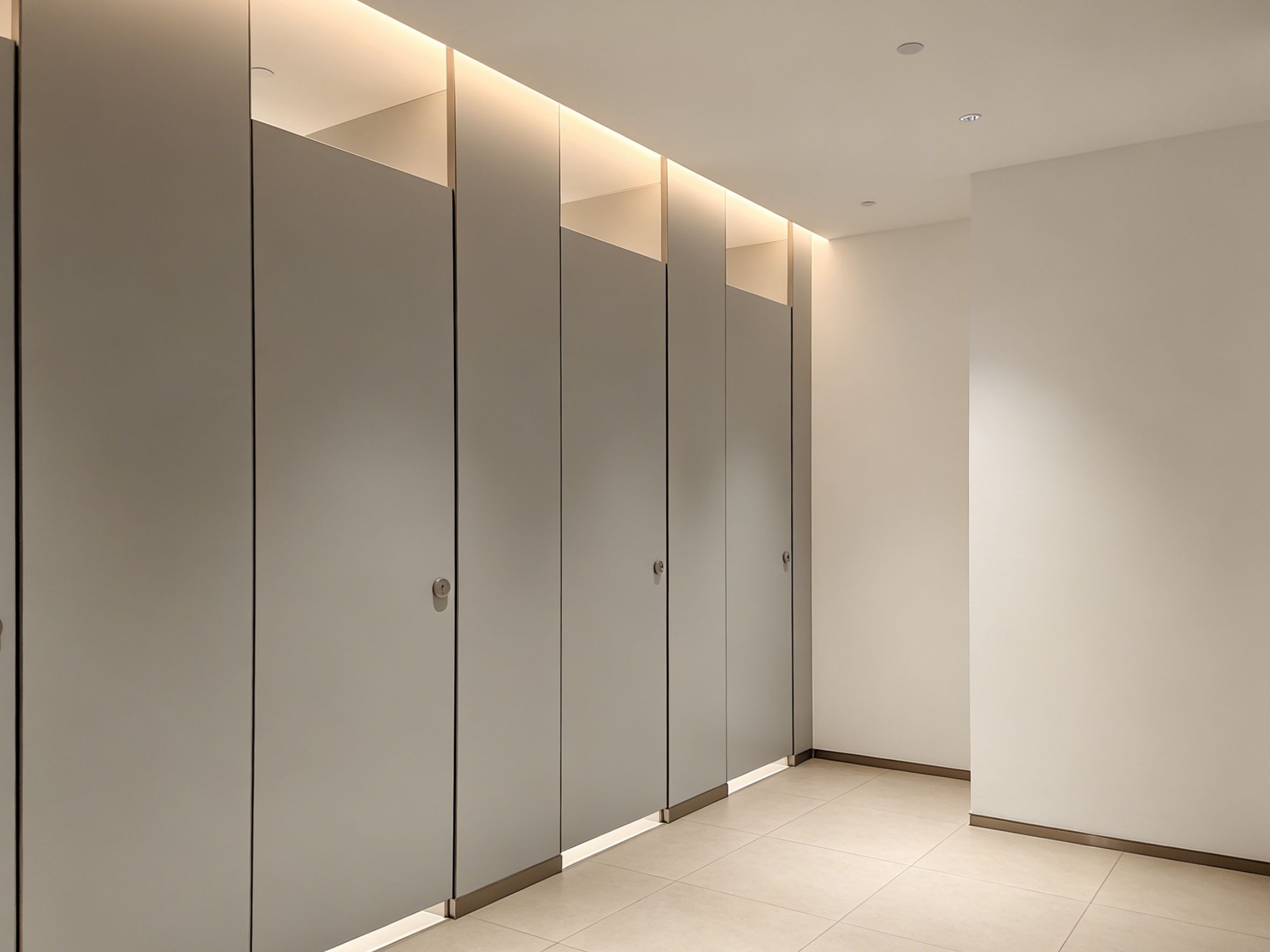
HPL Toilet Partitions Specifications: Thickness, Size and Material Guide
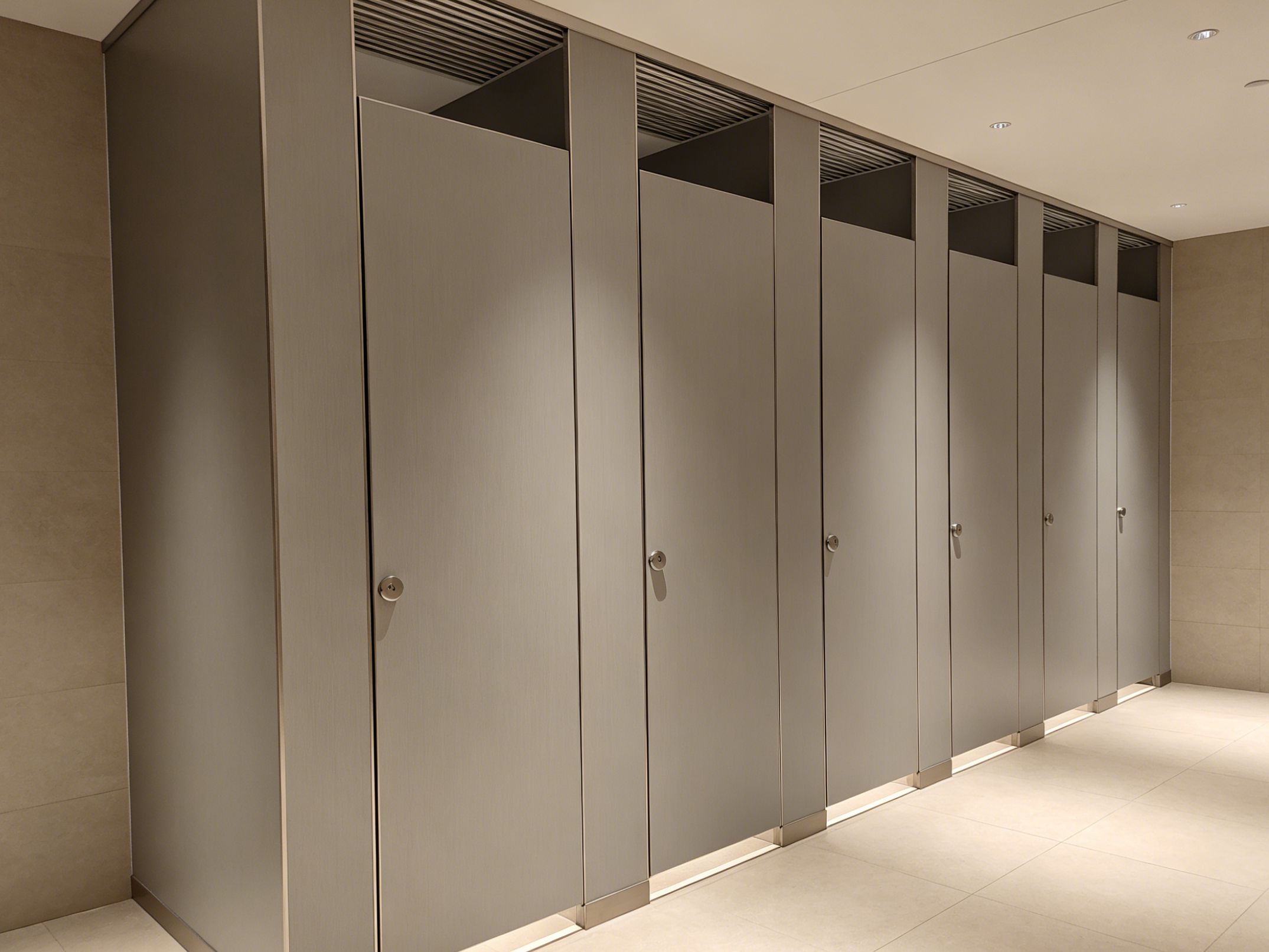
HPL Toilet Partitions Specifications for Malaysia Projects
Selecting the correct HPL toilet partitions specifications is an important step when preparing commercial restroom designs in Malaysia.
For contractors, architects, and project developers, specifications should cover more than panel appearance. Thickness, dimensions, material construction, hardware, finishes, fixing methods, and project conditions all influence the final partition system.
A clear specification before production can reduce quotation differences, installation problems, material waste, and costly site modifications.
What Should Be Included in HPL Toilet Partitions Specifications?
A complete specification should define the main components of the restroom partition system.
Important items include:
- Panel material
- Panel thickness
- Panel height
- Panel width
- Door dimensions
- Surface finish
- Color
- Edge treatment
- Hardware
- Support feet
- Wall brackets
- Floor fixing
- Installation requirements
For customized projects, these details should be coordinated with the architectural drawings and BOQ.
1. Panel Thickness
Panel thickness is one of the first specifications buyers should confirm.
Different commercial applications may require different thickness options depending on panel dimensions, structural requirements, hardware configuration, and expected usage.
Thicker panels may provide additional rigidity, but selecting the thickest available option is not always necessary.
The appropriate specification should balance structural performance, design requirements, installation conditions, and project budget.
2. Panel Dimensions
Panel dimensions should be determined according to the restroom layout.
The project team should confirm:
- Overall partition height
- Cubicle width
- Panel length
- Door width
- Door height
- Floor clearance
- Wall connection dimensions
Customized dimensions should be reviewed before production.
Accurate dimensions help manufacturers prepare materials correctly and reduce unnecessary cutting or modification at the construction site.
3. Material Construction
Material construction is another important specification for commercial restroom applications.
Buyers should understand the structure of the selected HPL partition system rather than evaluating the surface appearance alone.
The material should be appropriate for the expected level of daily use and environmental conditions.
For humid restroom environments, the project team should also consider moisture exposure, cleaning practices, ventilation, drainage, and installation details.
4. Surface Finish and Color
The surface finish contributes to the overall architectural appearance.
Common project requirements may include:
- Solid colors
- Neutral colors
- Wood-grain appearances
- Decorative finishes
- Brand-specific colors
- Custom finishes
Architects should confirm the selected finish before production.
For large projects, physical samples can help the project team verify the actual appearance under site lighting conditions.
HPL Toilet Partitions Specifications for High-Traffic Facilities
High-traffic facilities require careful specification because partition systems may experience continuous daily use.
Examples include:
- Public schools
- Shopping malls
- Transportation facilities
- Stadiums
- Factories
- Hospitals
- Large office buildings
For these applications, buyers should pay particular attention to structural durability, hardware quality, fixing methods, door operation, and maintenance requirements.
5. Door Specifications
Doors are among the most frequently operated components in a restroom partition system.
The specification should define:
- Door dimensions
- Opening direction
- Hinge type
- Lock type
- Handle type
- Indicator bolt
- Door clearance
- Door alignment requirements
Door configuration should also be coordinated with the surrounding cubicles and sanitary fixtures.
For accessible restroom layouts, door movement and circulation should receive additional attention.
6. Hardware Specifications
Hardware can have a significant effect on the performance of the complete partition system.
Typical hardware includes:
- Hinges
- Locks
- Handles
- Indicator bolts
- Brackets
- Support feet
- Wall fixings
- Floor fixings
Hardware specifications should be confirmed together with panel dimensions and door configuration.
Using incompatible components can create alignment, installation, or maintenance problems.
7. Support and Fixing Specifications
The fixing method should be suitable for the actual wall and floor conditions.
Depending on the project, the system may require:
- Wall brackets
- Floor brackets
- Support feet
- Headrails
- Structural connections
- Mechanical fixings
The project team should confirm the fixing method during the design stage.
This is particularly important for customized layouts and buildings with unusual wall or floor conditions.
How to Write an HPL Toilet Partitions Specification
A practical specification should be clear enough for different suppliers to quote the same basic product requirements.
For example, a project specification can define:
Product: HPL toilet partitions
Application: Commercial restroom
Panel: Project-approved HPL partition material
Thickness: According to approved project specification
Dimensions: According to architectural drawings
Finish: Project-approved color or decorative finish
Hardware: Project-approved hinges, locks, handles, brackets, and support components
Installation: According to approved installation drawings and site conditions
This structure makes supplier quotations easier to compare.
Specification vs Product Quotation
A quotation describes commercial pricing, while a specification defines what the supplier is expected to provide.
These two documents should match.
Before comparing quotations, contractors should confirm that every supplier is quoting based on the same:
- Thickness
- Dimensions
- Material
- Finish
- Hardware
- Quantity
- Installation scope
Otherwise, a lower quotation may simply represent a different product specification.
How Specifications Affect Project Cost
Specifications directly influence procurement cost.
For example, customized dimensions may require additional processing, while special finishes can affect material availability and production planning.
Hardware selection can also change the total system cost.
The goal should not be to specify the most expensive configuration, but to select a suitable specification that meets the project's functional and architectural requirements.
How Specifications Affect Installation
Poorly defined specifications can create problems after materials arrive.
If panel dimensions, door positions, hardware, or fixing details are unclear, installers may need to make additional adjustments on site.
A detailed specification combined with approved CAD drawings can reduce this risk.
Factory production can then follow a consistent set of requirements.
Specification Considerations for Malaysia
Malaysia projects should consider local site conditions when preparing partition specifications.
Relevant factors can include:
- Humidity
- Water exposure
- Restroom traffic
- Cleaning frequency
- Floor conditions
- Wall construction
- Ventilation
- Drainage
- Building usage
A specification designed for a low-traffic office restroom may not be suitable for a busy public facility.
The specification should therefore reflect the actual application.
How to Select the Right Thickness
When selecting panel thickness, consider:
Expected Traffic
High-use facilities may require stronger specifications.
Panel Dimensions
Larger panels may require appropriate structural rigidity.
Door Size
Large doors can influence hardware and panel requirements.
Hardware
The selected hardware should be compatible with the panel system.
Installation Method
Fixing details can influence the required specification.
Project Budget
The specification should provide an appropriate balance between performance and cost.
Common HPL Toilet Partitions Specification Mistakes
Specifying Only the Color
Appearance alone does not define a complete partition system.
Omitting Panel Thickness
Thickness should be clearly stated in the project documentation.
Ignoring Hardware
Hardware is essential to door operation and overall system performance.
Not Providing Drawings
Complex layouts should be supported by accurate drawings.
Mixing Different Specifications
All suppliers should receive the same basic specification when quotations are being compared.
Changing Specifications After Production
Late changes can increase cost and delay the project schedule.
Specification Checklist for B2B Buyers
Before approving an HPL toilet partition specification, check:
- Product type
- Panel material
- Panel thickness
- Panel dimensions
- Door dimensions
- Partition height
- Surface finish
- Color
- Hardware
- Fixing method
- Quantity
- CAD drawings
- Installation requirements
- Delivery schedule
- Quality requirements
A complete checklist can help prevent omissions during procurement.
People Also Ask (FAQ)
Q1: What specifications should I check when buying HPL toilet partitions?
Important specifications include panel material, thickness, dimensions, finish, door configuration, hardware, fixing method, and installation requirements.
Q2: What HPL toilet partitions thickness should I choose?
The appropriate thickness depends on panel dimensions, expected traffic, structural requirements, hardware, installation method, and project specifications. It should be selected according to the actual application rather than price alone.
Q3: Can HPL toilet partitions be customized?
Yes. Depending on the manufacturer, panels can be customized in dimensions, colors, finishes, door configurations, and other project-specific requirements.
Q4: Should HPL toilet partition specifications include hardware?
Yes. Hardware should be included because hinges, locks, brackets, support feet, and fixings are essential parts of the complete partition system.
Q5: Why are CAD drawings important for HPL toilet partitions?
CAD drawings help coordinate cubicle dimensions, doors, hardware, fixing points, sanitary fixtures, and other site conditions before production.
Project Planning & Engineering Support
Successful restroom partition projects begin with accurate specifications. If you're preparing specifications for commercial offices, public schools, shopping malls, hospitals, hotels, factories, airports, or other projects in Malaysia, our engineers can review your CAD drawings and BOQ and help confirm suitable HPL toilet partition materials, dimensions, thicknesses, finishes, hardware, and installation requirements.
- CAD & Specification Review: mrsalufcs@gmail.com (Submit your drawings or BOQ for engineering verification.)
- Technical Consultation: +86 15207652902 (Consult our team on panel specifications, thickness, hardware selection, customization, installation, and project coordination.)
HPL Toilet Partitions vs Phenolic: Which Is Better for Malaysia Projects?
HPL Toilet Partitions Maintenance in Malaysia: Cleaning and Care Guide