HPL Toilet Partitions vs Metal: A Practical Guide for Malaysia
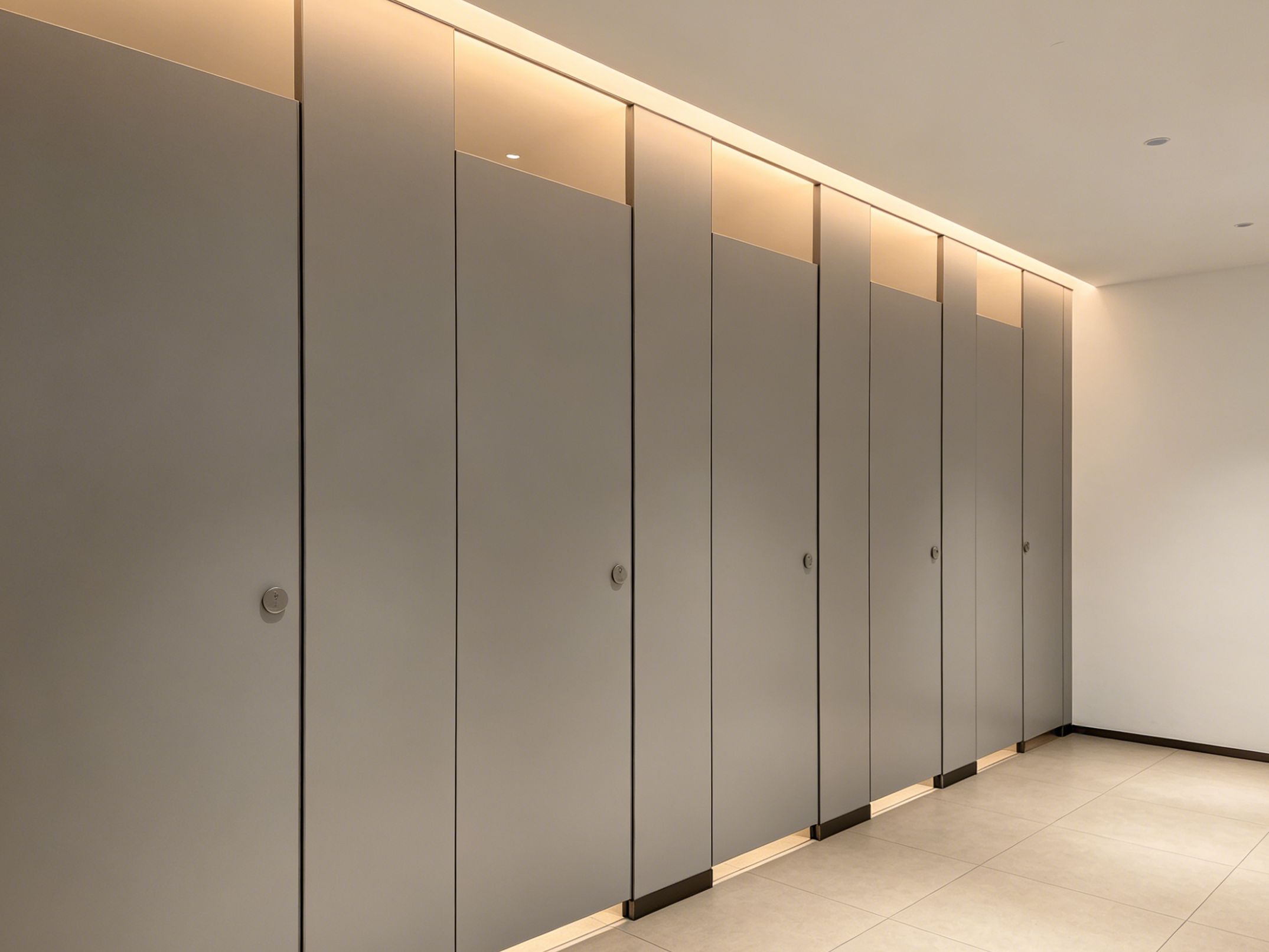
HPL Toilet Partitions vs Metal for Malaysia Projects
When selecting restroom partitions for commercial projects in Malaysia, comparing HPL toilet partitions vs metal can help buyers understand which system better matches their building requirements.
Both materials can be used in commercial restroom environments, but they differ in surface characteristics, environmental performance, appearance, maintenance requirements, and customization possibilities.
For contractors, architects, and project developers, the right choice should be based on actual restroom conditions rather than initial material price alone.

Why Compare HPL Toilet Partitions vs Metal?
Commercial restrooms are demanding environments.
Partitions may be exposed to:
- High humidity
- Water splashing
- Frequent cleaning
- Heavy daily traffic
- Repeated door operation
- Accidental impact
- Cleaning chemicals
- Long operating hours
These conditions can affect different materials in different ways.
Comparing the complete partition system before procurement can help buyers avoid selecting a product that does not match the actual application.
1. Moisture Exposure
Moisture is an important consideration for restroom projects in Malaysia.
Commercial restrooms may experience wet floors, water splashing, humidity, and regular cleaning.
When comparing HPL toilet partitions vs metal, buyers should evaluate the specific material construction and how each system is designed to handle the expected environment.
The surrounding installation conditions are equally important.
Proper drainage, ventilation, waterproofing, and installation can reduce moisture-related problems regardless of the selected material.
2. Corrosion Considerations
Metal partitions can require additional attention to corrosion depending on the specific metal, coating, surface treatment, installation environment, and exposure conditions.
Restrooms create an environment where moisture can remain around fixing points, hardware, edges, and floor connections.
Therefore, buyers should not evaluate metal simply as "corrosion resistant" or "not corrosion resistant."
The exact metal specification and protective treatment should be confirmed before procurement.
HPL systems avoid some of the corrosion considerations associated with exposed metal surfaces, although supporting hardware still needs appropriate material selection.
3. Impact and Structural Durability
Restroom partitions in public facilities experience repeated physical use.
Doors may be opened and closed hundreds or thousands of times, while panels can experience accidental impact and pressure.
Durability should therefore be evaluated through the complete system, including:
- Panel construction
- Panel thickness
- Edge strength
- Door design
- Hardware
- Brackets
- Support feet
- Fixing method
A strong panel with poor hardware can still create maintenance problems.
For this reason, B2B buyers should evaluate the complete partition system rather than the panel material alone.
HPL Toilet Partitions vs Metal: Appearance
Architectural appearance is another important difference.
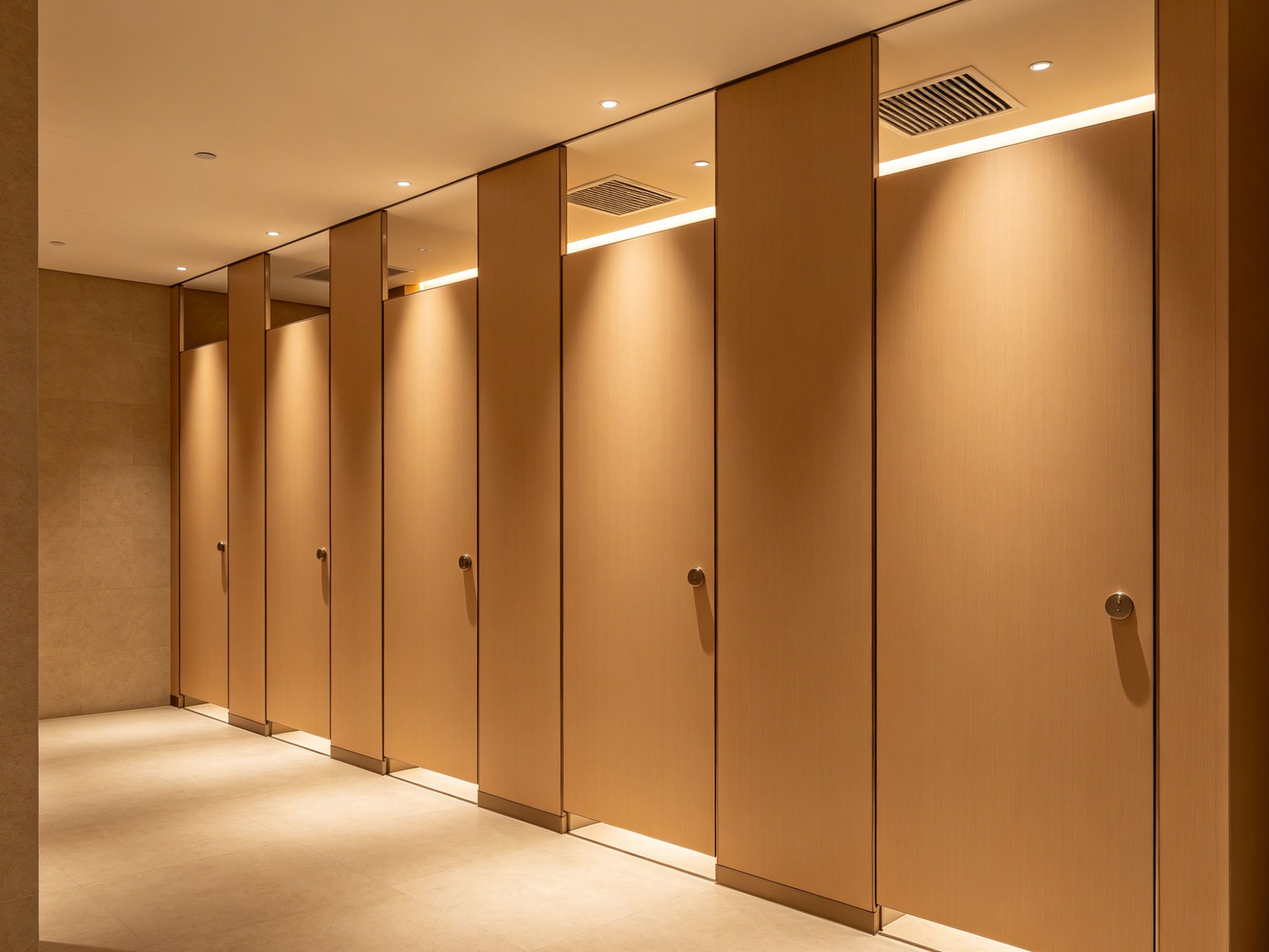
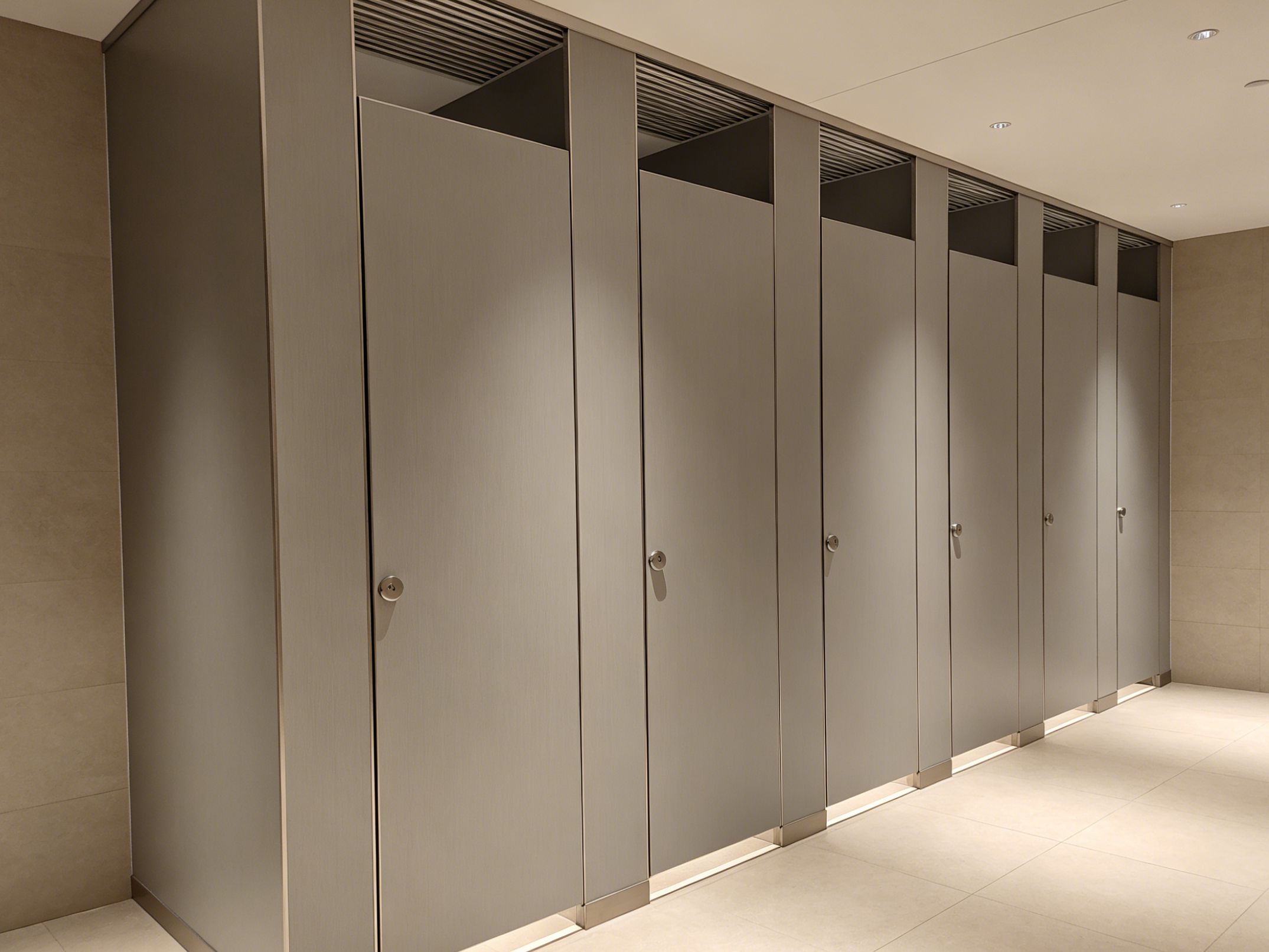
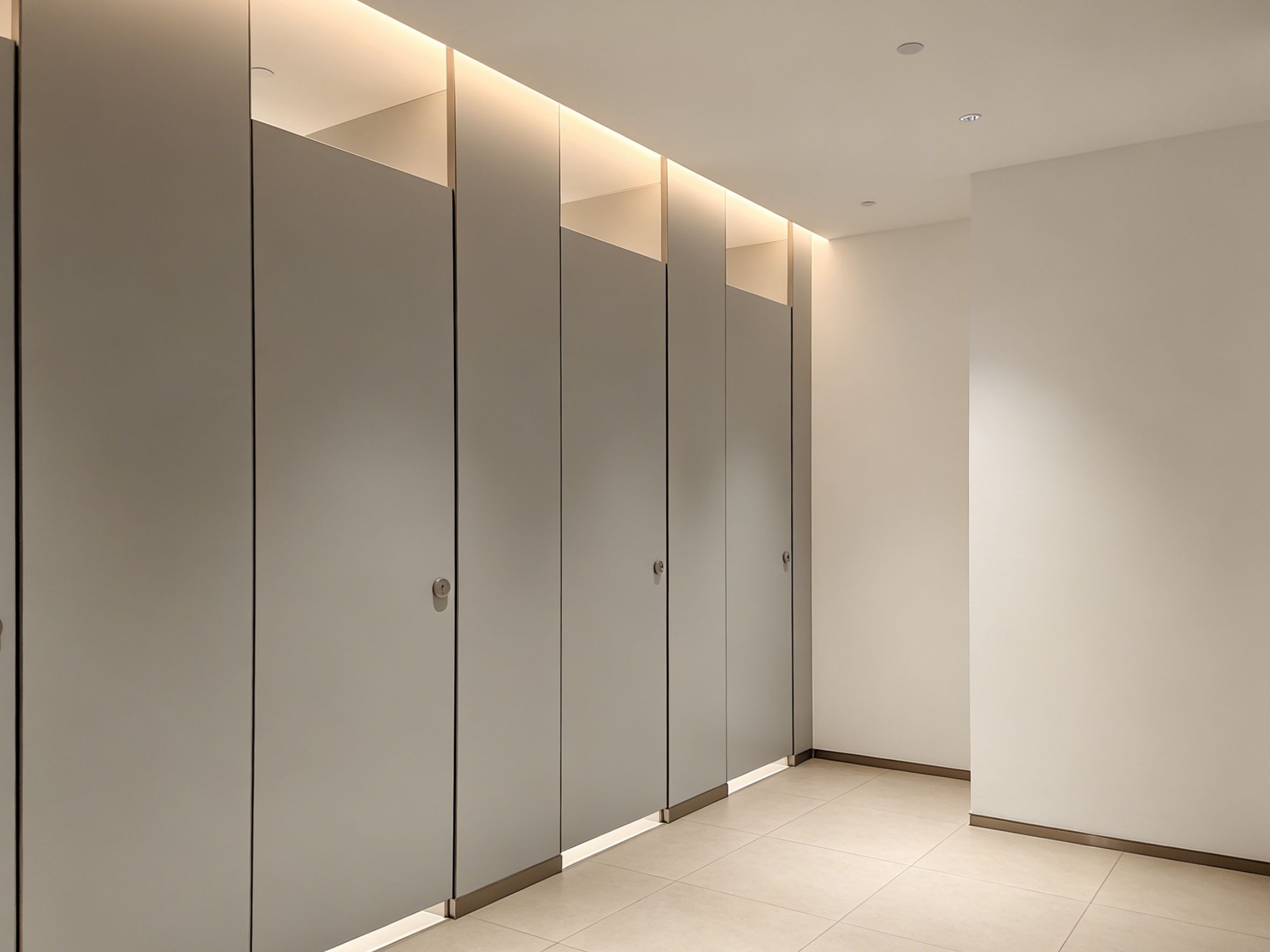
HPL surfaces can provide a wide range of decorative options for commercial interior design.
Potential choices include:
- Solid colors
- Neutral tones
- Wood-grain effects
- Decorative patterns
- Custom colors
- Brand-related finishes
Metal partitions may provide a more industrial or functional appearance depending on their coating and finish.
The better option depends on the architectural concept of the building.
4. Customization
Commercial projects frequently require customized dimensions and layouts.
Customization may include:
- Panel width
- Panel height
- Door dimensions
- Cubicle configuration
- Accessible cubicles
- Color
- Surface finish
- Hardware
- Fixing configuration
HPL systems can provide flexible decorative customization depending on the manufacturer's production capability.
For large projects, buyers should confirm customization options before finalizing the architectural specification.
5. Cleaning and Maintenance
Restroom partitions require regular cleaning regardless of material.
Facility managers should establish procedures for:
- Surface cleaning
- Hardware inspection
- Door adjustment
- Lock inspection
- Bracket inspection
- Moisture monitoring
- Damage assessment
Metal systems may require additional monitoring of coating condition and corrosion-prone areas depending on the product specification.
HPL systems also require appropriate cleaning procedures and moisture management.
The maintenance plan should therefore be based on the actual product specification.
HPL Toilet Partitions vs Metal in High-Traffic Facilities
High-traffic applications include:
- Public schools
- Shopping malls
- Airports
- Stadiums
- Factories
- Transportation facilities
- Large office buildings
- Public buildings
For these environments, buyers should consider more than the number of restroom cubicles.
Important questions include:
- How many users will access the restroom daily?
- How frequently will the restroom be cleaned?
- Is water exposure high?
- How often will doors operate?
- What level of impact is expected?
- How frequently can maintenance teams inspect the system?
These factors help determine the appropriate partition specification.
Installation Considerations
Installation requirements can vary significantly between different partition systems.
Contractors should evaluate:
- Panel weight
- Cutting requirements
- Drilling
- Hardware installation
- Wall connections
- Floor connections
- Door adjustment
- Site access
Factory-processed components can help reduce repetitive fabrication work at the construction site.
Accurate CAD drawings also help installers understand the intended layout before work begins.
Lifecycle Cost Considerations
Initial purchase price should not be the only factor when comparing HPL toilet partitions vs metal.
A more complete evaluation can include:
- Material cost
- Hardware
- Factory processing
- Transportation
- Installation
- Cleaning
- Maintenance
- Repairs
- Replacement components
- Expected service requirements
A material with a lower initial quotation may not necessarily provide the lowest overall project cost.
B2B buyers should compare equivalent specifications and consider the complete lifecycle.
HPL Toilet Partitions for Modern Commercial Interiors
HPL can be attractive for projects where architects want restroom partitions to coordinate with the wider interior design.
For example, a commercial office may use wood-inspired finishes to complement interior wall treatments.
A school may use stronger contrasting colors to create a more distinctive environment.
A hotel may prioritize coordinated colors and decorative finishes.
This flexibility can make HPL a practical option for projects where both function and appearance are important.
When Metal Partitions May Be Considered
Metal can still be suitable for certain applications.
It may be considered where the project specifically requires:
- Industrial appearance
- Specific metal specifications
- Particular fire-related requirements
- Existing metal construction standards
- Specialized facility requirements
The final choice should be based on the building's technical specifications and operating environment.
How Contractors Should Compare the Two Systems
Before requesting quotations, contractors should prepare a consistent specification.
Compare:
Panel
- Material
- Thickness
- Dimensions
- Construction
- Finish
Hardware
- Hinges
- Locks
- Handles
- Brackets
- Support feet
Engineering
- CAD drawings
- Customization
- Shop drawings
- Installation information
Project Service
- Packaging
- Delivery
- Lead time
- Technical support
- After-sales support
Using the same specification for every supplier creates a more meaningful price comparison.
How Architects Can Make the Right Choice
Architects should begin with the project's functional requirements.
Consider:
- Building type
- Expected traffic
- Humidity
- Water exposure
- Cleaning frequency
- Design requirements
- Customization
- Hardware
- Maintenance
- Budget
This approach prevents the material decision from being based on a single factor.
Choosing Between HPL and Metal for Malaysia
For Malaysia projects, there is no universal material that is best for every restroom.
The correct selection depends on:
- Environmental exposure
- Traffic level
- Architectural requirements
- Material construction
- Hardware
- Installation conditions
- Maintenance strategy
- Project budget
The most effective procurement strategy is to compare complete systems using the same project requirements.
Common Material Selection Mistakes
Choosing Only by Initial Price
The lowest quotation may not represent the lowest total project cost.
Ignoring Corrosion Conditions
Metal specifications should be evaluated according to the actual environment.
Ignoring Hardware
Hardware performance affects door operation and maintenance.
Focusing Only on Appearance
The internal construction and fixing system are equally important.
Using Different Specifications for Supplier Quotes
Different specifications make direct price comparisons unreliable.
Ignoring Maintenance
The building's maintenance capability should be considered during material selection.
People Also Ask (FAQ)
Q1: Which is better, HPL toilet partitions or metal?
Neither is universally better. The appropriate choice depends on humidity, water exposure, traffic, durability requirements, appearance, customization, maintenance, installation, and project specifications.
Q2: Are HPL toilet partitions suitable for humid Malaysia conditions?
Suitable HPL partition systems can be used in commercial restroom environments, provided that the panel construction, installation, drainage, ventilation, and maintenance requirements are properly considered.
Q3: Can metal toilet partitions corrode?
Corrosion performance depends on the metal type, coating, surface treatment, hardware, installation conditions, and exposure to moisture. The exact specification should be confirmed before procurement.
Q4: Are HPL toilet partitions easier to customize than metal?
Customization depends on the manufacturer's production capabilities. HPL systems can offer a broad range of dimensions, colors, finishes, and configurations for commercial projects.
Q5: Should contractors compare HPL and metal based only on durability?
No. Contractors should evaluate durability together with moisture exposure, corrosion considerations, appearance, hardware, installation, maintenance, customization, and total project cost.
Project Planning & Engineering Support
Material selection should be finalized according to the actual project requirements. If you're evaluating HPL toilet partitions and metal partition systems for commercial offices, public schools, shopping malls, hospitals, hotels, factories, airports, or other projects in Malaysia, our engineers can review your CAD drawings and BOQ and help determine suitable panel specifications, finishes, hardware, and installation requirements.
- CAD & Specification Review: mrsalufcs@gmail.com (Submit your drawings or BOQ for engineering verification.)
- Technical Consultation: +86 15207652902 (Consult our team on material selection, panel specifications, hardware, customization, installation, and project coordination.)
HPL Toilet Partitions vs Phenolic: Which Is Better for Malaysia Projects?