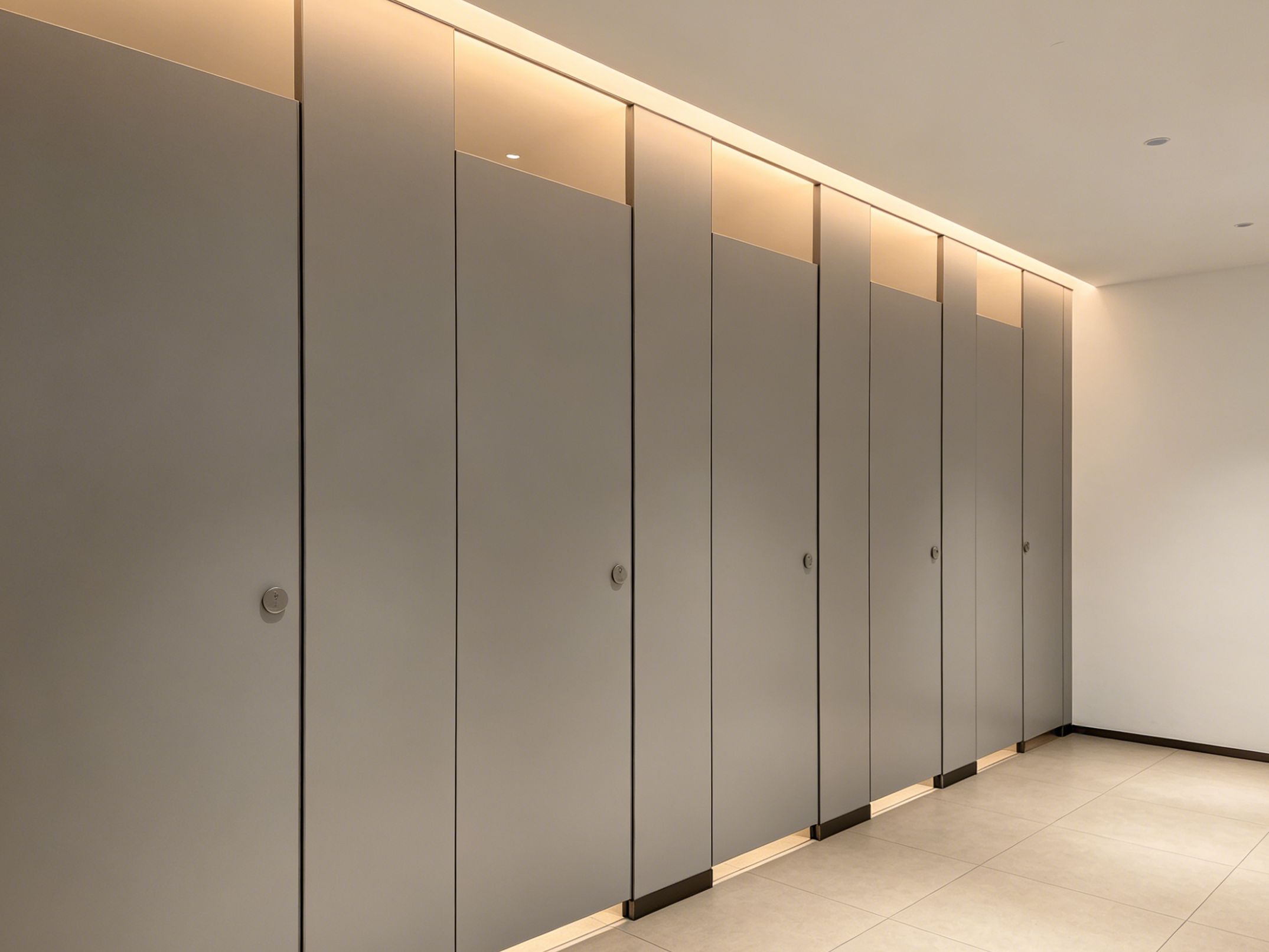
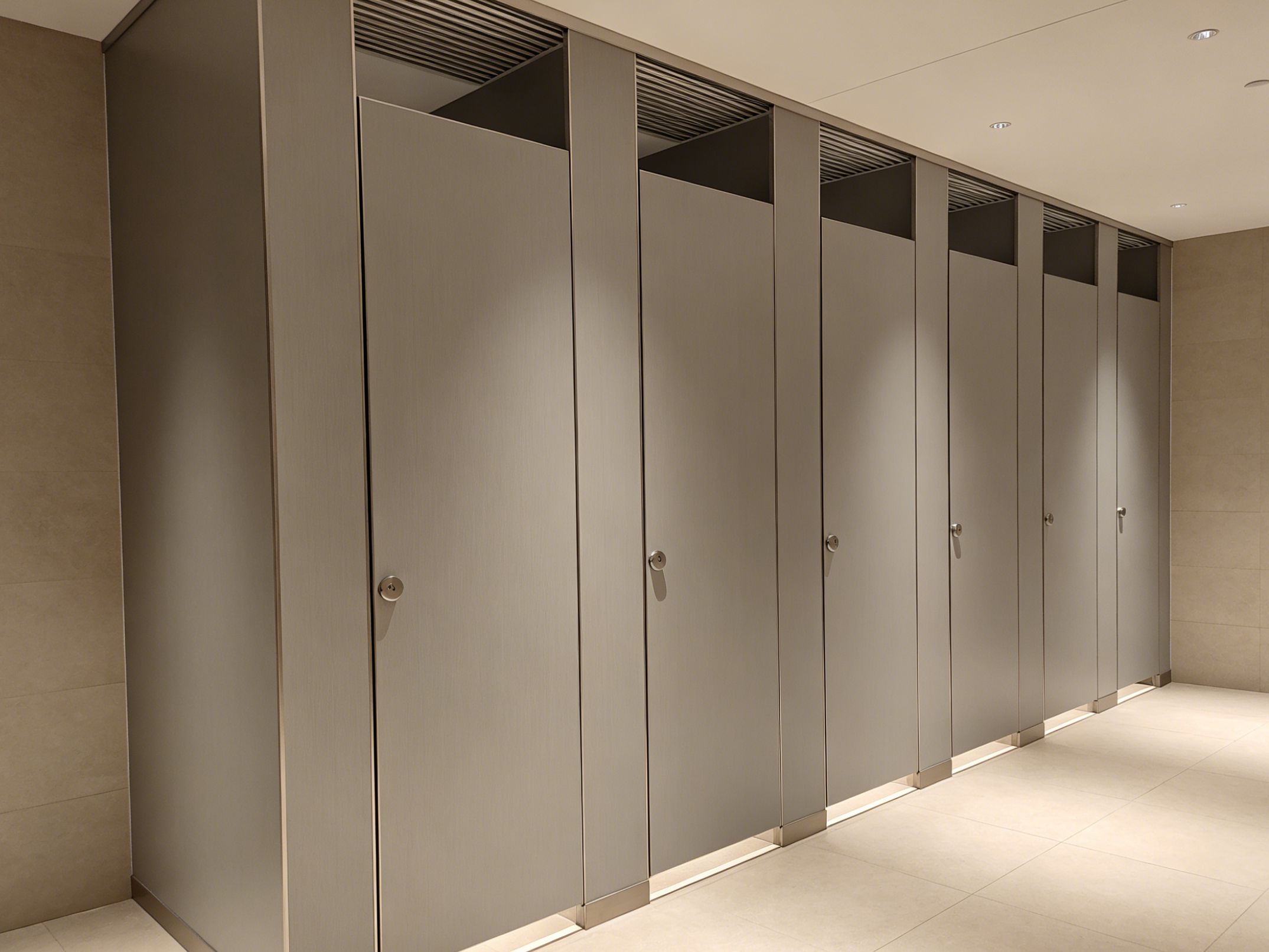
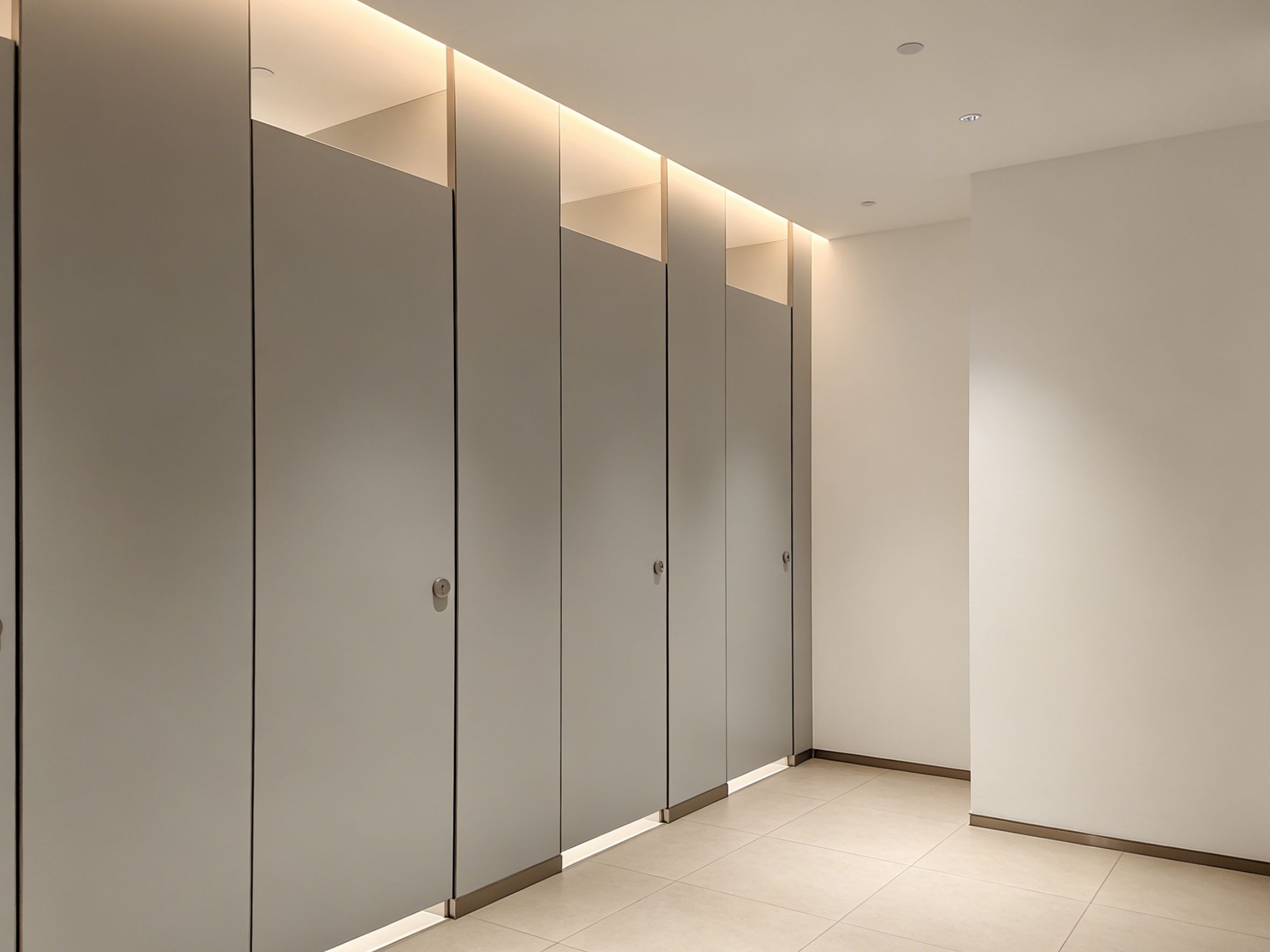
HPL Toilet Partitions vs Phenolic: Which Is Better for Malaysia Projects?
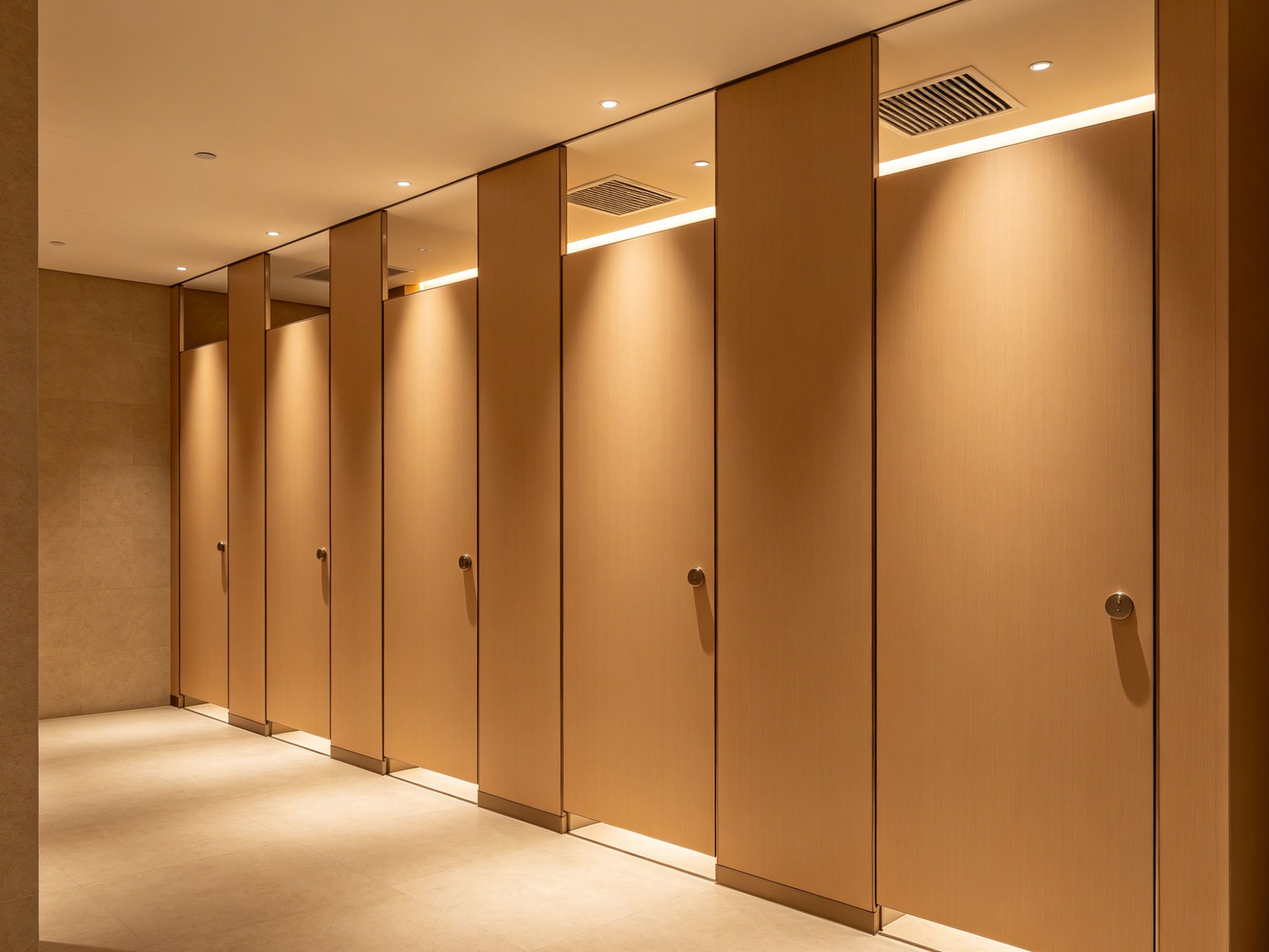
HPL Toilet Partitions vs Phenolic for Malaysia Projects
When planning commercial restroom projects in Malaysia, comparing HPL toilet partitions vs phenolic can help contractors, architects, and project developers select a suitable material system.
Both options are commonly considered for commercial restroom environments, but their material characteristics, construction methods, appearance, customization possibilities, and project requirements can differ.
The best choice depends on the building environment, expected traffic, design requirements, installation conditions, maintenance expectations, and project budget.
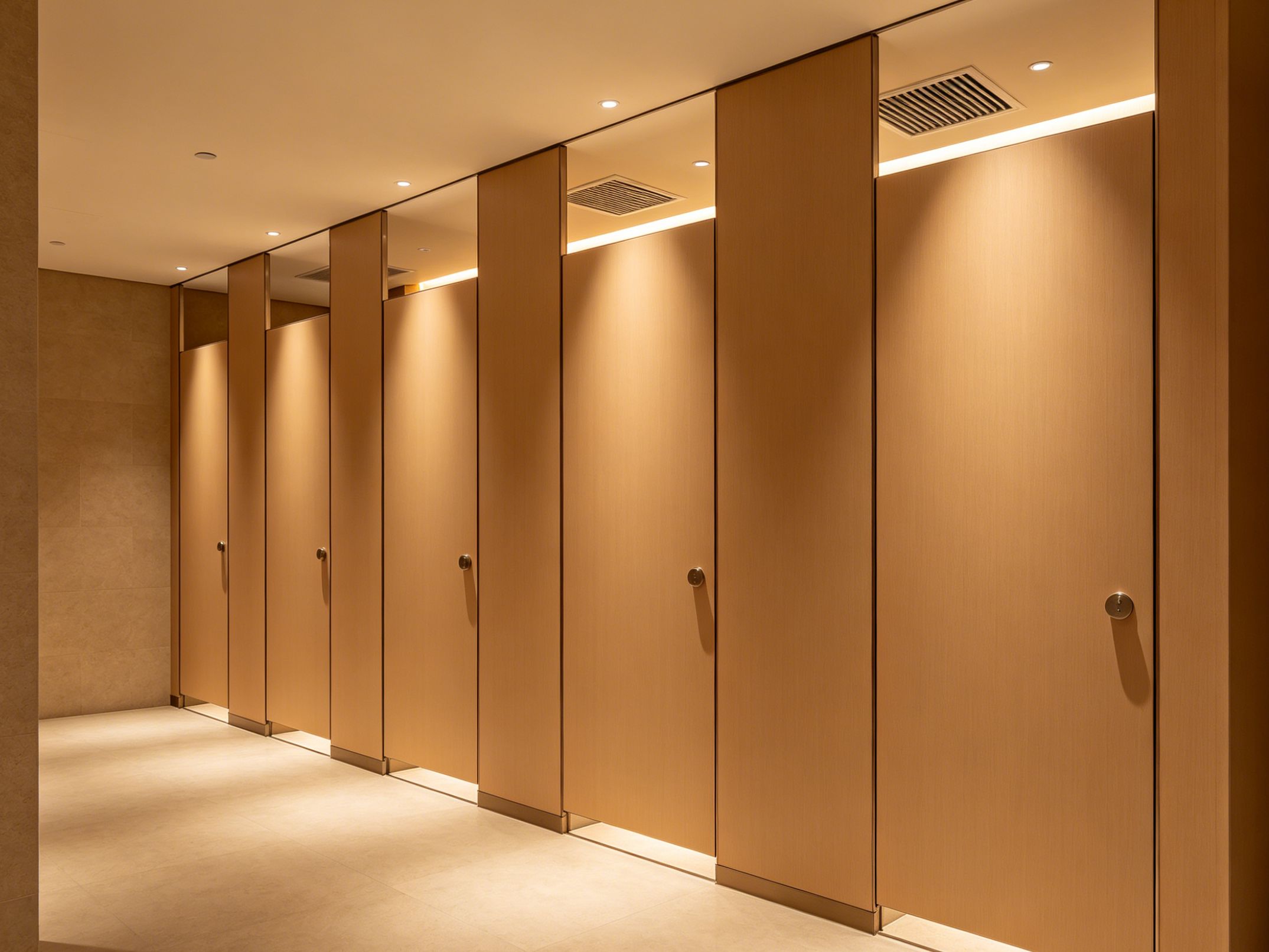
Why Compare HPL Toilet Partitions vs Phenolic?
Material selection should be based on actual project requirements rather than appearance alone.
Commercial restrooms may experience:
- Frequent daily use
- High humidity
- Water exposure
- Repeated cleaning
- Physical impact
- Continuous door operation
- Different maintenance schedules
Understanding the differences between partition materials helps buyers create more appropriate specifications before requesting quotations.
HPL Toilet Partitions vs Phenolic: Material Construction
HPL toilet partitions use a high-pressure laminate surface system combined with an appropriate structural core.
Phenolic partitions are typically manufactured using resin-impregnated kraft paper compressed under high pressure and temperature.
The internal construction of each system affects its structural properties, weight, machining requirements, and environmental performance.
For B2B buyers, the complete panel construction should be reviewed rather than judging products only by their surface appearance.
1. Moisture and Humidity Considerations
Moisture performance is particularly important for Malaysia restroom projects.
Restrooms can experience water splashing, wet floors, humidity, cleaning water, and plumbing leaks.
When comparing HPL toilet partitions vs phenolic, buyers should evaluate the specific panel construction and the level of moisture exposure expected in the project.
The surrounding environment also matters.
Good drainage, ventilation, correct installation, and appropriate cleaning practices can help protect the partition system regardless of material choice.
2. Durability and Impact Resistance
Commercial restroom partitions must withstand repeated daily use.
Doors are opened and closed many times, while panels can experience accidental impact, pushing, and general wear.
When evaluating durability, consider:
- Panel rigidity
- Surface resistance
- Edge strength
- Hardware quality
- Fixing method
- Door size
- Expected traffic
A durable partition system should be selected according to the actual operating conditions of the building.
3. Surface Appearance
Architectural appearance can be important in commercial projects.
HPL systems provide a wide range of decorative surface possibilities, which can be useful when architects want to coordinate restroom partitions with interior finishes.
Potential design directions include:
- Solid colors
- Neutral tones
- Wood-grain effects
- Decorative patterns
- Brand-related colors
Phenolic products may also offer different finishes depending on the manufacturer.
The final selection should consider the overall interior design rather than comparing material names alone.
4. Customization Options
Customization is frequently required in commercial construction.
Projects may require:
- Custom panel dimensions
- Special cubicle sizes
- Different door configurations
- Specific colors
- Customized finishes
- Special hardware
- Accessible restroom layouts
Before selecting a material, buyers should confirm the manufacturer's actual customization capability.
This is especially important when the project contains irregular dimensions or detailed architectural requirements.
HPL Toilet Partitions vs Phenolic: Installation Considerations
Installation requirements depend on the selected panel system, hardware, fixing method, and site conditions.
Contractors should consider:
- Panel weight
- Cutting requirements
- Drilling requirements
- Hardware installation
- Wall fixing
- Floor fixing
- Door adjustment
- Site access
Factory-processed components can help reduce unnecessary site fabrication.
A clear CAD drawing and installation plan can also improve project efficiency.
Maintenance Considerations
Both the partition material and the complete restroom environment influence maintenance requirements.
Facility teams should monitor:
- Surface condition
- Panel edges
- Hinges
- Locks
- Handles
- Brackets
- Support feet
- Door alignment
- Moisture exposure
Regular maintenance can identify small problems before they become expensive repairs.
The cleaning procedure should follow the manufacturer's recommendations for the selected material.
Which Material Is Better for High-Traffic Restrooms?
There is no universal answer because high traffic can mean different things in different facilities.
For schools, airports, shopping malls, factories, and other busy facilities, buyers should prioritize:
- Structural durability
- Moisture suitability
- Hardware performance
- Easy maintenance
- Correct installation
- Replacement availability
Instead of selecting a material based only on its name, evaluate the complete partition system against the actual site requirements.
HPL Toilet Partitions vs Phenolic: Cost Considerations
Initial purchase price is only one part of the project budget.
Buyers should consider:
- Panel price
- Hardware
- Customization
- Factory processing
- Packaging
- Shipping
- Installation
- Maintenance
- Replacement
A lower initial price does not automatically mean a lower lifecycle cost.
For B2B projects, the better approach is to compare equivalent specifications and evaluate the complete project cost.
How Architects Should Specify the Material
Architects should define the partition requirements clearly in project documents.
The specification can include:
- Material type
- Panel construction
- Thickness
- Dimensions
- Surface finish
- Color
- Hardware
- Fixing method
- Installation requirements
For projects where material selection is still open, architects can request samples from suppliers and compare the physical products before final approval.
How Contractors Should Compare Quotations
When comparing HPL toilet partitions vs phenolic, contractors should make sure suppliers are quoting equivalent specifications.
Compare:
Panel
- Material
- Thickness
- Dimensions
- Finish
- Edge treatment
Hardware
- Hinges
- Locks
- Handles
- Brackets
- Support feet
Engineering
- CAD review
- Shop drawings
- Customization
- Installation documentation
Logistics
- Packaging
- Delivery
- Shipping
- Lead time
This prevents misleading price comparisons.
Which Is Better for Malaysia Commercial Projects?
The appropriate material depends on the specific project.
For commercial offices, schools, shopping malls, hospitals, hotels, factories, and public facilities, buyers should evaluate the complete combination of:
- Environmental conditions
- Traffic level
- Design requirements
- Material specifications
- Hardware
- Installation
- Maintenance
- Budget
There is no need to select a product simply because it is marketed as the "best" material.
A properly specified partition system that matches the project conditions is usually the more practical choice.
Common Material Selection Mistakes
Comparing Only Surface Appearance
The internal construction and complete system also matter.
Comparing Different Specifications
A thicker or differently constructed panel should not be compared directly with a lower specification.
Ignoring Hardware
Hardware contributes significantly to restroom system performance.
Ignoring Installation
Material selection should consider how the system will actually be installed.
Focusing Only on Initial Price
Long-term maintenance and replacement can also affect project economics.
People Also Ask (FAQ)
Q1: Which is better, HPL toilet partitions or phenolic?
Neither material is universally better. The right choice depends on moisture exposure, traffic, durability requirements, appearance, customization, installation conditions, maintenance, and project budget.
Q2: Are HPL toilet partitions suitable for humid Malaysia projects?
Suitable HPL partition systems can be used in commercial restroom environments, but the complete panel construction, installation method, drainage, ventilation, and moisture exposure should all be considered.
Q3: Are phenolic partitions more durable than HPL?
Durability depends on the specific product construction and specification. Buyers should compare equivalent panel thickness, structure, hardware, fixing systems, and application requirements.
Q4: Which partition material is easier to customize?
Customization depends on the manufacturer's production capability. Buyers should confirm available dimensions, colors, finishes, door configurations, and hardware before ordering.
Q5: Should contractors compare HPL and phenolic based only on price?
No. Contractors should compare equivalent specifications and consider material, hardware, customization, installation, shipping, maintenance, and expected service requirements.
Project Planning & Engineering Support
Material selection should be confirmed before production begins. If you're comparing HPL toilet partitions and alternative partition systems for commercial offices, public schools, shopping malls, hospitals, hotels, factories, airports, or other projects in Malaysia, our engineers can review your CAD drawings and BOQ and help evaluate suitable panel specifications, finishes, hardware, and installation requirements.
- CAD & Specification Review: mrsalufcs@gmail.com (Submit your drawings or BOQ for engineering verification.)
- Technical Consultation: +86 15207652902 (Consult our team on material selection, panel specifications, hardware, customization, installation, and project coordination.)
HPL Toilet Partitions vs Metal: A Practical Guide for Malaysia
HPL Toilet Partitions Specifications: Thickness, Size and Material Guide