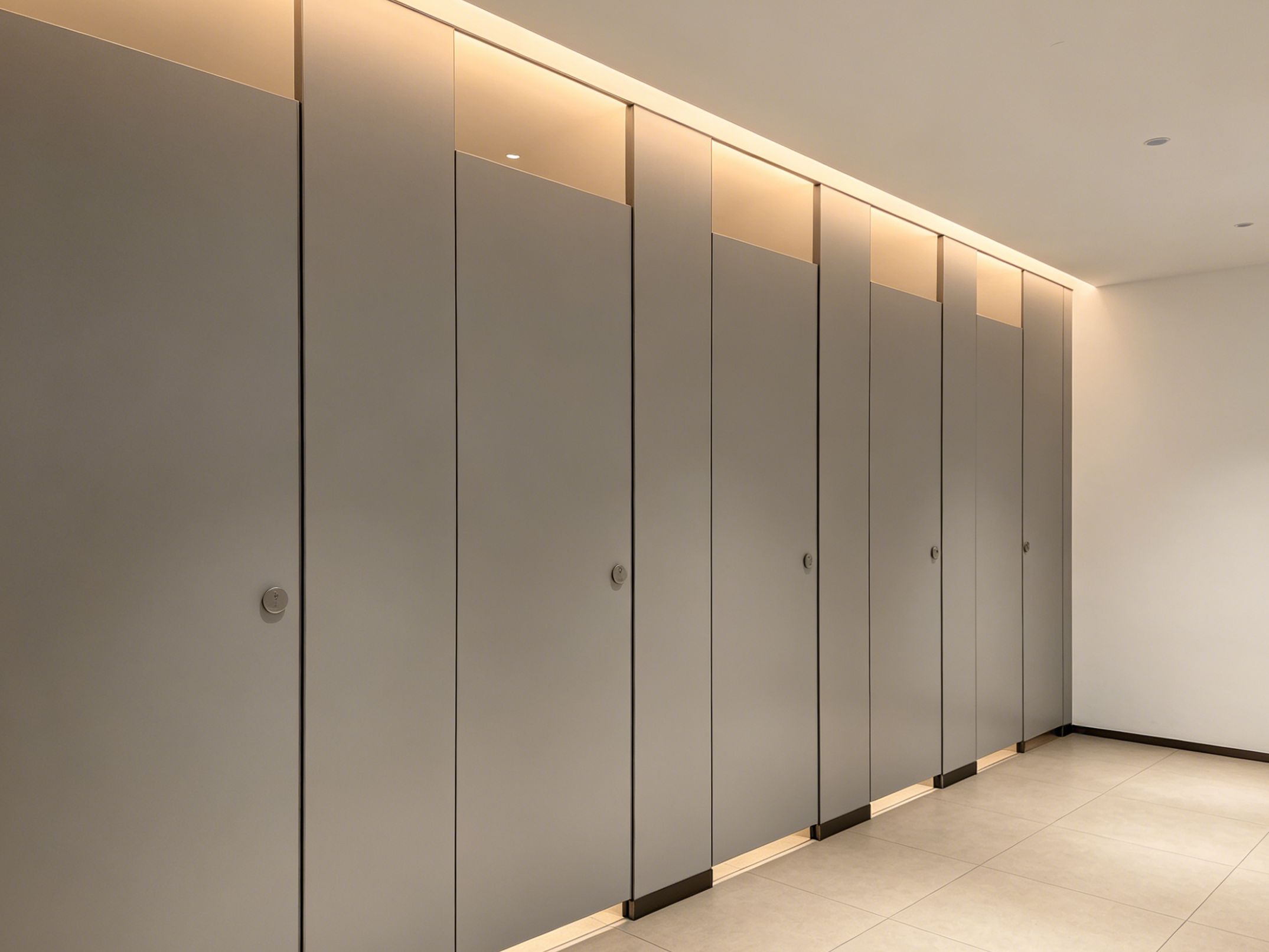
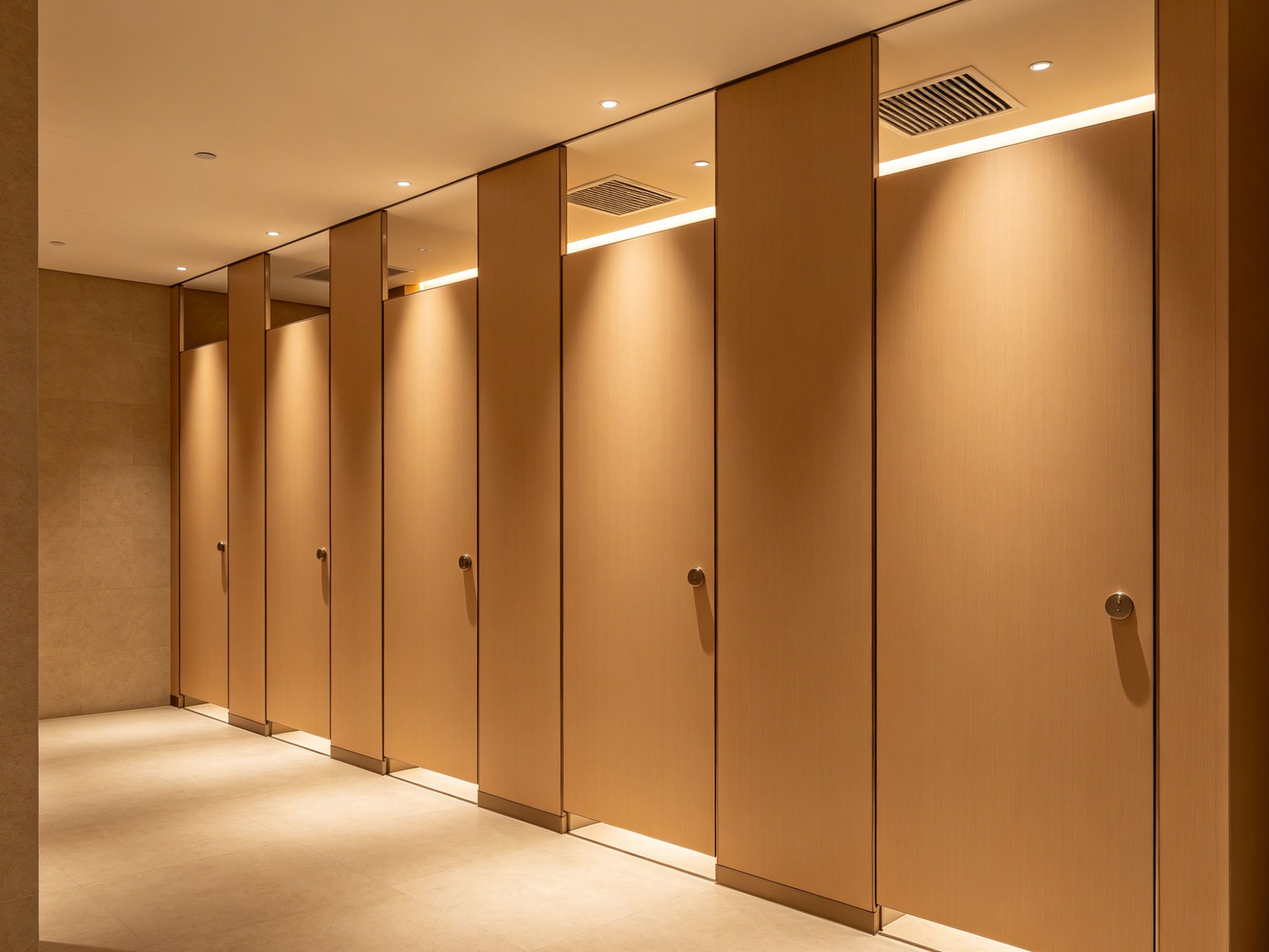
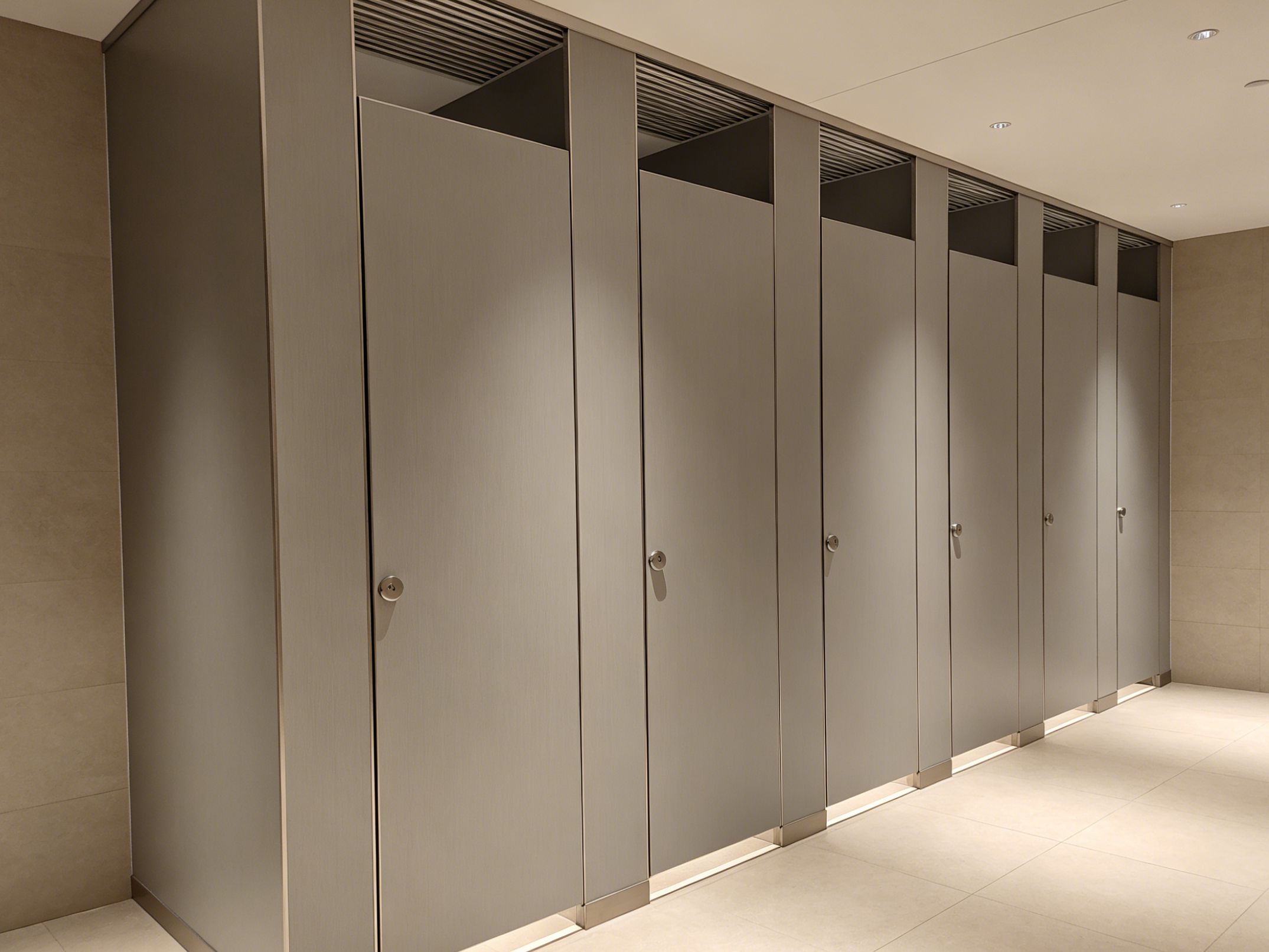
HPL Toilet Partition Hardware Accessories Guide for Malaysia Projects
HPL Toilet Partition Hardware Accessories for Malaysia Projects
Selecting suitable HPL toilet partitions hardware is an important part of restroom planning in Malaysia. Hinges, locks, brackets, support feet, handles, and fixing components directly affect door operation, panel stability, installation efficiency, and long-term maintenance.
For contractors, architects, and project developers, hardware should be coordinated with the panel structure and restroom layout before production begins. Using incompatible components can lead to alignment problems, loose connections, difficult door operation, and additional installation work.
This guide explains the main hardware accessories used with HPL toilet partitions and how B2B buyers can coordinate them correctly for commercial office buildings and public schools.
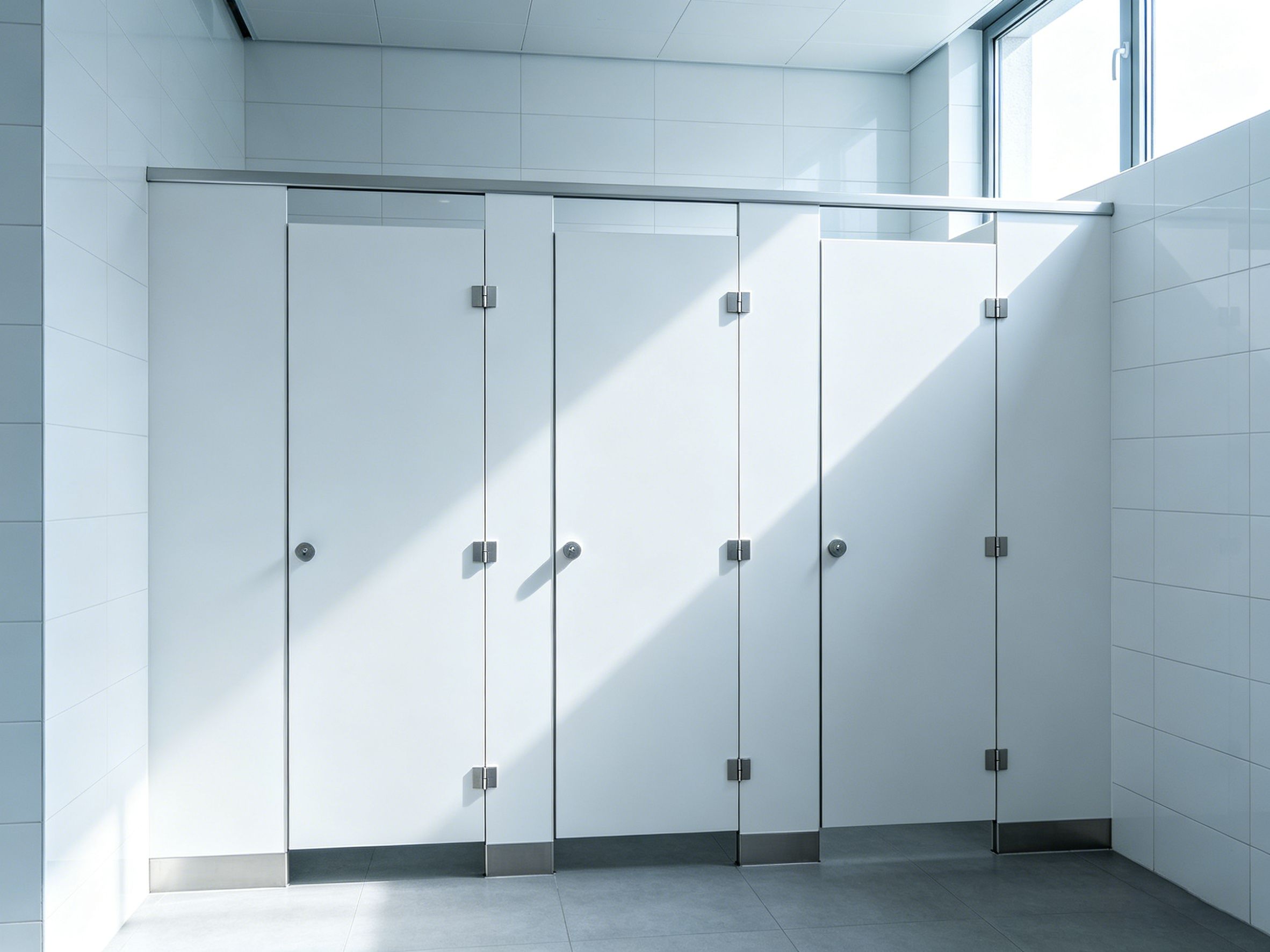
Why Hardware Matters in HPL Toilet Partition Systems
HPL toilet partitions are not simply individual panels. The finished restroom system depends on the interaction between panels, doors, hardware, walls, floors, and supporting structures.
A high-quality panel can still perform poorly if the hinges are incorrectly selected or the fixing points are not suitable. Hardware quality also affects how frequently doors require adjustment and how well the partition system maintains alignment over time.
For this reason, hardware should be treated as part of the complete partition specification rather than as an accessory selected after the panels have been ordered.
1. Toilet Partition Hinges
Hinges connect the restroom door to the partition and support repeated opening and closing. Their load capacity, fixing method, finish, and compatibility with the panel thickness should be confirmed before production.
For high-traffic environments such as public schools and busy commercial facilities, hinges should be selected according to the expected frequency of use and door configuration.
Installers should also verify hinge positioning carefully. Incorrect positioning can cause uneven door gaps, poor closing performance, or door sagging.
2. Toilet Partition Locks and Indicator Bolts
Locks provide privacy and are among the most frequently operated hardware components in a restroom.
Common configurations may include occupied indicators, emergency release functions, handles, and privacy bolts depending on the project requirements. The lock should be compatible with the door thickness and selected hardware configuration.
For commercial projects, consistent lock positioning across all cubicles helps create a cleaner finished appearance and simplifies maintenance.
3. Support Feet and Adjustable Legs
Support feet transfer part of the partition load to the floor and help maintain panel stability. They are particularly important for floor-mounted partition systems.
The selected feet should be suitable for the panel structure and actual floor conditions. Adjustable components can also help installers compensate for minor floor-level differences during installation.
In humid restroom environments, buyers should consider the material and surface treatment of the support components as well as their structural function.
4. Partition Brackets
Brackets connect partition panels to walls or other supporting elements. Different layouts may require different bracket configurations depending on whether the panel is positioned against a wall, connected to another panel, or installed at a corner.
Bracket selection should therefore follow the final restroom layout rather than being standardized without considering the installation condition.
Correct bracket positioning can improve panel alignment and reduce movement during daily use.
5. Handles and Door Accessories
Handles should be coordinated with the selected lock and door configuration. Their size, fixing position, finish, and operating method should be confirmed before fabrication.
For commercial office projects, designers may want the handle finish to coordinate with other restroom hardware. Public school projects may place greater emphasis on durability and easy operation.
Consistent hardware across the project can also simplify procurement and future replacement.
6. Fasteners and Fixing Components
Fasteners are often overlooked during product selection, but they are critical to the stability of the finished partition system.
The appropriate fixing components depend on the substrate. Concrete floors, masonry walls, metal structures, and other substrates may require different fixing methods.
Contractors should confirm the actual site conditions before installation rather than assuming that one type of anchor or fastener will work for every project.
HPL Toilet Partition Hardware and Panel Thickness
Hardware selection should be coordinated with the panel specification. Panel thickness can influence hinge fixing, lock installation, bracket connections, and other hardware requirements.
This is why contractors should not finalize hardware separately from the HPL toilet partitions thickness specification.
When the panel thickness or construction changes after hardware has already been ordered, additional modifications may be required. Confirming both specifications during the drawing review stage can reduce this risk.
HPL Toilet Partition Hardware and Door Dimensions
Door size also affects hardware requirements. Larger or heavier doors may place additional loads on hinges and fixing points.
Before production, project teams should confirm:
- Door width
- Door height
- Panel thickness
- Opening direction
- Hinge configuration
- Lock position
- Handle position
- Door clearance
Coordinating these elements together helps installers avoid unnecessary adjustments on-site.
Hardware Selection for Malaysia's Humid Environment
Restroom hardware in Malaysia may be exposed to moisture, water splashes, cleaning chemicals, and high humidity. Hardware material and surface treatment should therefore be considered alongside panel performance.
Contractors should evaluate corrosion resistance, finish durability, fixing quality, and cleaning requirements when selecting hardware.
Hardware that deteriorates prematurely can affect both appearance and door operation even when the partition panels remain in good condition.
Hardware Requirements for Commercial Office Buildings
Commercial office restrooms often require a balance between durability and visual consistency. Hardware finishes can be selected to coordinate with other interior elements.
Project teams should focus on smooth door operation, reliable privacy locks, consistent installation, and easy maintenance.
For customized office projects, hardware specifications can be coordinated with the architectural drawings before production.
Hardware Requirements for Public Schools
Public school restrooms can experience intensive daily use, making hardware durability particularly important.
Contractors should prioritize robust hinges, reliable locks, stable brackets, and suitable support feet. Hardware should also be easy to inspect and maintain after handover.
Consistent hardware specifications across multiple school restroom areas can simplify future replacement and maintenance.
How to Plan HPL Toilet Partition Hardware Before Ordering
A complete hardware schedule should be prepared before production. The schedule can include the quantity and specification of each major component.
A typical project review should cover:
- Panel thickness
- Door dimensions
- Hinges
- Locks
- Handles
- Indicator bolts
- Brackets
- Support feet
- Wall fixing components
- Floor fixing components
- Surface finish
- Quantity per cubicle
- Spare hardware requirements
Providing the manufacturer with CAD drawings and a BOQ can help coordinate these requirements before fabrication.
Common Hardware Selection Mistakes
Choosing Hardware Without Checking Panel Thickness
Different panel constructions may require different fixing solutions. Hardware should be matched to the actual panel specification.
Selecting Hinges Only by Appearance
The visual finish is important, but load capacity and compatibility are equally important.
Ignoring Floor Conditions
Support feet and floor fixings must be appropriate for the actual substrate and floor level.
Using Different Hardware Configurations Across One Project
Inconsistent hardware can make installation and future maintenance more complicated.
Waiting Until Installation to Resolve Hardware Conflicts
Hardware positions should be coordinated during the drawing stage rather than discovered after panels arrive on-site.
How Hardware Coordination Can Reduce Installation Labor
Proper hardware planning can help contractors reduce unnecessary drilling, repositioning, and adjustment during installation.
When panel dimensions, door positions, hinges, locks, brackets, and fixing points are approved together, installers can follow a more predictable installation sequence.
This is particularly valuable for large commercial projects where a small installation problem repeated across dozens of cubicles can significantly increase labor costs.
People Also Ask (FAQ)
Q1: What hardware is needed for HPL toilet partitions?
Typical hardware includes hinges, locks, handles, indicator bolts, brackets, support feet, and wall and floor fixing components. The exact configuration depends on the partition system and project layout.
Q2: Does HPL toilet partition hardware need to match the panel thickness?
Yes. Hardware should be compatible with the panel structure and thickness to ensure secure fixing and reliable operation.
Q3: What hardware is suitable for humid Malaysia restroom environments?
Hardware with suitable corrosion resistance and durable surface treatment should be considered. The final specification should reflect the expected humidity, water exposure, and cleaning conditions.
Q4: Should hardware be selected before HPL toilet partitions are produced?
Ideally, yes. Coordinating hardware with panel dimensions and CAD drawings before production can reduce compatibility issues and installation modifications.
Q5: Can manufacturers provide complete HPL toilet partition hardware?
Many project suppliers can provide coordinated hardware packages together with partition panels. Buyers should confirm the exact hardware specification, material, finish, and quantity before ordering.
Project Planning & Engineering Support
Successful restroom partition projects begin with accurate planning. If you're developing specifications for commercial office buildings or public schools in Malaysia, our engineers can help review your layouts and recommend suitable HPL toilet partition solutions before production begins.
- CAD & Specification Review: mrsalufcs@gmail.com (Submit your drawings or BOQ for engineering verification.)
- Technical Consultation: +86 15207652902 (Consult our team on partition layouts, hardware selection, and project coordination.)
HPL Toilet Partitions CAD Drawing and Specification Guide for Malaysia Projects
HPL Toilet Partition Installation Guide for Malaysia Contractors