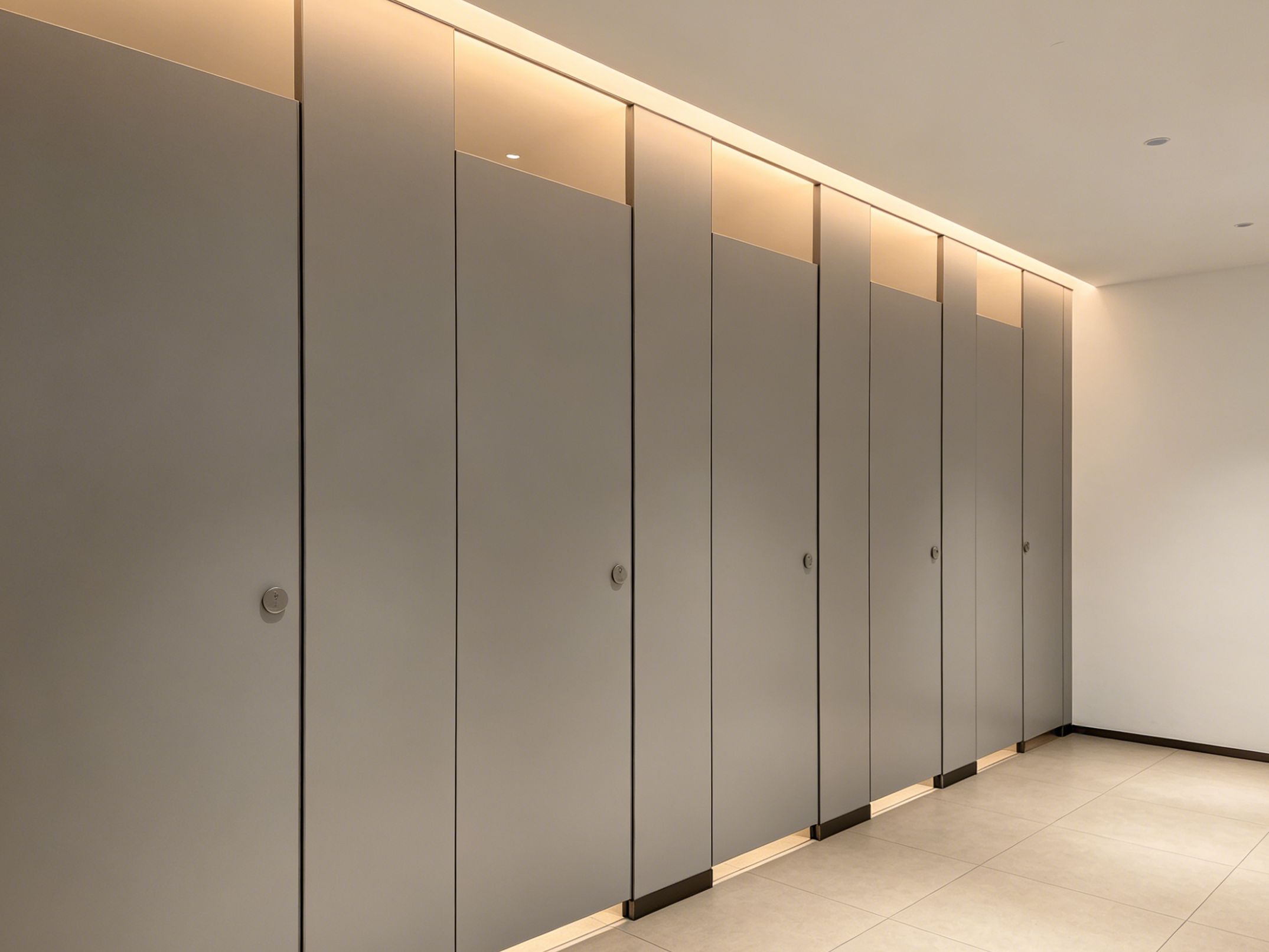
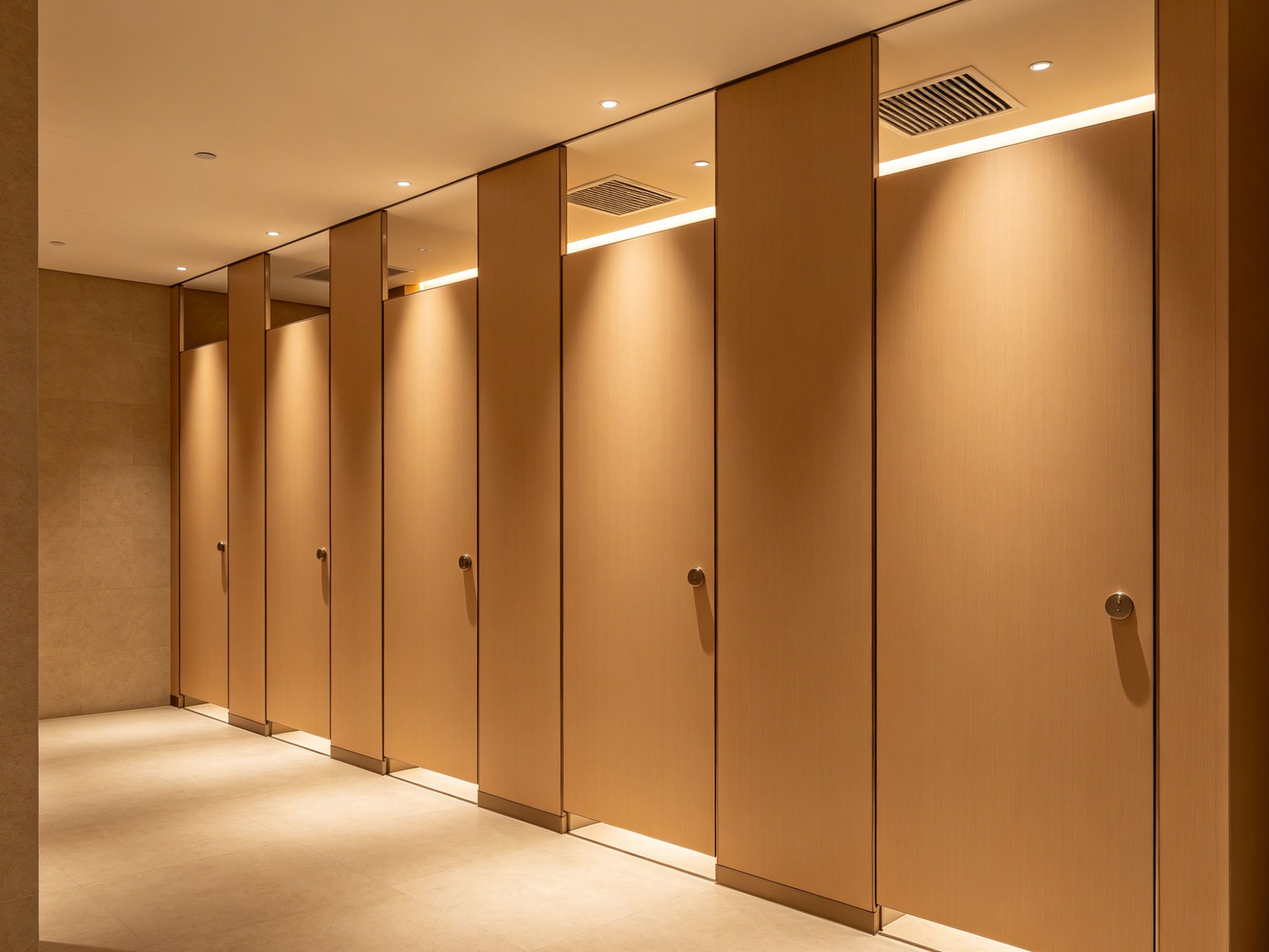
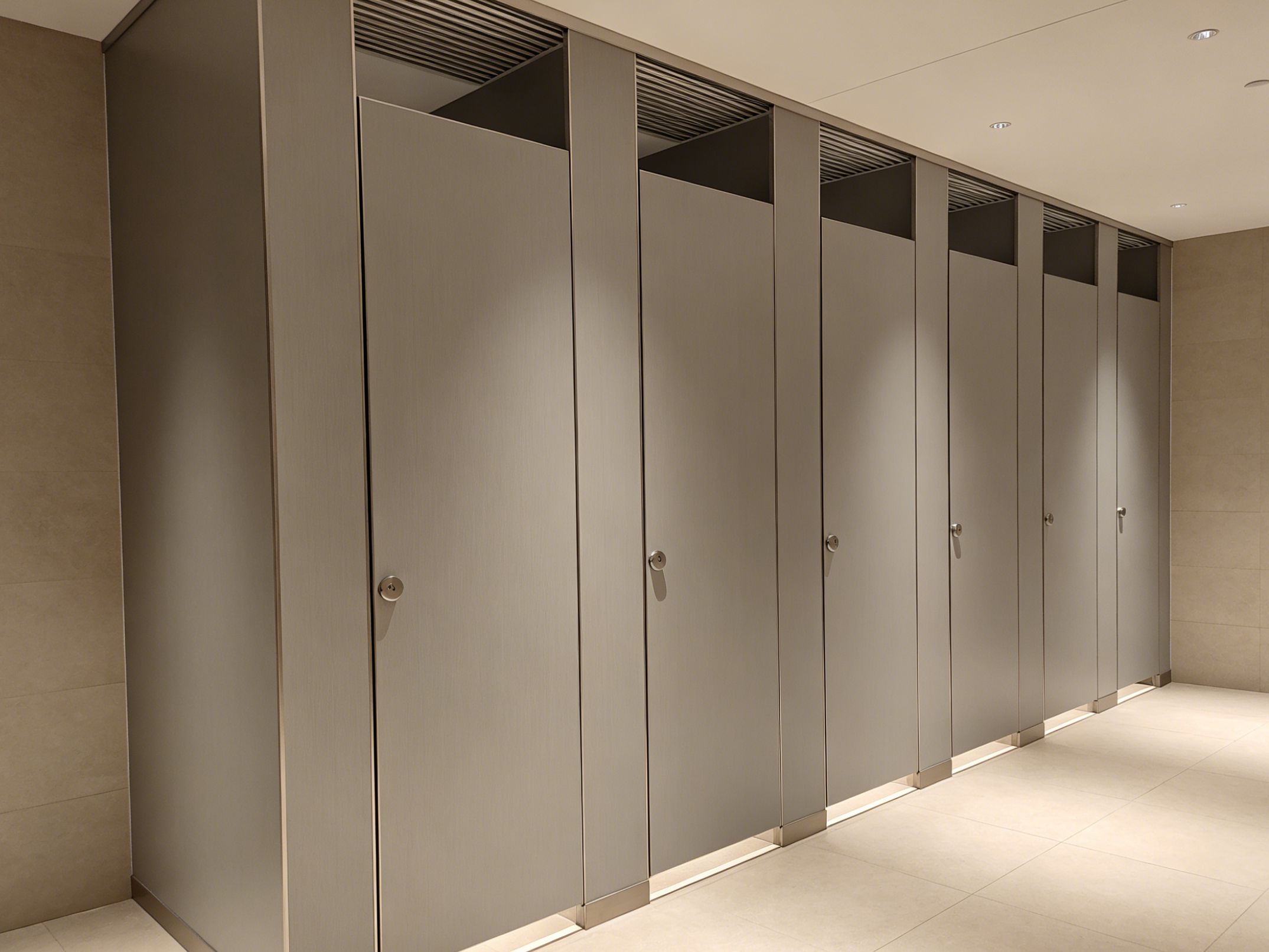
HPL Toilet Partitions Maintenance and Cleaning Guide for Malaysia Projects
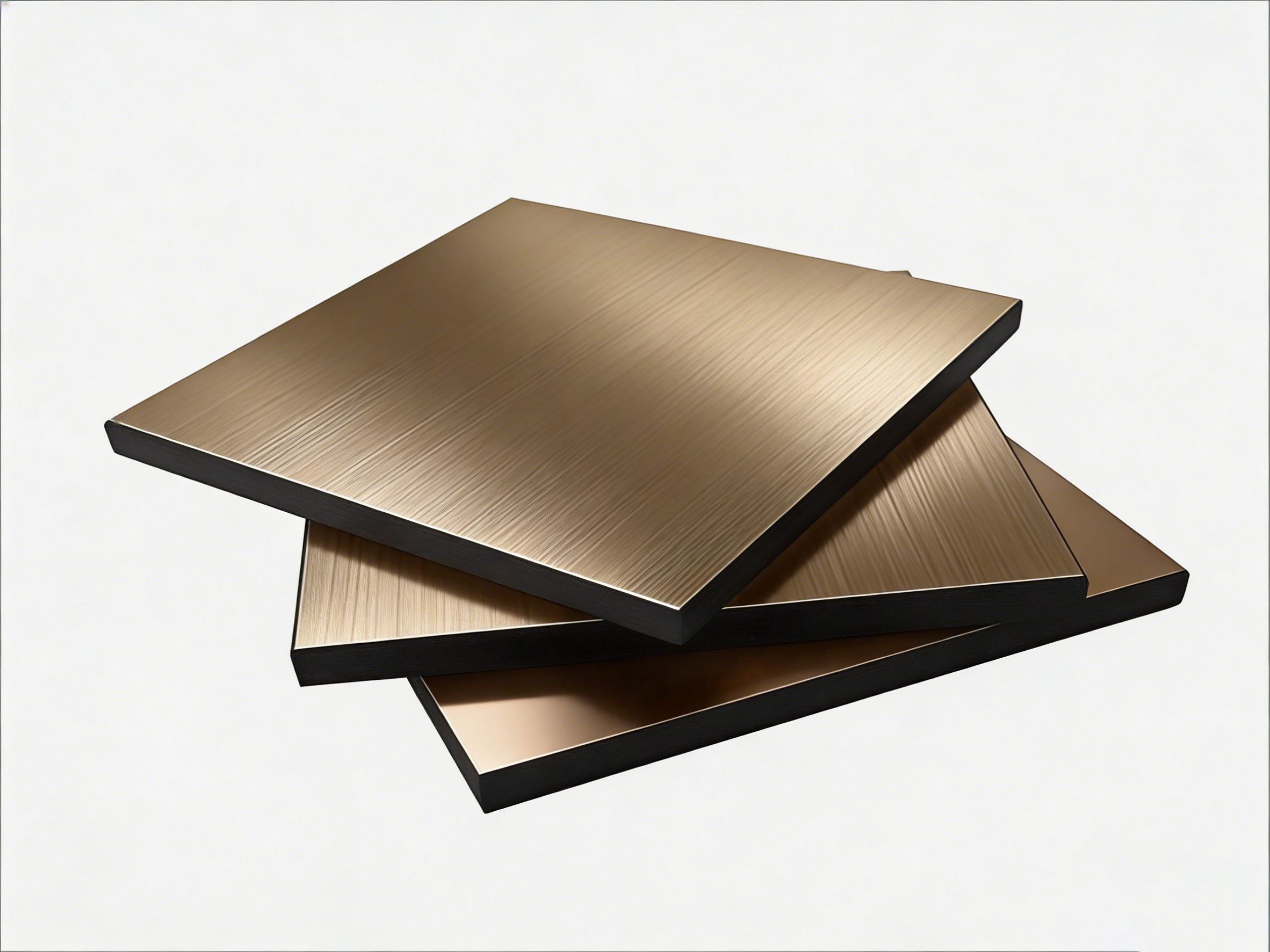
HPL Toilet Partitions Maintenance and Cleaning Guide for Malaysia Projects
Proper maintenance helps extend the service life and appearance of HPL toilet partitions in commercial restroom environments. For commercial office buildings and public schools in Malaysia, partitions are exposed to frequent cleaning, humidity, water splashes, repeated door operation, and daily physical contact.
Even a durable partition system can develop avoidable problems when cleaning methods, moisture control, or hardware inspection are neglected. A simple maintenance plan can help reduce premature repairs, maintain appearance, and minimize disruption to building operations.
This guide explains how contractors, facility managers, and project developers can establish a practical maintenance routine for HPL toilet partitions.
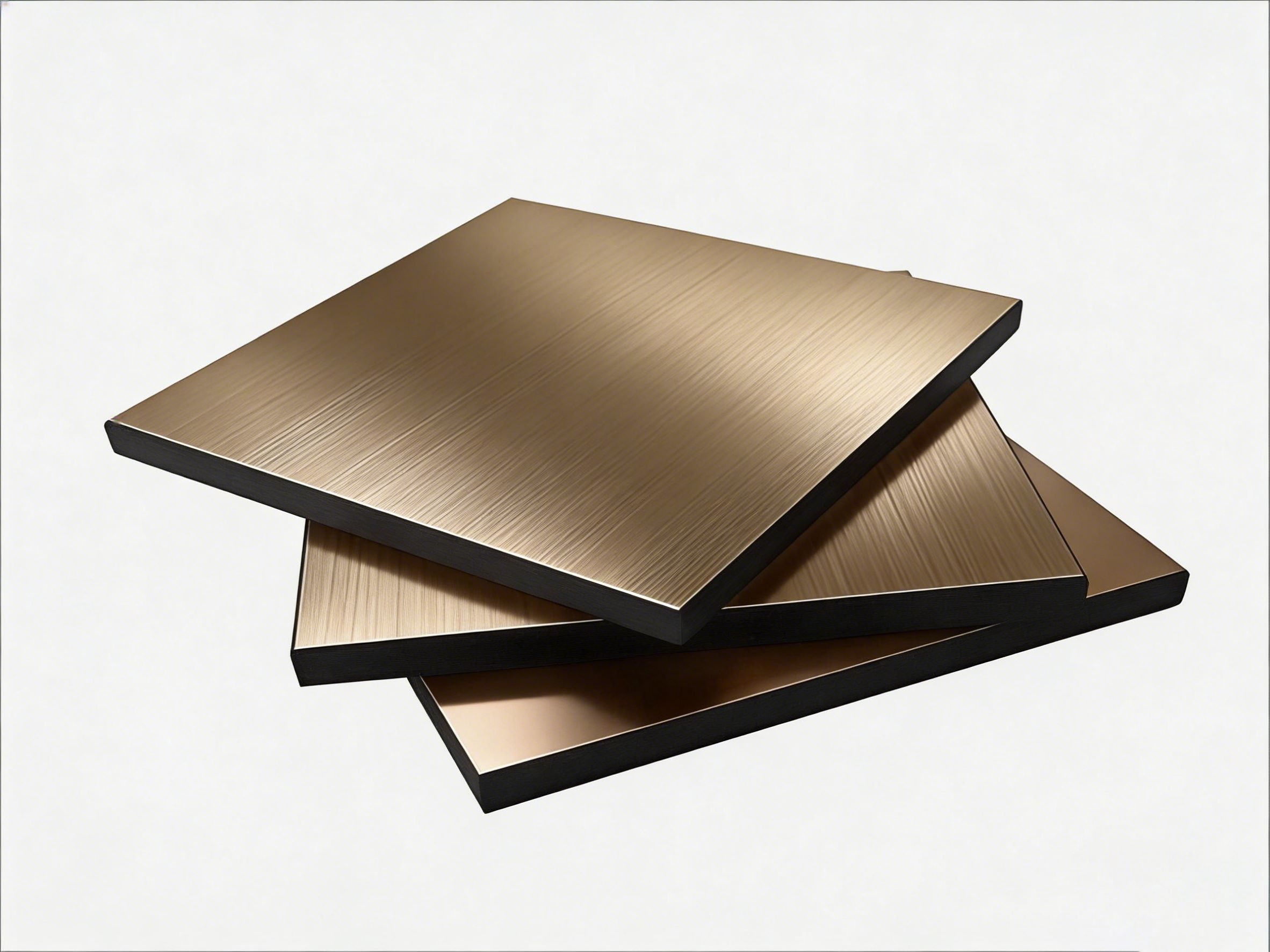
Why HPL Toilet Partitions Need Regular Maintenance
Restroom partitions are continuously exposed to demanding operating conditions. Cleaning staff may use them several times a day, while doors and locks can be operated hundreds of times over an extended period.
Maintenance therefore needs to cover more than the visible panel surface. Hinges, locks, brackets, support feet, fixing points, edges, and surrounding floor conditions should also be inspected.
Regular inspection allows small issues to be addressed before they become expensive repair or replacement problems.
1. Use the Correct Cleaning Method
Routine cleaning should begin with a suitable soft cloth or sponge and an appropriate mild cleaning solution.
The surface should be cleaned according to the manufacturer's recommendations. Excessively abrasive materials should be avoided because repeated aggressive cleaning may affect the decorative surface.
After cleaning, excessive water should not be left standing on the panel or around vulnerable edges and hardware.
A consistent cleaning procedure is especially important in public schools and high-traffic commercial buildings.
2. Control Moisture Exposure
Malaysia's humid climate makes moisture management particularly important for restroom materials.
Although suitable HPL toilet partitions can be designed for demanding restroom environments, long-term water exposure should still be avoided where possible. Standing water around the floor, edges, fixing points, or hardware can create unnecessary stress on the complete system.
Facility teams should therefore check:
- Floor drainage
- Water leakage
- Plumbing connections
- Panel edges
- Hardware areas
- Ventilation
- Areas around support feet
Early detection of leaks can prevent wider restroom damage.
3. Inspect Panel Edges Regularly
The panel surface is usually easy to inspect, but edges deserve equal attention.
Cleaning teams and facility managers should check for visible damage, chips, separation, or unusual changes around exposed edges. Any damage should be recorded and assessed according to the manufacturer's repair recommendations.
Avoid making unauthorized modifications to damaged panels because drilling or cutting in the wrong location may worsen the problem.
4. Check Hinges and Door Operation
Hinges are among the most frequently used components of an HPL toilet partition system.
During routine inspection, check whether doors:
- Open smoothly
- Close correctly
- Remain aligned
- Have consistent gaps
- Make unusual noises
- Show signs of loose hardware
If a door begins to sag or rub against another component, it should be inspected promptly.
Early hinge adjustment can be much easier than replacing damaged hardware or repairing surrounding panels later.
5. Inspect Locks and Indicator Bolts
Privacy locks should be tested regularly, especially in public facilities.
Check that the lock engages correctly, releases smoothly, and remains properly aligned with the strike or receiving component.
Indicator bolts and emergency-release functions should also be inspected where applicable.
A malfunctioning lock can affect user experience and may require immediate attention in high-traffic commercial restrooms.
6. Check Brackets and Support Feet
Brackets and support feet contribute to the stability of the partition system.
Facility teams should inspect them for:
- Loose screws
- Movement
- Damage
- Corrosion
- Unusual vibration
- Floor instability
If a panel moves more than expected during normal use, the fixing system should be checked.
Hardware problems should be corrected according to the manufacturer's recommended procedure rather than simply tightening components without identifying the underlying cause.
7. Protect the Surface From Scratches and Impact
HPL surfaces are designed for commercial use, but unnecessary impact should still be avoided.
Cleaning equipment, carts, maintenance tools, and other objects can damage panel surfaces if they repeatedly strike the partitions.
For public schools, facility managers can also reduce unnecessary damage by incorporating restroom-use guidelines into routine building management.
Preventing damage is generally more cost-effective than repairing or replacing panels after severe impact.
Maintenance for Commercial Office Buildings
Office restrooms generally benefit from a structured cleaning and inspection schedule.
Cleaning staff can perform routine surface cleaning, while maintenance personnel can periodically inspect doors, locks, hinges, brackets, and support feet.
For multi-floor office buildings, using the same inspection checklist across all restroom areas can make it easier to identify recurring problems and coordinate maintenance.
Maintenance for Public Schools
School restrooms can experience higher daily traffic and more physical contact than many office environments.
Maintenance teams should pay particular attention to:
- Door hinges
- Locks
- Panel alignment
- Support feet
- Surface scratches
- Edge condition
- Water leakage
- Floor drainage
Regular inspections can help identify minor damage before it becomes a larger repair requirement.
Recommended Maintenance Schedule
A practical maintenance program can be divided into several levels.
Daily or Routine Cleaning
Clean visible surfaces and remove water or contaminants from the restroom environment.
Weekly Inspection
Check doors, locks, hinges, and visible hardware for unusual movement or damage.
Monthly Inspection
Review panel alignment, brackets, support feet, edges, and fixing points.
Periodic Professional Inspection
For large commercial projects, a more comprehensive inspection can be scheduled to evaluate the complete partition system and identify components approaching replacement.
The actual frequency should be adjusted according to restroom traffic and operating conditions.
Common HPL Toilet Partitions Maintenance Mistakes
Using Abrasive Cleaning Materials
Aggressive scrubbing can unnecessarily damage decorative surfaces.
Allowing Standing Water
Persistent water exposure can place additional stress on panel edges and hardware.
Ignoring Loose Hardware
A loose hinge or bracket can become a larger structural problem if left unresolved.
Using Incorrect Chemicals
Strong chemicals that are not recommended for the surface may cause discoloration or deterioration.
Delaying Repairs
Small hardware or alignment problems are usually easier to resolve before they cause secondary damage.
Modifying Panels Without Approval
Unplanned drilling or cutting can compromise the panel and void applicable product requirements.
How Proper Maintenance Reduces Total Project Cost
Maintenance is not simply an operational expense. It can influence the total lifecycle cost of the restroom system.
Regular inspections can help reduce:
- Emergency repairs
- Hardware replacement
- Panel replacement
- Installation disruption
- Restroom downtime
- Repeated service visits
For commercial property owners, a predictable preventive maintenance program can be more economical than waiting for components to fail.
When Should HPL Toilet Partition Components Be Replaced?
Not every damaged component requires replacement of the entire partition.
A qualified maintenance team should first identify the source of the problem. In some cases, replacing a hinge, lock, bracket, or support component may restore normal operation.
Panel replacement may be necessary when structural damage, severe surface deterioration, or other conditions cannot be safely repaired.
Keeping spare hardware and maintaining product records can make future repairs faster.
People Also Ask (FAQ)
Q1: How often should HPL toilet partitions be cleaned?
Cleaning frequency depends on restroom traffic. Commercial offices and public schools should establish cleaning schedules based on actual usage and building conditions.
Q2: Can normal restroom cleaning products be used on HPL toilet partitions?
Cleaning products should be compatible with the manufacturer's surface recommendations. Abrasive materials and unsuitable aggressive chemicals should be avoided.
Q3: How can I prevent moisture damage to HPL toilet partitions?
Maintain good drainage and ventilation, prevent standing water, repair leaks promptly, and pay particular attention to panel edges, support feet, and hardware.
Q4: What should be checked during HPL toilet partition maintenance?
Inspect surfaces, edges, hinges, locks, brackets, support feet, fixing points, alignment, and signs of moisture or physical damage.
Q5: Do I need to replace the whole partition if the hardware fails?
Not necessarily. Some hardware components can be replaced individually, depending on the partition system and the extent of the damage.
Project Planning & Engineering Support
Successful restroom partition projects begin with accurate planning. If you're developing specifications for commercial office buildings or public schools in Malaysia, our engineers can help review your layouts and recommend suitable HPL toilet partition solutions before production begins.
- CAD & Specification Review: mrsalufcs@gmail.com (Submit your drawings or BOQ for engineering verification.)
- Technical Consultation: +86 15207652902 (Consult our team on partition layouts, hardware selection, and project coordination.)
HPL Toilet Partitions for Schools in Malaysia: Durability, Safety and Maintenance Guide
HPL Toilet Partitions Manufacturer and Supplier Guide for Malaysia