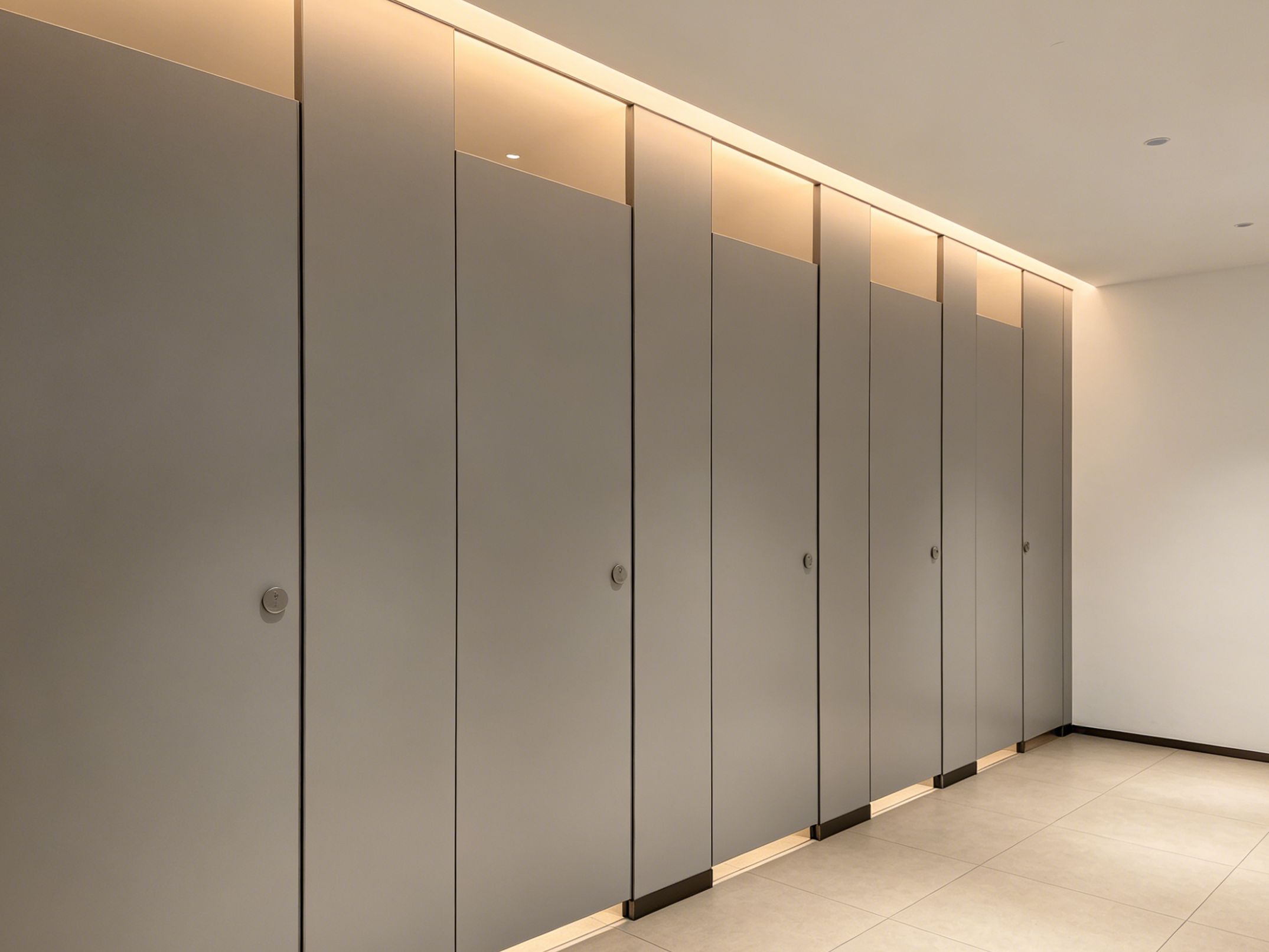
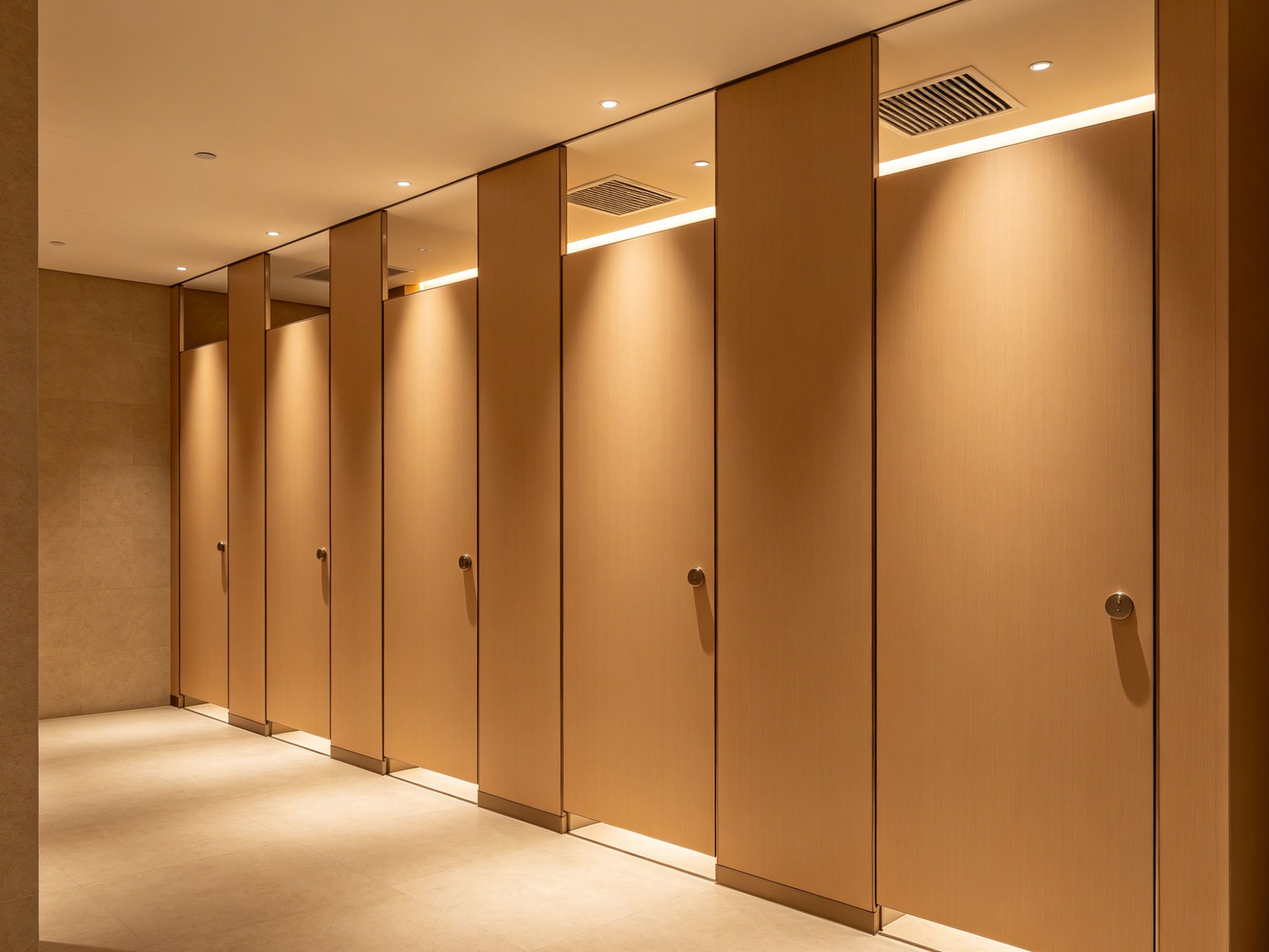
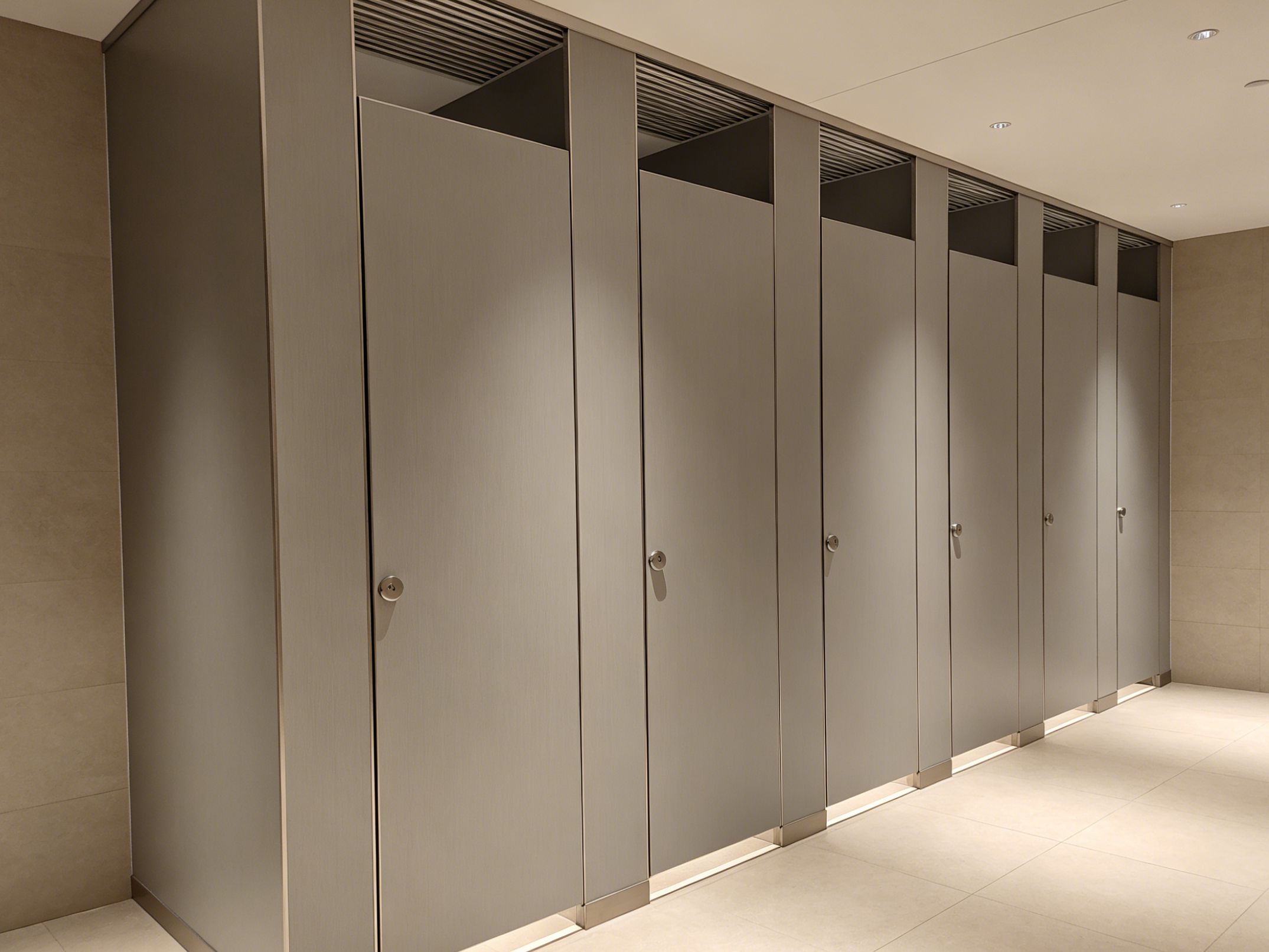
HPL Toilet Partitions Thickness Guide for Malaysia Projects
HPL Toilet Partitions Thickness Guide for Malaysia Projects
Choosing the correct HPL toilet partitions thickness is an important part of restroom specification for commercial projects in Malaysia. Panel thickness affects structural stability, impact resistance, hardware compatibility, appearance, installation, and the overall performance of the partition system.
For contractors, architects, and project developers, selecting a thickness should not be based only on product price. The correct specification depends on restroom traffic, partition dimensions, door configuration, fixing method, and the expected operating environment.
This guide explains the main factors to consider when selecting HPL toilet partitions thickness for commercial office buildings and public schools in Malaysia.
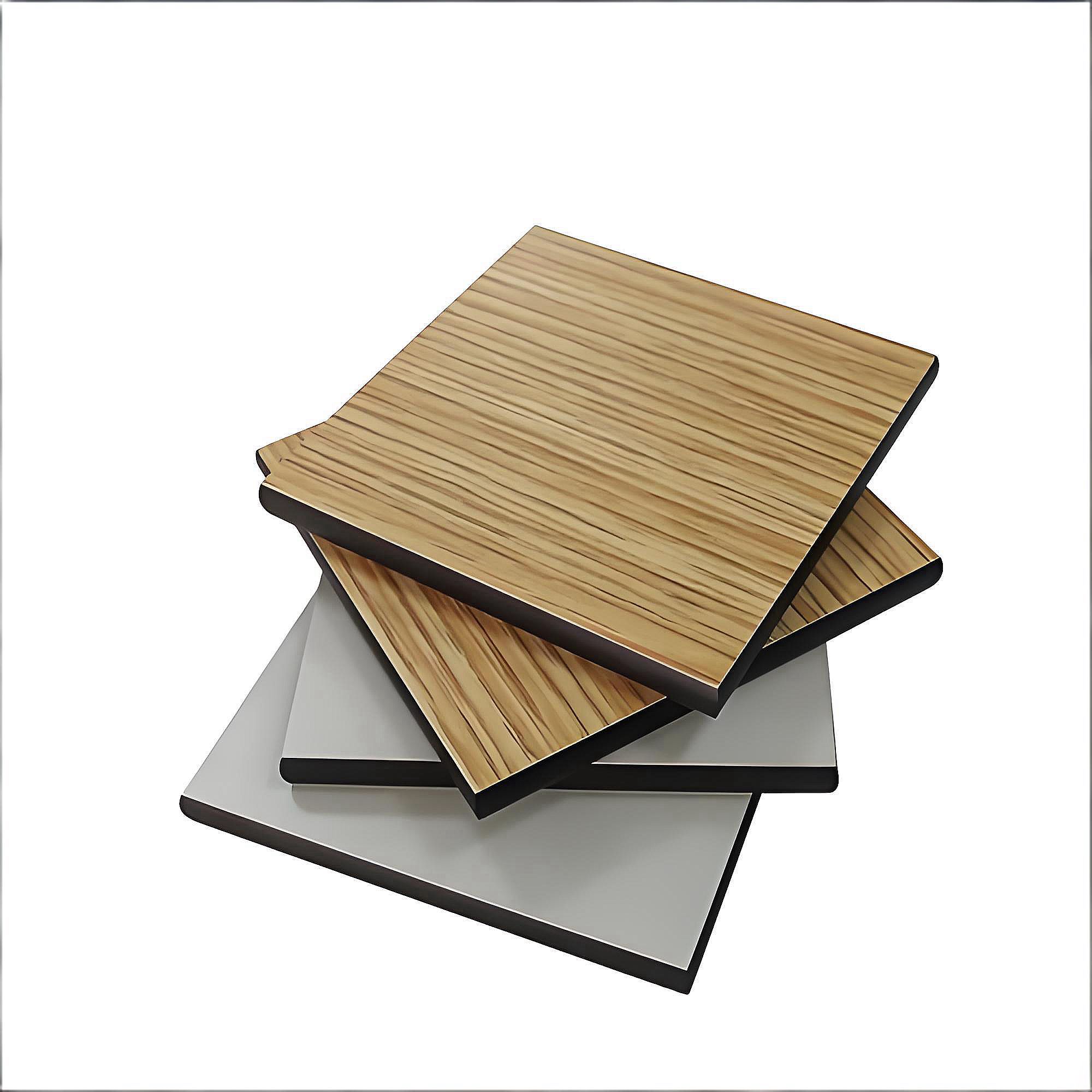
Why HPL Toilet Partitions Thickness Matters
A restroom partition must remain stable while being exposed to repeated door movement, accidental impacts, cleaning, and daily public use. Panel thickness is one of the factors that contributes to this structural performance.
A partition that is too light for its intended application may require additional support or become more vulnerable to movement during intensive use. On the other hand, selecting an unnecessarily heavy specification can increase material consumption, hardware requirements, transportation weight, and project cost.
The goal is therefore to select a thickness that matches the actual project requirements.
1. Consider the Restroom Traffic Level
Expected traffic is one of the first factors contractors should evaluate. A private or low-traffic commercial restroom may experience significantly less physical stress than a public school or busy commercial facility.
Public schools can have concentrated restroom use during breaks and between classes. HPL toilet partitions in these environments should therefore be specified with sufficient structural stability and impact resistance.
Commercial office buildings generally have more predictable usage patterns, but high-occupancy offices can still place significant demands on restroom partitions.
2. Match Panel Thickness With Partition Dimensions
Panel dimensions and thickness should be considered together. Taller or larger partition panels may require a specification that provides sufficient rigidity for the intended configuration.
Door dimensions are also important because repeated opening and closing places additional stress on hinges, fixing points, and supporting components.
Before production, contractors should provide accurate measurements and CAD drawings so the manufacturer can review the complete partition configuration rather than recommending thickness based only on a single dimension.
3. Consider Impact-Resistant Structural Durability
Impact resistance is particularly important in high-traffic restrooms. Partition panels can experience accidental impacts, repeated door movement, contact with cleaning equipment, and general daily wear.
A suitable HPL toilet partition structure should provide sufficient rigidity for the application. Panel thickness works together with the core structure, edge treatment, support configuration, and hardware to determine overall performance.
For public schools and other high-use facilities, project teams should evaluate the complete structural specification instead of selecting a panel based solely on thickness.
4. Check Hardware Compatibility
Panel thickness directly affects the selection and installation of supporting hardware. Hinges, brackets, locks, indicator bolts, and other accessories must be compatible with the specified panel construction.
Using a thicker or thinner panel than originally specified may require changes to hardware or fixing methods. This can create unnecessary delays if the change is discovered after production.
Contractors should therefore confirm panel thickness and hardware specifications together before approving the final production drawings.
For a more detailed component review, see our guide to toilet partition hardware accessories.
5. Consider Door Configuration
The partition door is one of the most frequently operated components in a restroom. Its size, weight, opening direction, hinge configuration, and usage frequency can all influence the required structural specification.
A larger door may place greater load on the hinges and surrounding panel structure. High-traffic facilities may also require hardware designed for repeated operation.
For this reason, panel thickness should be reviewed together with door dimensions and hardware rather than treated as an independent specification.
6. Evaluate Malaysia's Humid Environment
Thickness alone does not determine moisture performance. Contractors should also evaluate the panel core, surface, edges, fixing components, and installation method.
In Malaysia, restroom partitions can be exposed to high humidity, water splashes, frequent cleaning, and poor ventilation. Appropriate material selection and edge protection are therefore important for reducing the risk of moisture-related deterioration.
A properly specified HPL toilet partition system should be selected according to the actual restroom environment rather than thickness alone.
7. Balance Performance With Project Cost
A thicker panel may appear to offer greater strength, but selecting the maximum thickness for every application is not necessarily the most cost-effective approach.
Project teams should consider the complete system cost, including panels, hardware, transportation, installation labor, and supporting components. The objective is to achieve sufficient structural performance without unnecessarily increasing material and installation costs.
For large projects, suppliers can review the project drawings and recommend a specification based on the actual application and layout.
Recommended Thickness Selection Process
Instead of choosing panel thickness based on a standard number alone, contractors should follow a project-based evaluation process.
Step 1: Define the Application
Identify whether the restroom is located in a commercial office, public school, shopping facility, sports center, or another high-traffic environment.
Step 2: Review the Layout
Confirm cubicle width, partition height, door dimensions, wall conditions, floor conditions, and support locations.
Step 3: Evaluate Usage
Estimate the expected daily traffic and level of physical stress. High-traffic applications may require a stronger overall partition configuration.
Step 4: Coordinate Hardware
Confirm hinges, locks, brackets, feet, and fixing components according to the selected panel construction.
Step 5: Review the Complete Specification
Before production, confirm panel thickness, core structure, edge treatment, finish, dimensions, and hardware as one coordinated system.
Standard Thickness or Custom Specification?
Standard thickness options can simplify procurement for straightforward projects. However, large commercial projects often have different structural, architectural, and installation requirements.
Custom specifications can be useful when the project includes unusual partition heights, large doors, special layouts, customized finishes, or specific hardware requirements.
For projects based on architectural drawings, early CAD review can help determine whether the proposed HPL toilet partitions specification is appropriate before manufacturing begins.
HPL Toilet Partitions Thickness for Different Applications
Commercial Office Buildings
Office restrooms generally require a balance between appearance, durability, installation efficiency, and maintenance. The selected thickness should be coordinated with the partition dimensions and door configuration.
Public Schools
School restrooms can experience intensive daily use and higher physical impact. Contractors should place greater emphasis on structural durability, hardware strength, moisture resistance, and easy maintenance.
High-Traffic Commercial Facilities
Shopping centers, transportation facilities, sports venues, and other public buildings may require more robust partition specifications because of continuous traffic and frequent cleaning.
The appropriate thickness should always be confirmed according to the complete project configuration.
People Also Ask (FAQ)
Q1: What thickness should HPL toilet partitions be?
There is no single thickness suitable for every project. The appropriate specification depends on panel structure, dimensions, door configuration, traffic level, hardware, and installation method.
Q2: Does a thicker HPL toilet partition always mean better quality?
Not necessarily. Thickness is only one part of overall performance. Core construction, structural rigidity, edge treatment, hardware, and installation all influence the finished system.
Q3: Should panel thickness and hardware be specified together?
Yes. Hinges, brackets, locks, and fixing components should be compatible with the selected panel construction and thickness. Coordinating them before production can reduce installation problems.
Q4: Which thickness is suitable for public school restrooms?
School projects should prioritize impact resistance and structural durability because of intensive daily use. The final thickness should be determined according to the complete partition configuration and project requirements.
Q5: Can the manufacturer recommend the appropriate thickness?
Yes. Contractors and architects can provide CAD drawings, dimensions, application information, and hardware requirements so the manufacturer can review the project and recommend a suitable specification.
Project Planning & Engineering Support
Successful restroom partition projects begin with accurate planning. If you're developing specifications for commercial office buildings or public schools in Malaysia, our engineers can help review your layouts and recommend suitable HPL toilet partition solutions before production begins.
- CAD & Specification Review: mrsalufcs@gmail.com (Submit your drawings or BOQ for engineering verification.)
- Technical Consultation: +86 15207652902 (Consult our team on partition layouts, hardware selection, and project coordination.)
HPL Toilet Partitions Dimensions and Layout Guide for Malaysia
HPL Toilet Partitions vs Metal Toilet Partitions for Malaysia Projects