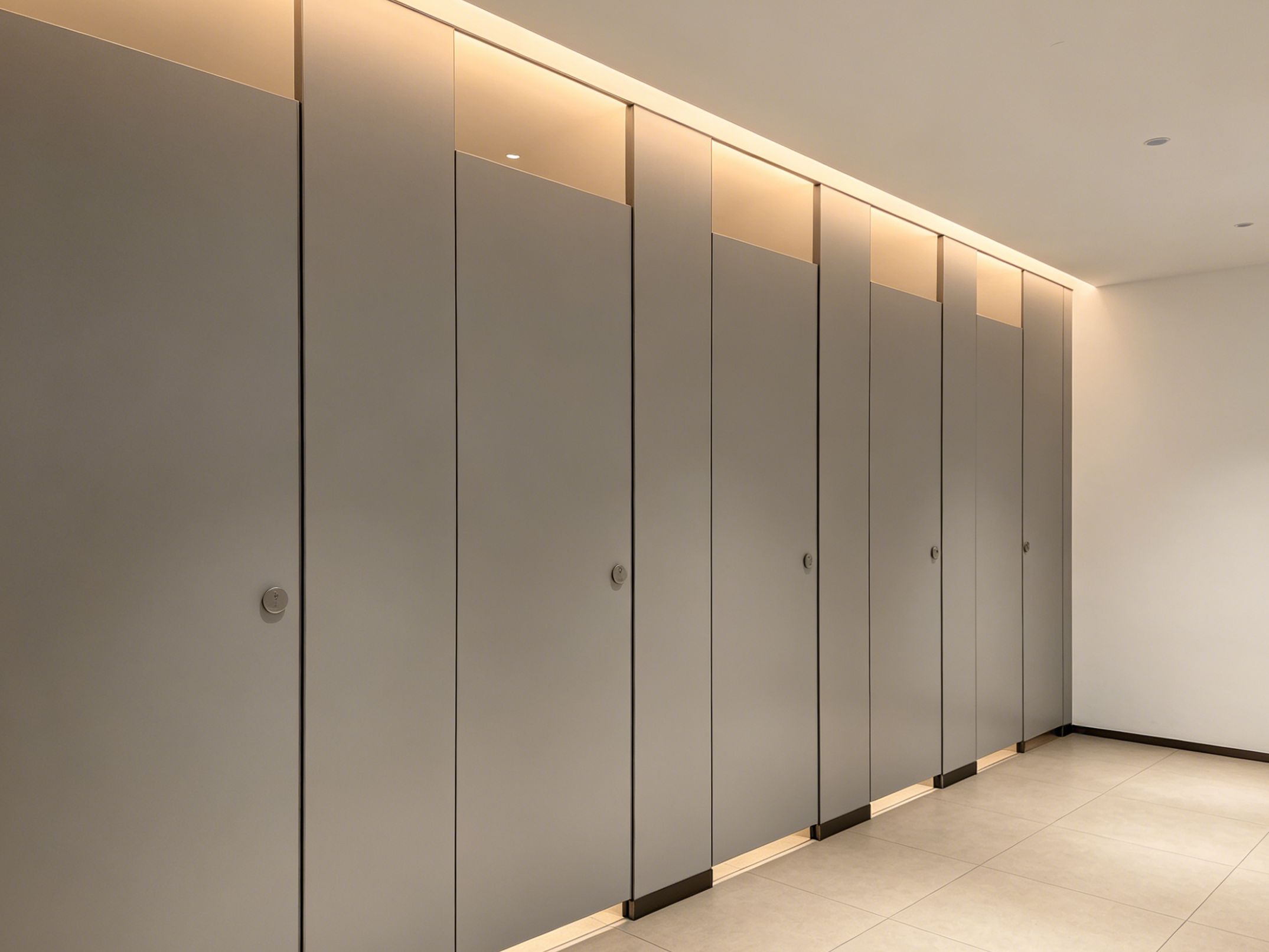
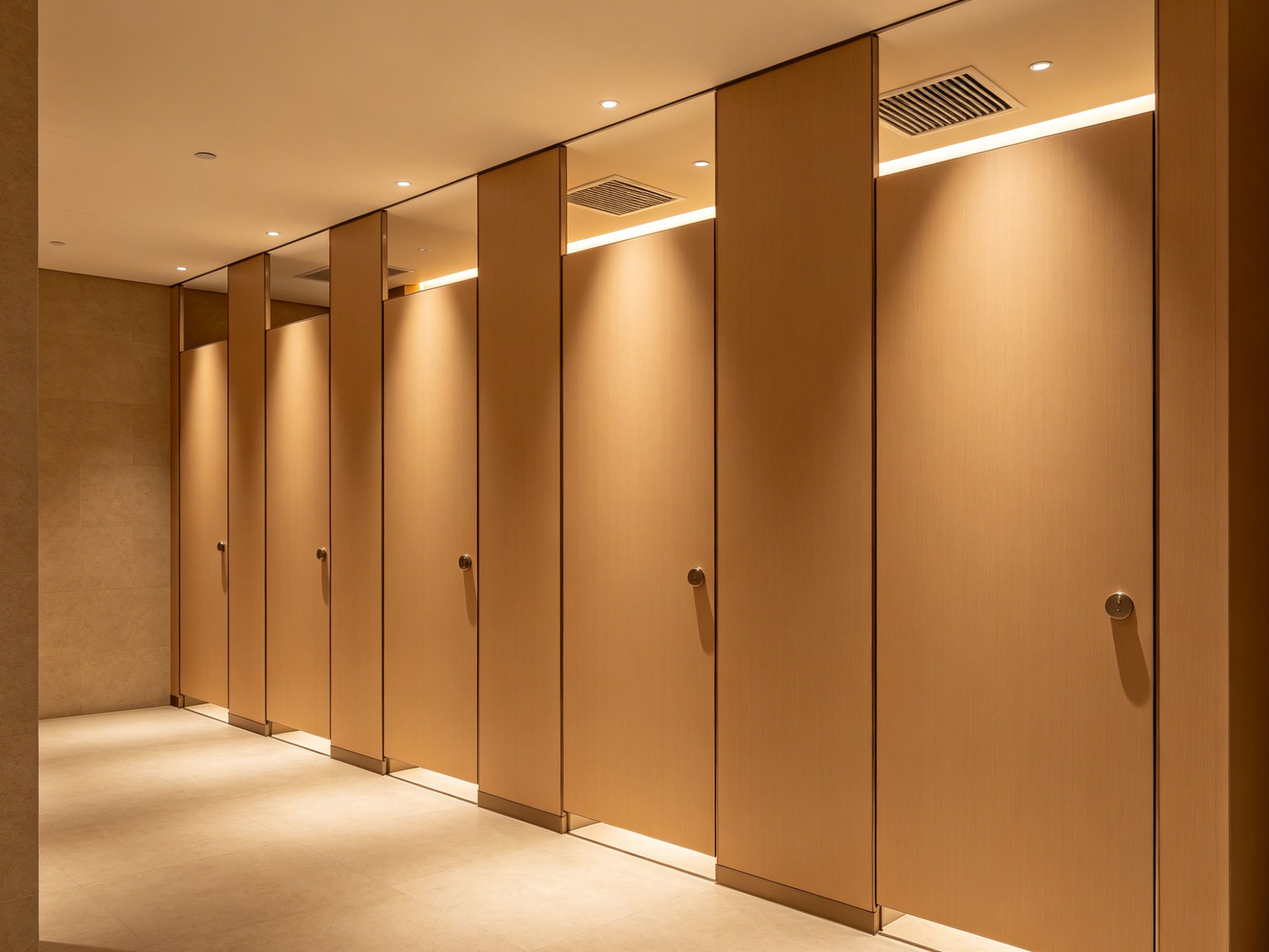
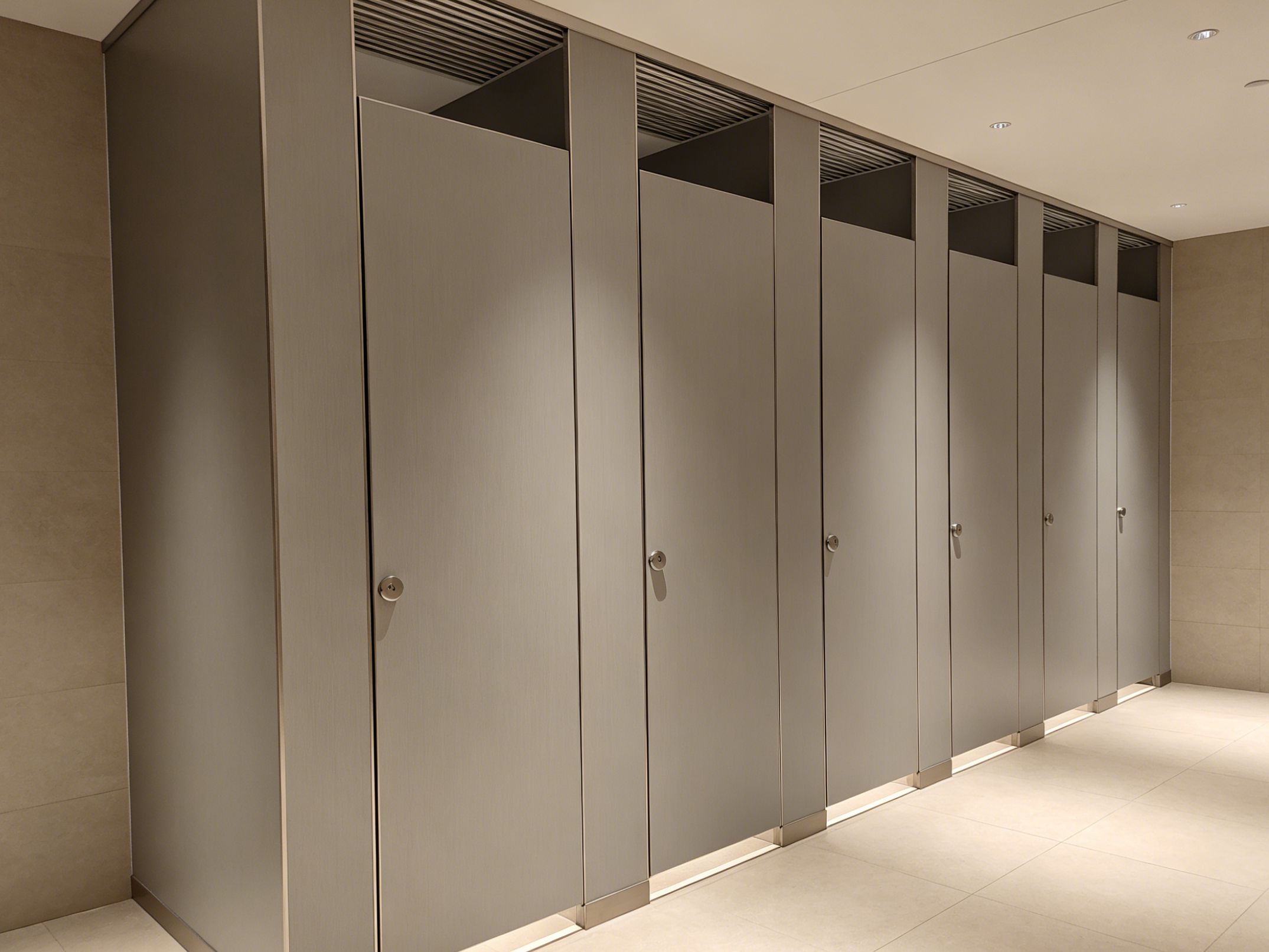
HPL Toilet Partitions for Universities and Colleges in Malaysia: Durability, Privacy and Maintenance Guide
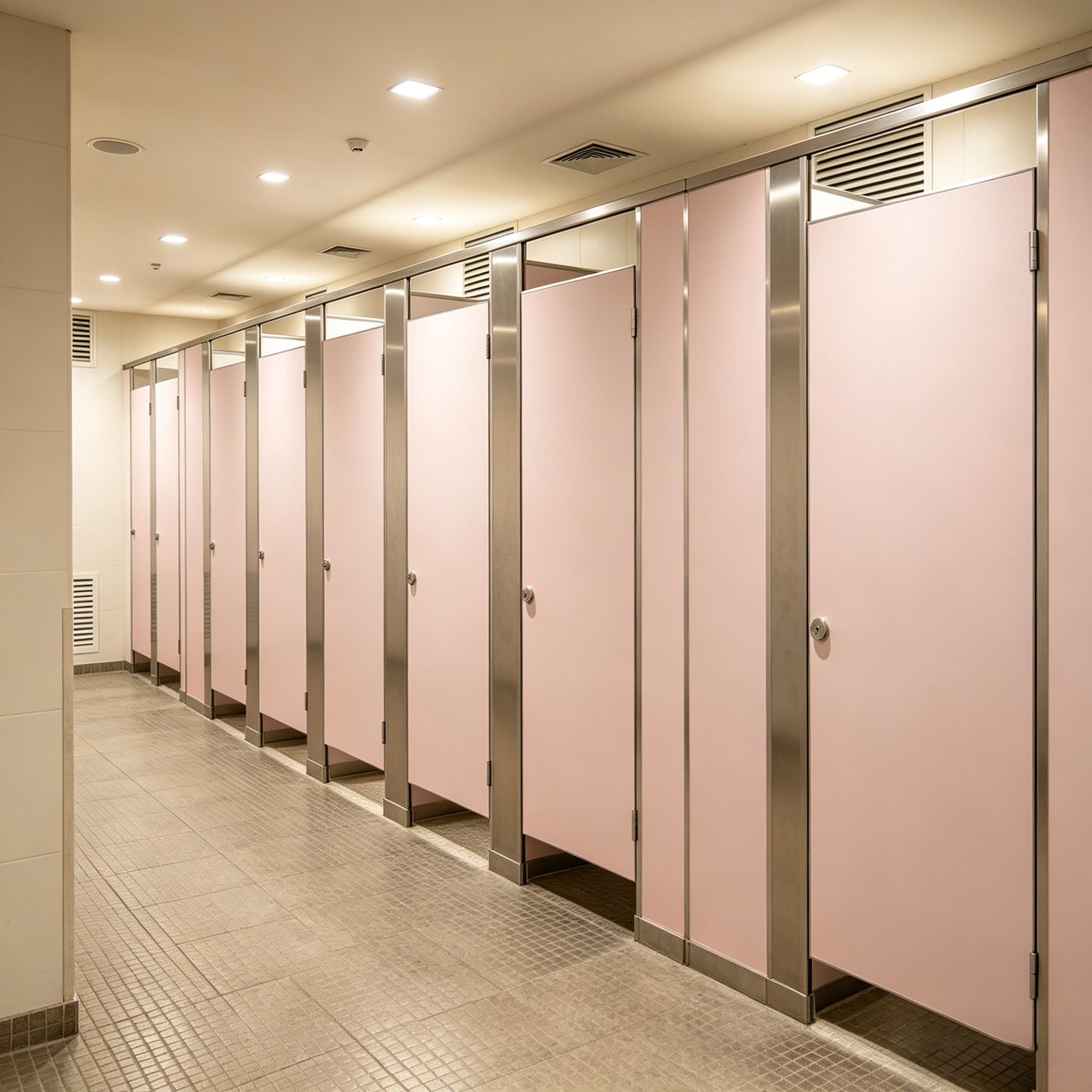
HPL Toilet Partitions for Universities and Colleges in Malaysia
University and college campuses have restroom facilities that may serve hundreds or thousands of students, staff members, and visitors every day. Selecting suitable HPL toilet partitions requires consideration of heavy daily traffic, privacy, cleaning, humidity, impact, installation efficiency, and long-term maintenance.
For contractors, architects, and project developers, campus restroom specifications should be designed around actual usage conditions rather than based solely on standard commercial requirements. A properly coordinated partition system can help reduce installation rework and future maintenance demands.
This guide explains the key considerations when specifying restroom partitions for university and college projects in Malaysia.
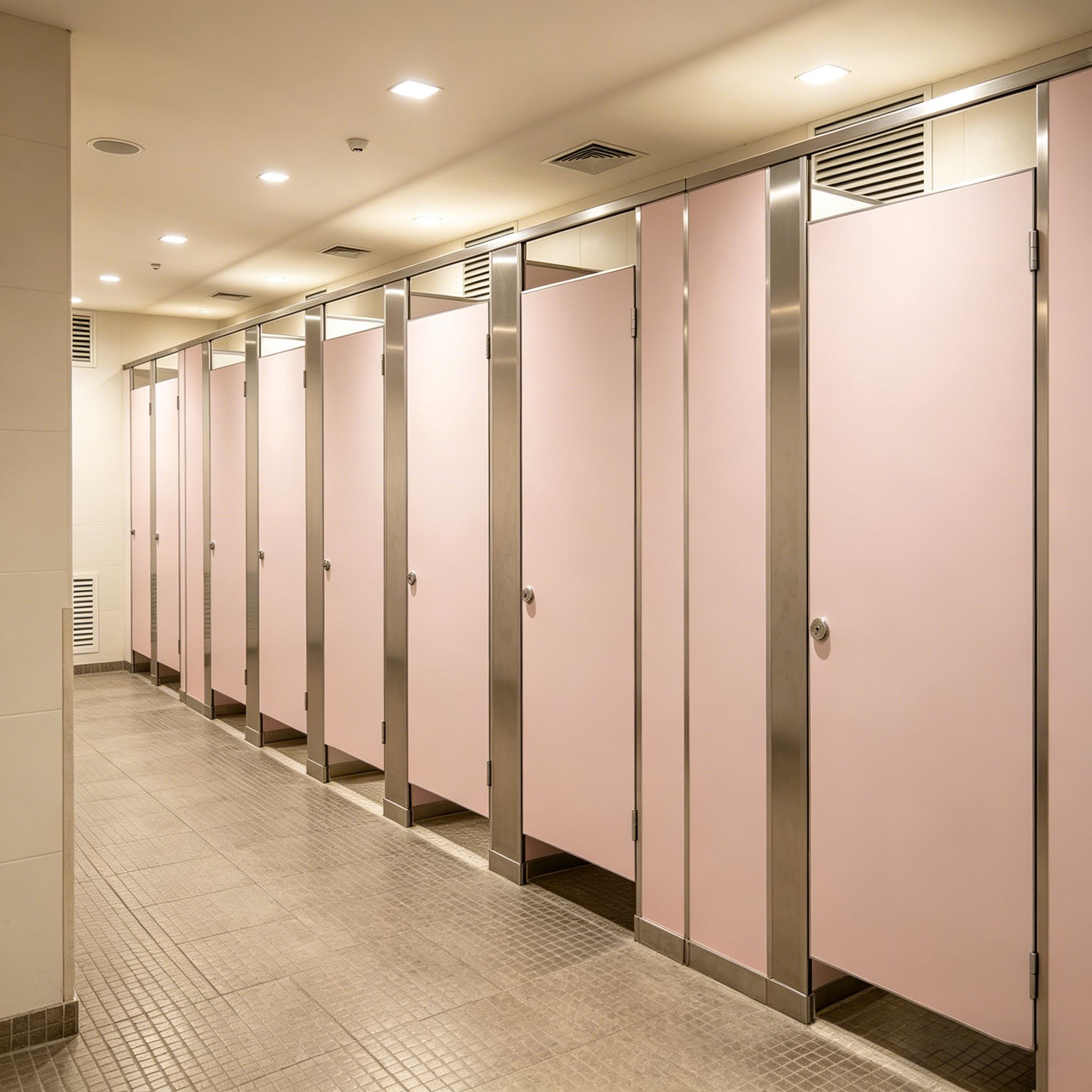
Why Campus Restrooms Need Durable Partition Systems
University and college restrooms can experience concentrated periods of high usage between classes, during events, and throughout the academic day.
Doors, hinges, locks, panels, and fixing components may be operated repeatedly by large numbers of users. Cleaning teams must also maintain these facilities on a regular basis.
The selected partition system should therefore provide a practical balance between durability, privacy, appearance, maintenance, and installation efficiency.
1. Impact-Resistant Structural Durability
Student facilities can experience more physical contact than low-traffic private restrooms.
Accidental impacts, repeated door operation, and contact with cleaning equipment can place additional stress on panels and hardware. A suitable partition system should provide appropriate structural rigidity for the expected application.
Hardware should be evaluated at the same time as the panel. Hinges, locks, brackets, and support feet all contribute to the stability and daily performance of the complete system.
For large campuses, consistent manufacturing quality is also important because the same specification may be repeated across multiple buildings.
2. Moisture Management for Campus Restrooms
Restrooms in Malaysian universities and colleges are exposed to humidity, water splashes, wet floors, and regular cleaning.
Good drainage and ventilation should therefore be considered during project planning. Areas around panel edges, floor connections, support feet, and hardware should receive particular attention.
Facility teams should also address plumbing leaks and standing water promptly to reduce unnecessary moisture exposure.
3. Privacy for Students and Staff
Privacy is an important consideration in educational facilities.
The partition layout should provide an appropriate balance between privacy, circulation, ventilation, cleaning access, and building requirements.
Before production, the project team should confirm:
- Cubicle dimensions
- Partition height
- Door dimensions
- Door opening direction
- Sightlines
- Circulation
- Fixture locations
- Accessible restroom layouts
CAD coordination can help identify potential layout issues before manufacturing begins.
4. Easy Cleaning and Daily Maintenance
Campus restrooms require regular cleaning because many users share the same facilities.
The partition surface should be compatible with the facility's approved cleaning procedures. Cleaning teams should use appropriate materials and chemicals according to manufacturer recommendations.
Cleaning routines should also include basic visual checks for loose hardware, damaged surfaces, door alignment, and water leakage.
A preventive approach can help reduce unexpected repair work.
HPL Toilet Partitions for Different Campus Areas
Universities and colleges may have several different restroom environments.
Student Restrooms
These facilities generally experience high daily traffic and require durable panels and reliable hardware.
Staff Restrooms
Staff facilities may use standardized specifications while maintaining appropriate privacy and appearance.
Dormitory Restrooms
Residential campus facilities can have extended daily usage and may require consistent maintenance planning.
Sports and Recreation Facilities
Campus gyms and sports buildings may experience higher moisture and concentrated traffic, requiring application-specific specifications.
Administration Buildings
Administrative areas may have lower traffic but often place greater emphasis on interior appearance and architectural coordination.
The final specification should be adapted to the actual use of each area.
5. Hardware Selection for Campus Projects
Hardware is repeatedly operated in university and college restrooms.
Typical components include:
- Hinges
- Privacy locks
- Handles
- Indicator bolts
- Brackets
- Support feet
- Floor fixings
- Wall fixings
The selected hardware should match the panel construction and door configuration.
For large campus projects, standardizing hardware across multiple buildings can simplify procurement, installation, maintenance, and future replacement.
6. Color and Finish Customization
Educational facilities do not need to use a single visual style.
Architects and developers may select colors and finishes that coordinate with campus branding or individual building interiors.
Available design directions may include:
- Solid colors
- Wood-grain finishes
- Decorative patterns
- Textured surfaces
- Coordinated hardware finishes
For projects involving several buildings, an approved physical sample can provide a consistent reference for mass production.
Installation Planning for University Projects
Campus projects can involve strict construction schedules, particularly when work needs to be completed before a new academic term.
Restroom installation should be coordinated with flooring, walls, plumbing, sanitary fixtures, and other interior work.
Accurate factory processing can reduce unnecessary cutting and drilling at the project site. Clearly labeled panels and hardware can also help installation teams identify components more efficiently.
Before installation, contractors should verify actual site conditions against the latest approved drawings.
How CAD Coordination Reduces Campus Project Rework
University buildings can have different restroom layouts even when they use the same general product specification.
CAD review can help coordinate:
- Cubicle dimensions
- Panel sizes
- Door positions
- Hardware locations
- Wall fixing points
- Floor fixing points
- Plumbing
- Sanitary fixtures
- Accessible facilities
Resolving these details before production can reduce the risk of manufacturing incorrect components.
Maintenance Planning for Universities and Colleges
Preventive maintenance is particularly useful when a restroom is used by a large campus population.
Maintenance teams should periodically inspect:
- Panel surfaces
- Panel edges
- Door alignment
- Hinges
- Locks
- Handles
- Brackets
- Support feet
- Floor drainage
- Moisture exposure
If a door becomes difficult to close or a lock stops operating correctly, the issue should be addressed promptly.
Keeping commonly required replacement hardware available can also reduce downtime.
How to Control Total Campus Project Costs
The initial unit price should not be the only procurement consideration.
Project teams should evaluate the complete cost, including:
- Product price
- Hardware
- Customization
- Packaging
- Transportation
- Installation labor
- Maintenance
- Replacement components
- Potential rework
Accurate drawings and standardized specifications can help reduce avoidable costs.
For projects covering several campus buildings, coordinated procurement can also improve production consistency.
How to Select a Manufacturer for University Projects
A suitable manufacturer should be able to support the project from design coordination through delivery.
Contractors should evaluate:
- Factory production capability
- Product consistency
- Customization
- CAD review
- Hardware supply
- Quality control
- Packaging
- Production lead time
- Export experience
- Technical support
For large educational projects, the manufacturer's ability to maintain consistent specifications across multiple orders can be especially important.
Common Procurement Mistakes
Choosing Only by Initial Price
A lower quotation may not provide the same panel structure, hardware, customization, or technical support.
Ignoring Different Campus Applications
Student restrooms, dormitories, sports facilities, and administrative buildings may have different usage conditions.
Ordering Before Final Drawing Approval
Customized panels should be manufactured only after dimensions and specifications are confirmed.
Treating Hardware as an Afterthought
Hardware affects door operation, privacy, maintenance, and installation.
Failing to Plan Future Maintenance
The project team should consider inspection procedures and replacement hardware before handover.
People Also Ask (FAQ)
Q1: Are HPL toilet partitions suitable for universities and colleges?
Yes. They can be specified for campus restroom applications when the panel construction, hardware, layout, cleaning, and maintenance requirements are appropriate for the project.
Q2: What should contractors consider for university restroom partitions?
Important factors include traffic levels, privacy, durability, moisture conditions, cleaning, hardware performance, customization, installation, and long-term maintenance.
Q3: Can campus restroom partitions be customized?
Yes. Customized dimensions, colors, finishes, layouts, doors, and hardware configurations can be coordinated according to approved project drawings.
Q4: Should dormitory and student restroom specifications be the same?
Not necessarily. Different campus facilities may have different traffic, privacy, moisture, and maintenance requirements, so each application should be evaluated separately.
Q5: How can contractors reduce installation labor on campus projects?
Accurate CAD drawings, factory processing, standardized specifications, coordinated hardware, site verification, and clear component labeling can help reduce unnecessary site modifications.
Project Planning & Engineering Support
Successful restroom partition projects begin with accurate planning. If you're developing specifications for universities, colleges, schools, gyms, or other educational facilities in Malaysia, our engineers can help review your layouts and recommend suitable HPL toilet partition solutions before production begins.
- CAD & Specification Review: mrsalufcs@gmail.com (Submit your drawings or BOQ for engineering verification.)
- Technical Consultation: +86 15207652902 (Consult our team on partition layouts, hardware selection, and project coordination.)
HPL Toilet Partitions for Hotels and Resorts in Malaysia: Design, Durability and Maintenance Guide
HPL Toilet Partitions for Airports and Transportation Hubs in Malaysia: Durability and Specification Guide