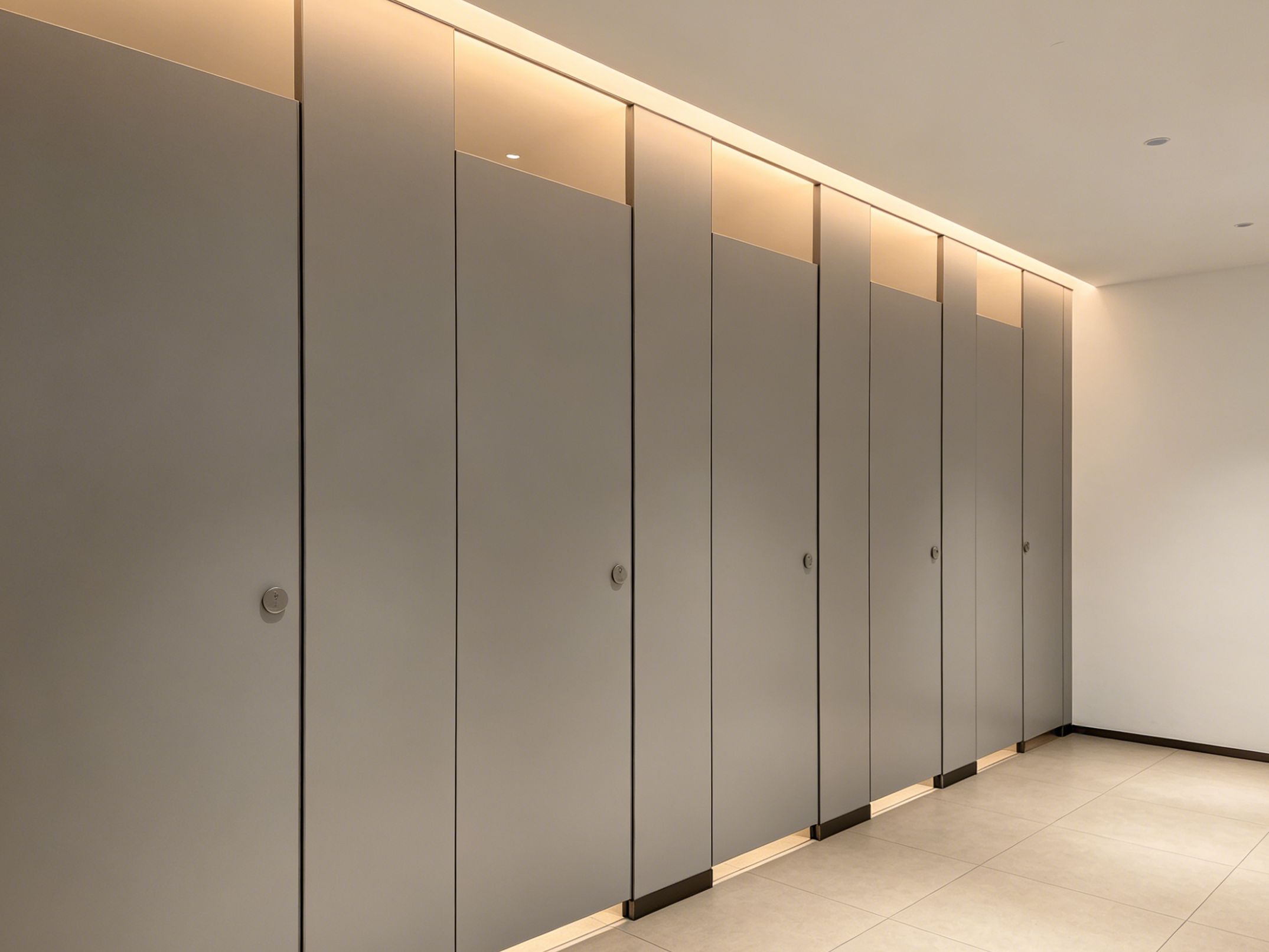
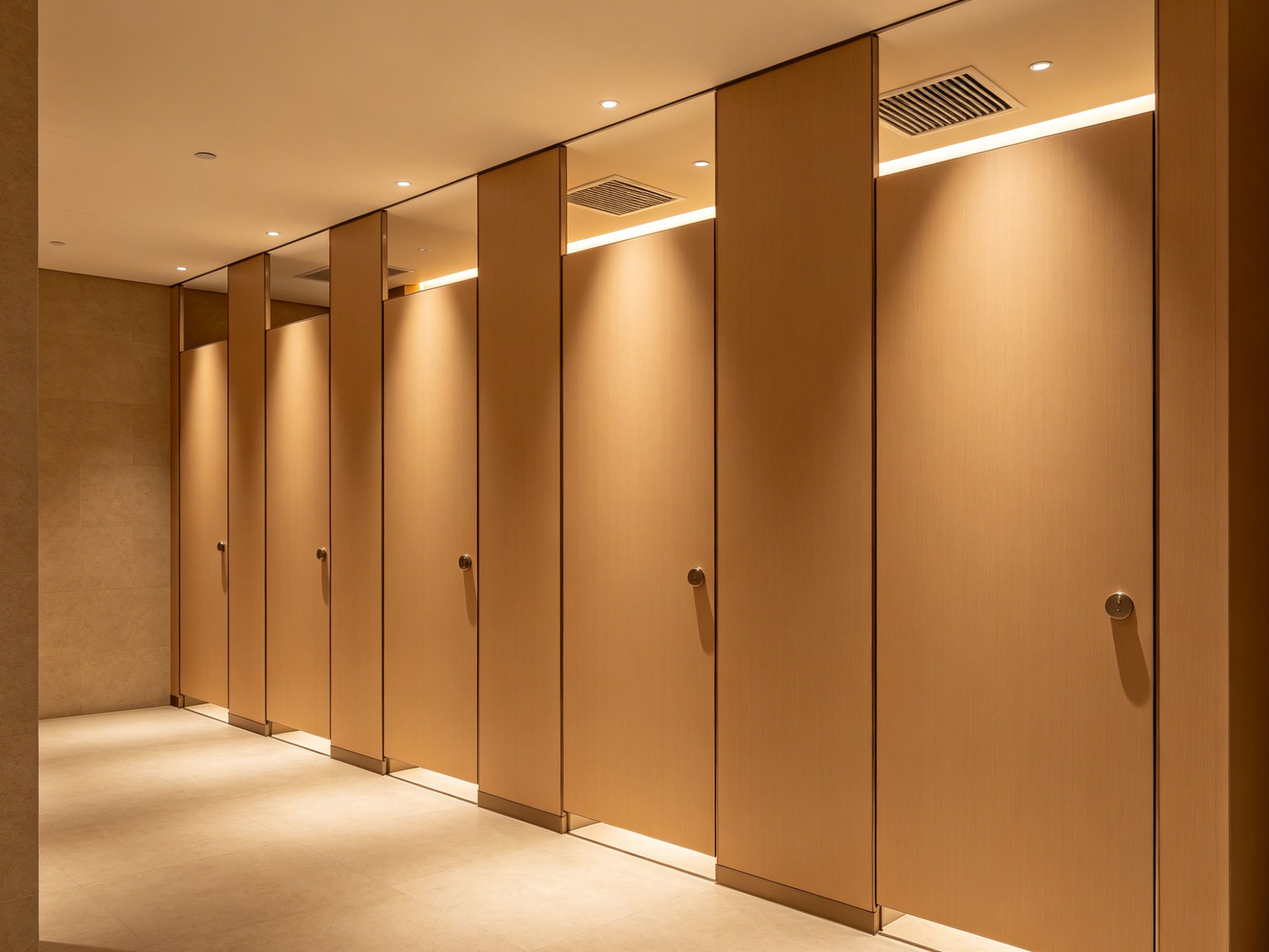
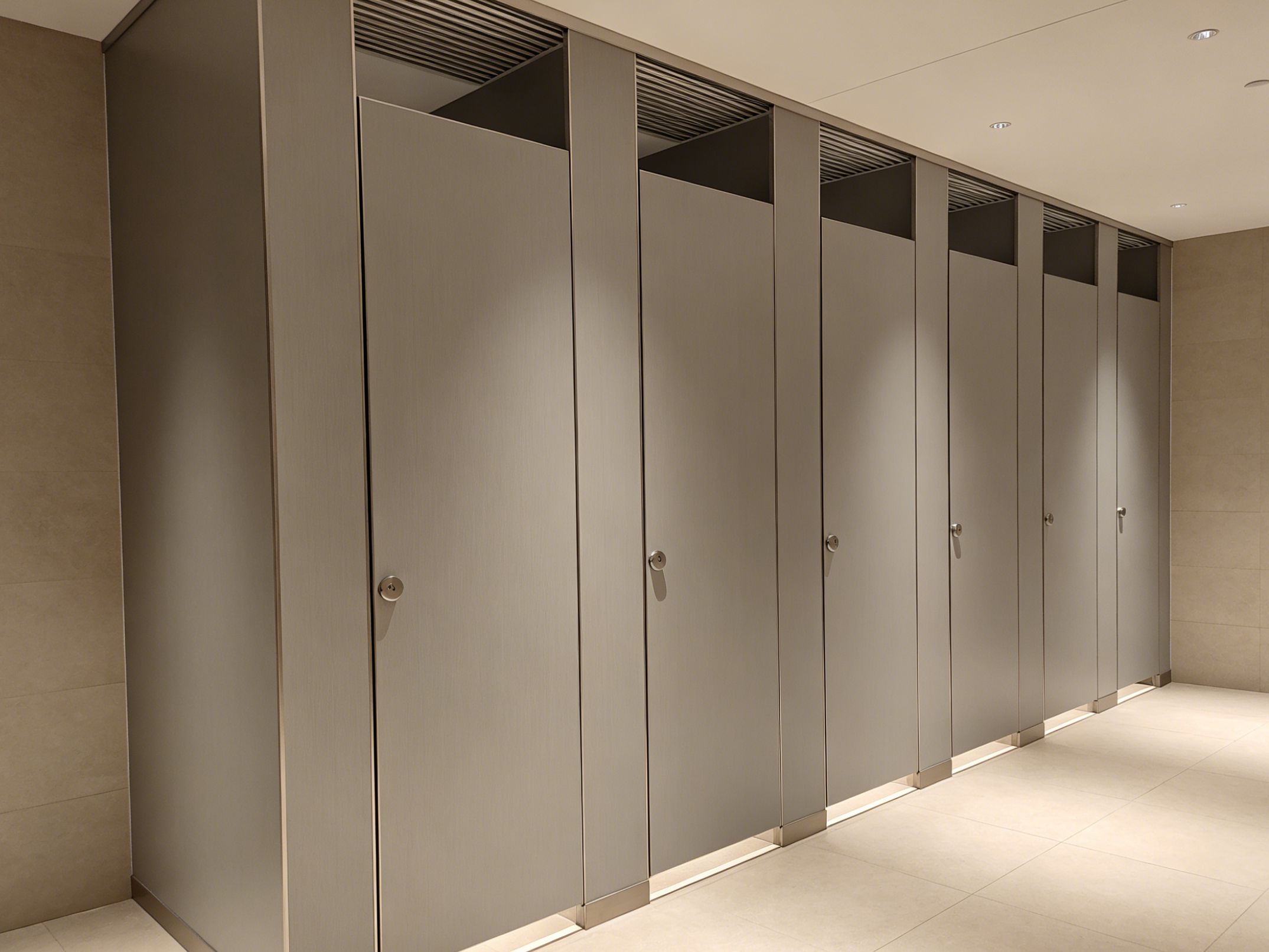
HPL Toilet Partitions vs Metal Toilet Partitions for Malaysia Projects
HPL Toilet Partitions vs Metal Toilet Partitions for Malaysia Projects
Choosing between HPL toilet partitions and metal toilet partitions requires more than comparing the initial purchase price. For contractors, architects, and project developers in Malaysia, restroom conditions, humidity exposure, traffic levels, architectural requirements, installation efficiency, and maintenance costs all influence the right specification.
Commercial office buildings and public schools require partition systems that can withstand repeated daily use while maintaining acceptable appearance and structural performance. In Malaysia's humid environment, the material and surface treatment should also be evaluated carefully before a project moves into production.
This guide compares HPL toilet partitions and metal toilet partitions to help B2B buyers make a more informed material decision.
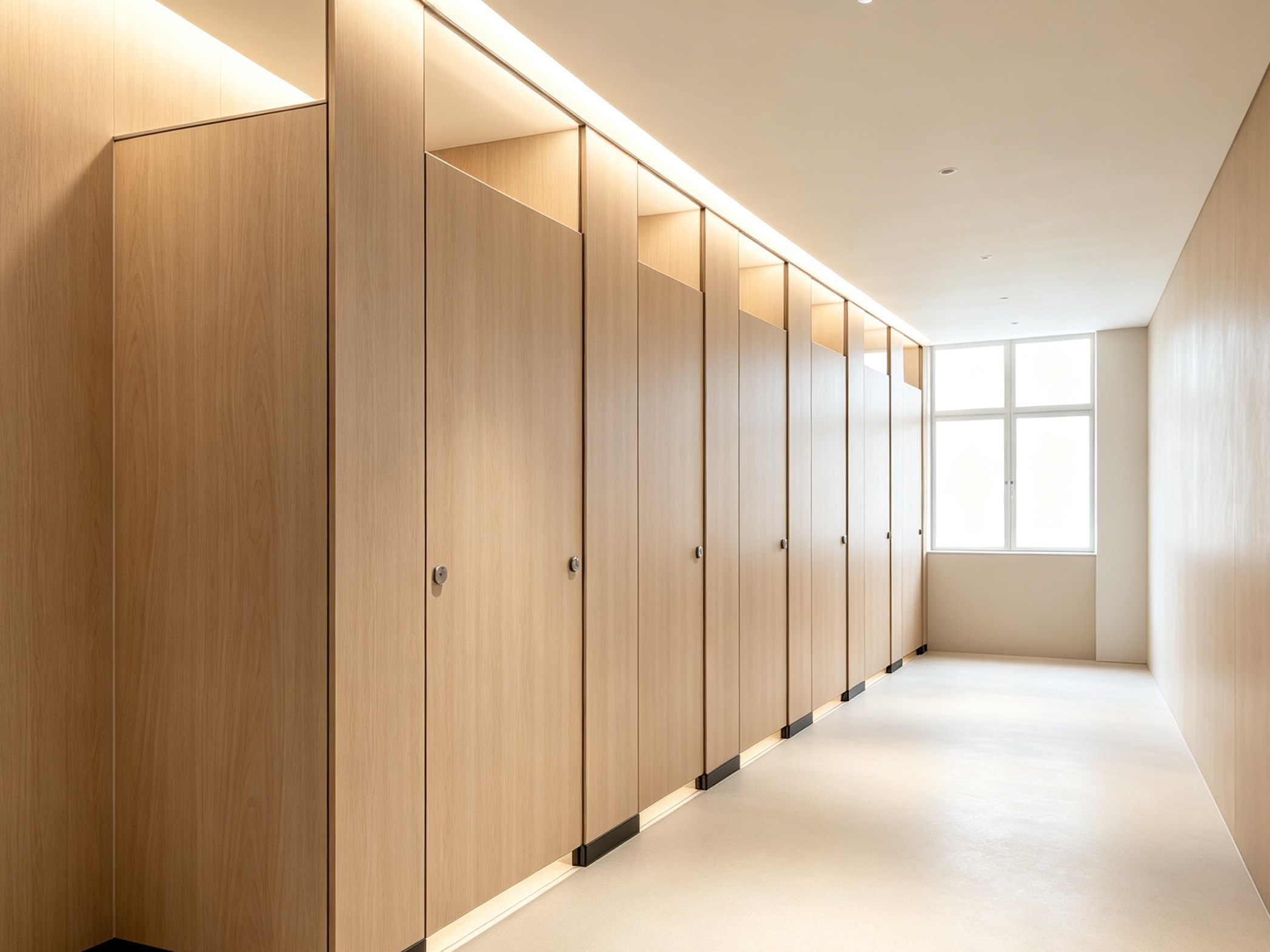
Why Material Selection Matters for Malaysia Restroom Projects
Restroom partitions are exposed to repeated door operation, accidental impacts, frequent cleaning, moisture, and daily public use. A material that performs well in one environment may not necessarily provide the same value in another application.
For Malaysian projects, humidity is an important consideration. Buyers should evaluate how the complete partition system responds to moisture, including the panel, edges, hardware, fasteners, and supporting components.
The best choice should therefore be based on the actual project environment rather than simply selecting the lowest-cost material.
HPL Toilet Partitions: Key Characteristics
HPL toilet partitions combine a decorative high-pressure laminate surface with a suitable structural core. This construction allows project teams to balance functional performance with architectural design requirements.
One of the main advantages of HPL toilet partitions is their design flexibility. Different colors, patterns, textures, and finishes can be selected to coordinate with commercial interiors, school environments, and other architectural elements.
For projects where appearance, customization, impact resistance, and practical maintenance are all important, HPL can provide a versatile partition solution.
Metal Toilet Partitions: Key Characteristics
Metal toilet partitions are commonly manufactured using metal panels with protective surface treatments. They can provide a rigid partition structure and are used in various commercial and public restroom applications.
Their performance depends heavily on the type of metal, coating, thickness, edge construction, fasteners, and manufacturing quality. In humid environments, the protection system is particularly important because surface damage or inadequate corrosion protection may affect long-term performance.
Therefore, buyers should always evaluate the actual metal specification rather than treating all metal partition systems as identical.
HPL Toilet Partitions vs Metal Toilet Partitions: Key Differences
1. Humidity and Corrosion Considerations
Malaysia's humid climate makes moisture performance an important purchasing factor.
HPL toilet partitions can be specified with suitable moisture-resistant structural construction for commercial restroom environments. Proper edge treatment and installation are also important for maintaining long-term performance.
Metal partitions require particular attention to corrosion protection. The metal type, coating quality, surface damage, fasteners, and exposure conditions can all influence resistance to corrosion.
For projects with frequent moisture exposure, contractors should request detailed material and surface-treatment specifications before selecting either system.
2. Impact-Resistant Durability
Both HPL and metal systems can be designed for high-traffic environments, but their performance depends on the specific construction.
HPL toilet partitions with a strong structural core can withstand repeated daily use and physical impacts in demanding commercial restrooms. This makes them suitable for applications such as public schools and busy commercial buildings.
Metal partitions can also provide strong structural rigidity. However, dents, scratches, or surface damage should be considered because physical damage to the protective coating may affect appearance and potentially expose the underlying metal.
The appropriate choice depends on the expected type and frequency of physical contact.
3. Appearance and Architectural Design
Appearance is increasingly important for commercial restroom projects. Architects often want partitions to coordinate with flooring, wall panels, doors, signage, and other interior finishes.
HPL toilet partitions provide extensive decorative flexibility through different colors, patterns, textures, and finishes. This makes them particularly useful when design coordination is an important part of the project specification.
Metal partitions can provide a clean and functional appearance, but available decorative options depend on the coating and manufacturing system selected.
For design-led office projects, buyers should compare actual finish samples rather than relying only on product descriptions.
4. Customization and Project Dimensions
Commercial restroom layouts often vary from building to building. Partition height, cubicle width, door dimensions, corner conditions, and fixing locations may all require customization.
HPL toilet partitions can be manufactured according to project dimensions and architectural drawings. Custom colors, finishes, panel sizes, and hardware configurations can also be coordinated before production.
Metal partitions can also be customized, but buyers should confirm the manufacturer's fabrication capabilities, available finishes, and acceptable dimensional tolerances before placing a bulk order.
5. Installation and Labor Efficiency
Installation speed is closely connected with project labor costs. A system that requires extensive site modification can increase both installation time and the risk of dimensional errors.
For HPL toilet partitions, factory fabrication based on approved CAD drawings can help reduce unnecessary cutting and adjustment on-site. Hardware and panel dimensions can also be coordinated before shipment.
Metal partition installation similarly depends on accurate site measurement and hardware coordination. Contractors should confirm wall and floor conditions before delivery to avoid unnecessary site modifications.
Which Is Better for Commercial Office Buildings?
Commercial office buildings often require a balance between durability and architectural appearance. Restrooms may be used continuously throughout the working day, while the interior design is expected to remain consistent with the overall corporate environment.
HPL toilet partitions can be advantageous when customized colors, finishes, and architectural coordination are important. Their design flexibility allows the restroom system to become part of the overall interior specification rather than simply a functional component.
Metal partitions may be appropriate where a simple functional appearance and rigid construction are the primary priorities.
Which Is Better for Public Schools?
Public schools generally experience intensive restroom traffic and frequent cleaning. Impact resistance, easy maintenance, moisture performance, and long-term durability should therefore receive particular attention.
HPL toilet partitions can provide a combination of impact-resistant construction, customizable finishes, and practical maintenance for school restroom applications.
Metal systems can also be considered, but project teams should carefully evaluate coating durability, corrosion protection, and resistance to scratches or dents.
The final decision should be based on the school's expected usage conditions and the complete product specification.
How Should Contractors Compare the Total Project Cost?
The initial panel price is only one component of the total cost. Contractors should also consider:
- Hardware and accessories
- Custom fabrication
- Packaging
- Shipping
- Installation labor
- Site modification
- Maintenance
- Potential repairs
- Replacement requirements
A lower initial price may not produce the lowest total project cost if additional installation or maintenance work is required.
For B2B procurement, comparing the complete delivered and installed system provides a more realistic basis for decision-making.
What Should You Confirm Before Ordering?
Before selecting HPL toilet partitions or metal toilet partitions, request the following information from your supplier:
- Panel material and structure
- Panel thickness
- Moisture or corrosion resistance
- Surface finish
- Available colors
- Customization capabilities
- Hardware specifications
- Installation method
- CAD drawing support
- Production lead time
- Packaging method
- Project technical support
A supplier that can review drawings and coordinate the complete system can help reduce specification errors before production begins.
People Also Ask (FAQ)
Q1: Are HPL toilet partitions better than metal toilet partitions?
Neither material is universally better. The correct choice depends on the project's humidity exposure, traffic level, appearance requirements, customization needs, installation conditions, and budget.
Q2: Are metal toilet partitions suitable for Malaysia's humid climate?
They can be suitable when the metal type and protective coating are properly selected. Buyers should pay particular attention to corrosion protection, coating durability, fasteners, and areas where the surface may be damaged.
Q3: Why choose HPL toilet partitions for office projects?
HPL toilet partitions provide a combination of structural durability and design flexibility. They can be customized in colors, finishes, dimensions, and configurations to coordinate with commercial interior designs.
Q4: Which material is suitable for high-traffic school restrooms?
Both systems can be considered, but buyers should prioritize impact resistance, moisture performance, surface durability, hardware quality, and maintenance requirements rather than choosing solely by material category.
Q5: Can HPL toilet partitions be customized according to CAD drawings?
Yes. Custom dimensions, layouts, colors, finishes, doors, and hardware configurations can be coordinated according to approved project drawings.
Project Planning & Engineering Support
Successful restroom partition projects begin with accurate planning. If you're developing specifications for commercial office buildings or public schools in Malaysia, our engineers can help review your layouts and recommend suitable HPL toilet partition solutions before production begins.
- CAD & Specification Review: mrsalufcs@gmail.com (Submit your drawings or BOQ for engineering verification.)
- Technical Consultation: +86 15207652902 (Consult our team on partition layouts, hardware selection, and project coordination.)
HPL Toilet Partitions Thickness Guide for Malaysia Projects
HPL Toilet Partitions vs Phenolic Toilet Partitions: Malaysia Project Guide