HPL Toilet Partitions vs Phenolic Toilet Partitions: Malaysia Project Guide
HPL Toilet Partitions vs Phenolic Toilet Partitions for Malaysia Projects
Choosing between HPL toilet partitions and phenolic toilet partitions is an important decision for contractors, architects, and project developers working on commercial restroom projects in Malaysia. Although both solutions are designed for demanding restroom environments, their construction, appearance, customization, installation requirements, and project positioning can differ.
For commercial office buildings and public schools, the right choice depends on the expected traffic level, humidity exposure, design requirements, budget, and long-term maintenance expectations. Comparing these factors before ordering can help project teams avoid selecting a system based only on initial price.
This guide compares HPL toilet partitions and phenolic toilet partitions from a practical B2B project perspective.
Why Compare HPL Toilet Partitions and Phenolic Toilet Partitions?
Restroom partitions are exposed to repeated daily use, moisture, cleaning, impacts, and constant door movement. In Malaysia, warm and humid conditions make material selection even more important.
A suitable partition system should provide sufficient structural stability while maintaining its appearance throughout the expected service period. Contractors also need to consider installation efficiency because labor costs and project schedules directly influence the final project budget.
For this reason, material comparison should cover more than surface appearance.
HPL Toilet Partitions: Key Characteristics
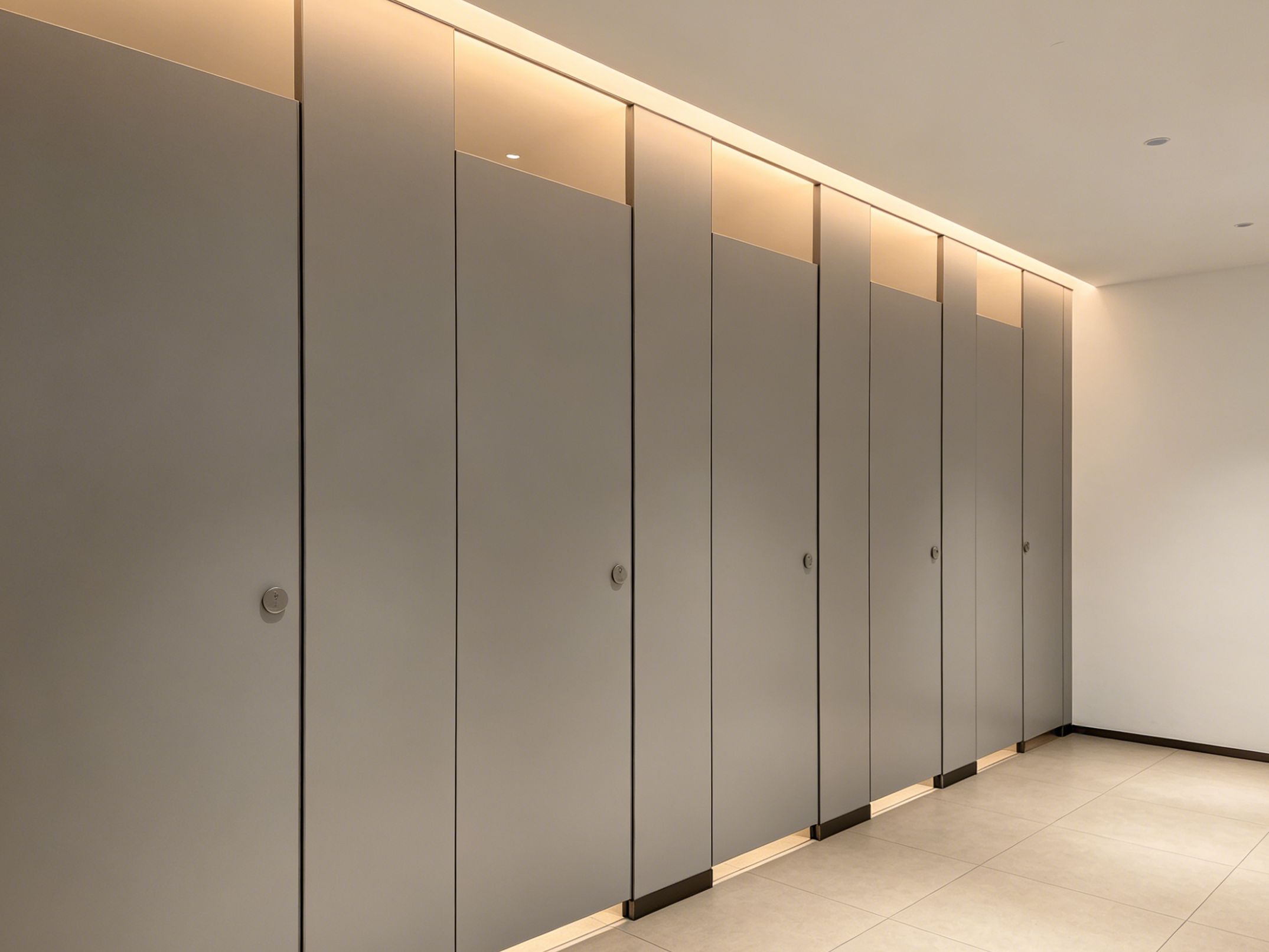
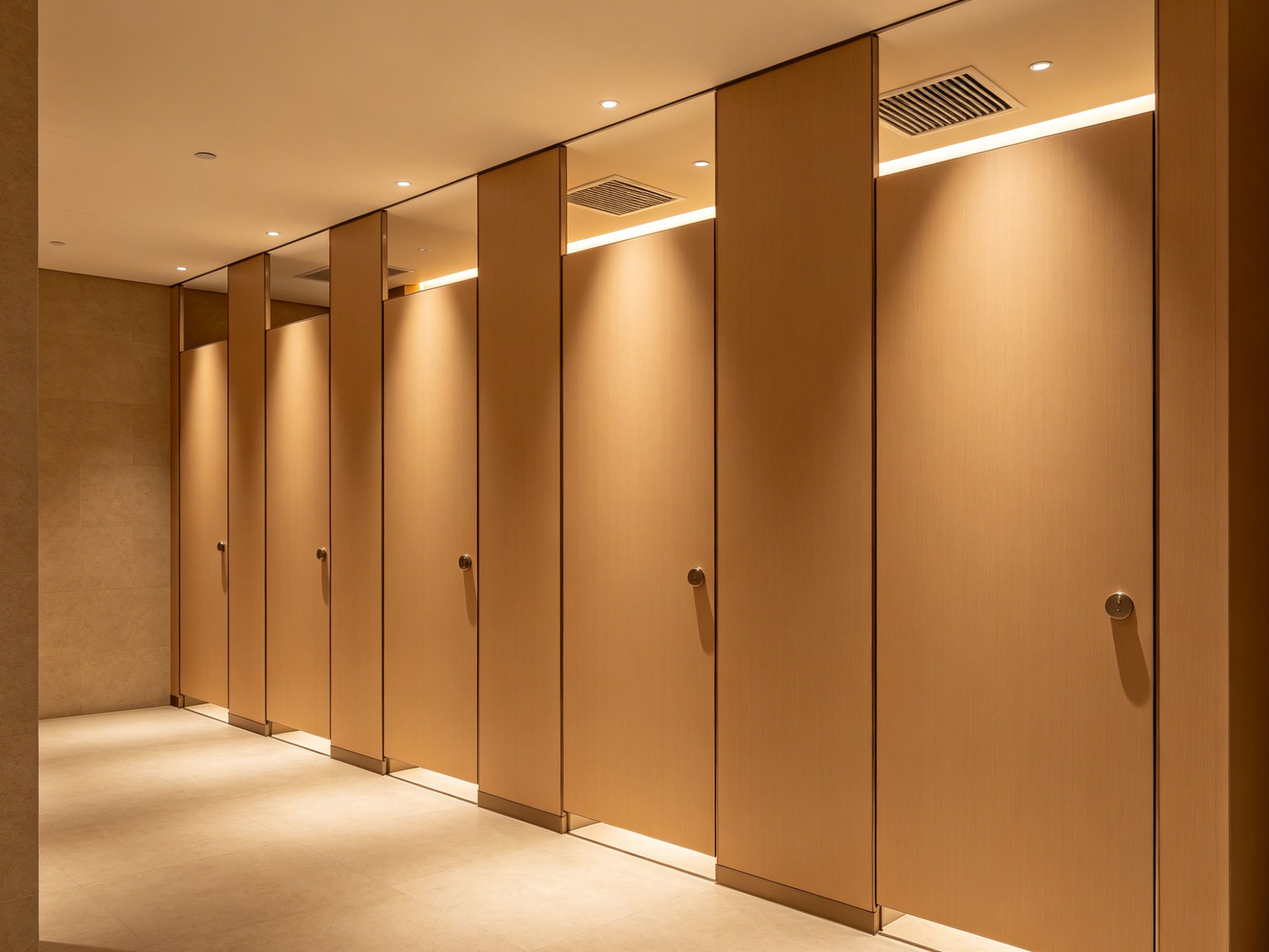
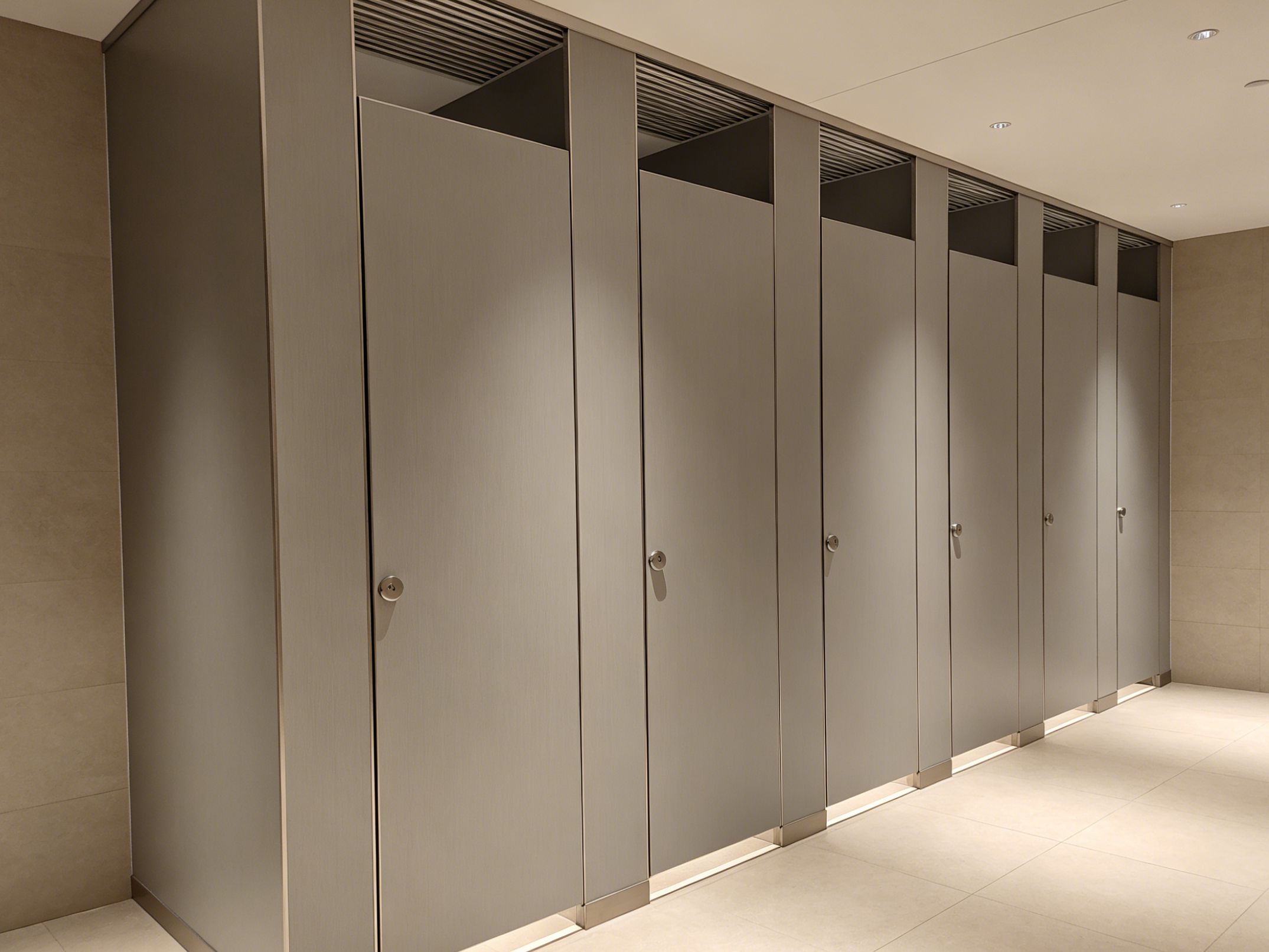
HPL toilet partitions use a high-pressure decorative surface combined with a suitable structural core to create a durable restroom partition system. They are widely used when projects require a balance between appearance, customization, durability, and practical installation.
One major advantage is design flexibility. HPL surfaces can be available in various colors, patterns, textures, and finishes, making them suitable for projects where restroom design needs to coordinate with the overall architectural concept.
For commercial offices and public schools, HPL toilet partitions can provide a practical combination of visual customization and everyday durability when the correct structure and installation method are specified.
Phenolic Toilet Partitions: Key Characteristics
Phenolic toilet partitions are commonly selected for demanding wet-area applications because of their dense construction and strong resistance to moisture. Their solid structural characteristics can make them suitable for high-traffic public restroom environments.
Phenolic systems are often considered when moisture exposure and impact resistance are major priorities. However, project teams should still evaluate the complete specification, including panel thickness, edge treatment, hardware, dimensions, and installation conditions.
The most suitable material depends on the actual requirements of the project rather than on a single material characteristic.
HPL Toilet Partitions vs Phenolic Toilet Partitions: Key Differences
1. Moisture Resistance
Moisture resistance is one of the most important factors for Malaysian restroom projects. Phenolic panels are known for their dense construction and strong performance in wet environments.
HPL toilet partitions can also be specified for humid restroom applications when the panel structure, core material, edge protection, and installation method are appropriately selected.
For projects with significant moisture exposure, buyers should evaluate the complete panel construction rather than judging performance from the decorative surface alone.
2. Impact and Structural Durability
Public schools, shopping facilities, and other high-traffic buildings require partitions capable of handling repeated physical stress.
Both HPL toilet partitions and phenolic systems can provide durable solutions when correctly engineered. The actual performance depends on panel construction, thickness, support configuration, hardware quality, and installation.
For projects expecting intensive use, contractors should request technical specifications and confirm the intended application before placing a bulk order.
3. Appearance and Design Flexibility
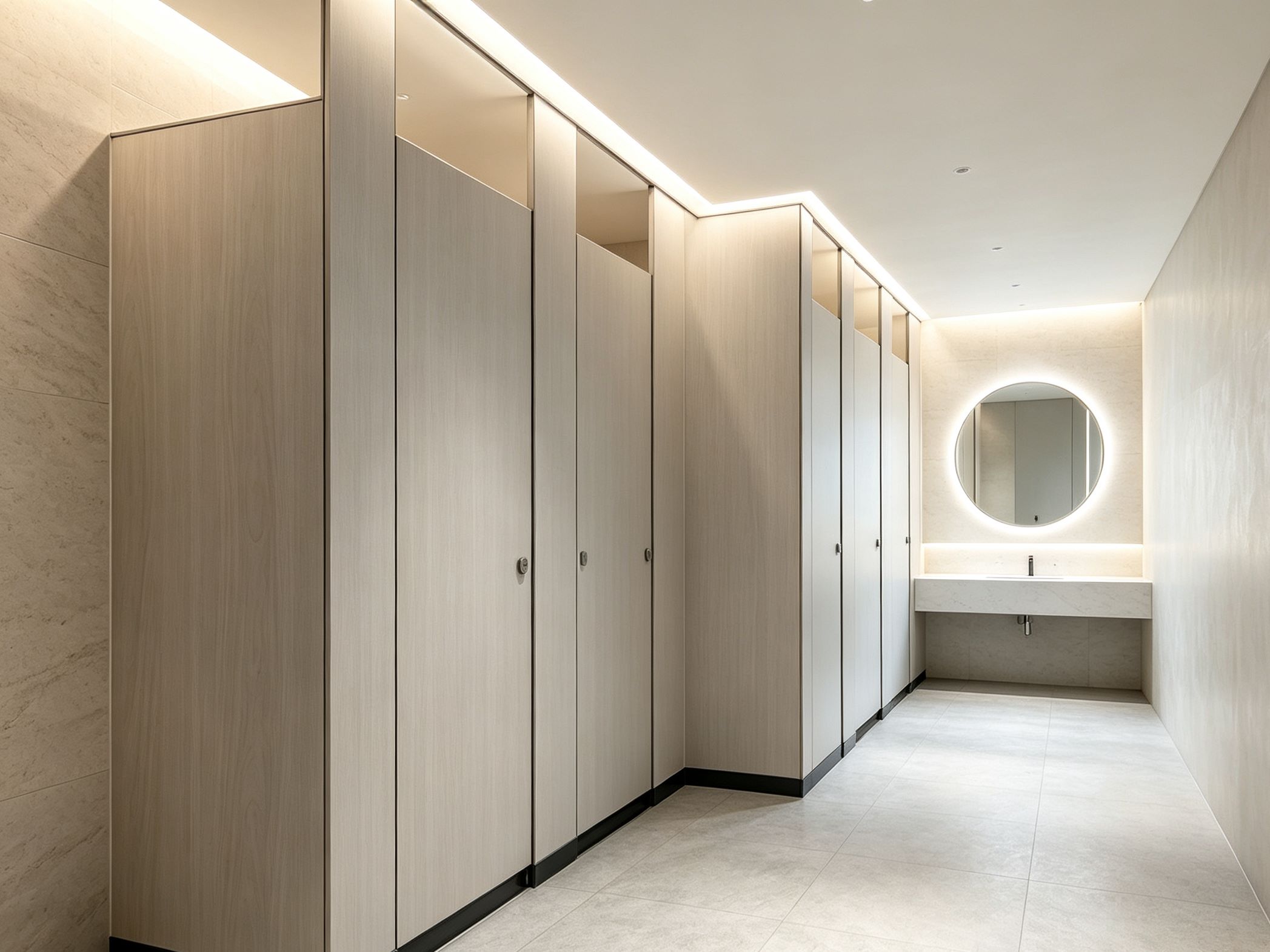
Architectural appearance can be an important consideration in commercial office projects. HPL toilet partitions offer extensive opportunities for color, pattern, and finish customization.
This flexibility allows architects to coordinate restroom partitions with flooring, wall finishes, furniture, and corporate interior design.
Phenolic partitions can also provide attractive finishes, but project teams should compare the available decorative options according to their specific design requirements.
4. Customization Requirements
Customized dimensions are common in commercial restroom projects because layouts vary between buildings.
HPL toilet partitions can be manufactured according to specific dimensions, colors, finishes, door configurations, and hardware requirements. This can be particularly useful when the partition layout needs to follow architectural drawings.
For both systems, contractors should provide accurate CAD drawings and project dimensions before production. Early engineering review can reduce the risk of fabrication errors and on-site modifications.
5. Installation Considerations
Installation efficiency affects both labor cost and project scheduling. A suitable partition system should be coordinated with the restroom layout, wall conditions, floor conditions, and hardware before delivery.
HPL toilet partitions can be factory fabricated according to approved project specifications, helping installation teams reduce unnecessary cutting and adjustment work on-site.
Regardless of the selected material, contractors should confirm panel dimensions, fixing methods, door positions, hinges, locks, brackets, and support feet before production.
Which Is Better for Malaysia Commercial Projects?
There is no universal answer because project requirements vary.
For commercial office buildings, HPL toilet partitions can be attractive when architects and developers prioritize customized colors, coordinated finishes, visual consistency, and practical durability.
For public schools, the selection should focus strongly on impact resistance, moisture performance, easy maintenance, and the ability to withstand intensive daily use.
For projects with particularly demanding wet-area conditions, phenolic partitions may deserve closer evaluation because of their dense construction and moisture-resistant characteristics.
The final decision should therefore be based on the complete technical specification, project environment, budget, design requirements, and expected service conditions.
What Should Contractors Compare Before Ordering?
A professional B2B comparison should include more than the panel material. Contractors and project developers should request information covering:
- Panel structure and thickness
- Moisture resistance
- Impact resistance
- Surface finish
- Available colors and patterns
- Custom dimensions
- Edge treatment
- Hardware compatibility
- Installation method
- Maintenance requirements
- Packaging and transportation
- Production lead time
- Technical support
Comparing these factors makes it easier to identify the system that provides the best overall value for a particular project.
How to Make the Final Material Decision
Start by defining the project environment and expected usage. Then compare HPL toilet partitions and phenolic toilet partitions according to moisture exposure, traffic intensity, design requirements, installation conditions, and maintenance expectations.
For projects where customized appearance and flexible architectural coordination are important, HPL toilet partitions can be a practical option. For highly demanding wet environments, project teams may give additional weight to dense phenolic construction.
Most importantly, buyers should evaluate the complete partition system rather than selecting a material based only on price or surface appearance.
People Also Ask (FAQ)
Q1: Are HPL toilet partitions suitable for humid Malaysia projects?
Yes. HPL toilet partitions can be suitable for humid commercial restroom environments when the panel structure, core, edge protection, hardware, and installation method are properly specified.
Q2: Are phenolic toilet partitions more moisture resistant than HPL toilet partitions?
Phenolic panels are known for strong moisture resistance because of their dense construction. However, HPL toilet partition performance depends on the complete structural specification, so buyers should compare the actual products rather than only the material names.
Q3: Which partition is better for public schools?
The decision should consider impact resistance, moisture exposure, cleaning frequency, maintenance requirements, budget, and expected traffic. A properly specified HPL toilet partition can be suitable for school environments when the structural and hardware requirements are correctly selected.
Q4: Can HPL toilet partitions be customized for commercial projects?
Yes. HPL toilet partitions can be customized in dimensions, colors, finishes, layouts, and hardware configurations according to project requirements and approved drawings.
Q5: Should I compare the complete system instead of only the panel?
Yes. Panel structure, hardware, fixing methods, dimensions, installation, and maintenance all affect the final performance of a restroom partition system.
Project Planning & Engineering Support
Successful restroom partition projects begin with accurate planning. If you're developing specifications for commercial office buildings or public schools in Malaysia, our engineers can help review your layouts and recommend suitable HPL toilet partition solutions before production begins.
- CAD & Specification Review: mrsalufcs@gmail.com (Submit your drawings or BOQ for engineering verification.)
- Technical Consultation: +86 15207652902 (Consult our team on partition layouts, hardware selection, and project coordination.)
HPL Toilet Partitions vs Metal Toilet Partitions for Malaysia Projects
HPL Toilet Partitions Buying Guide for Malaysia Projects