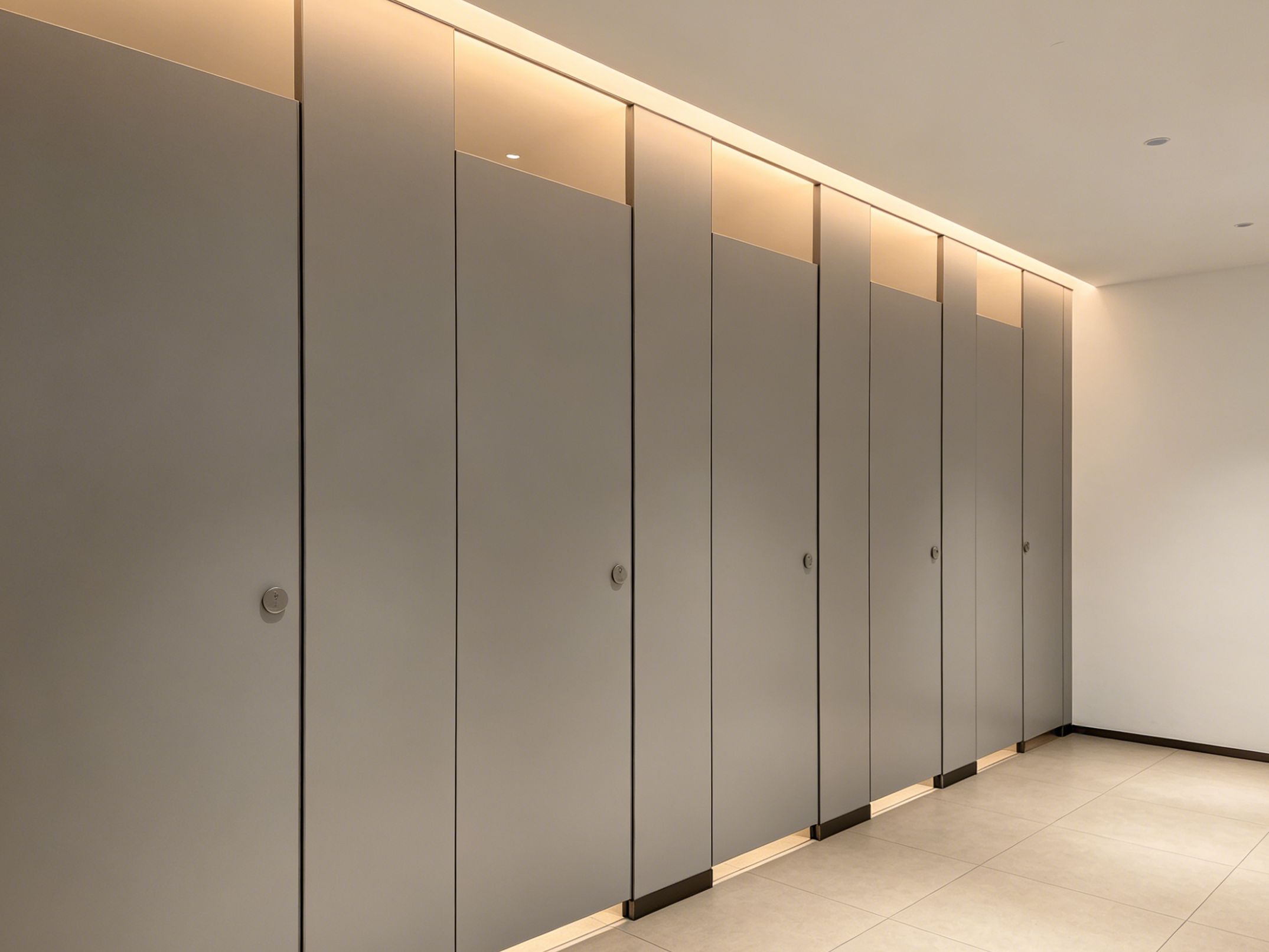
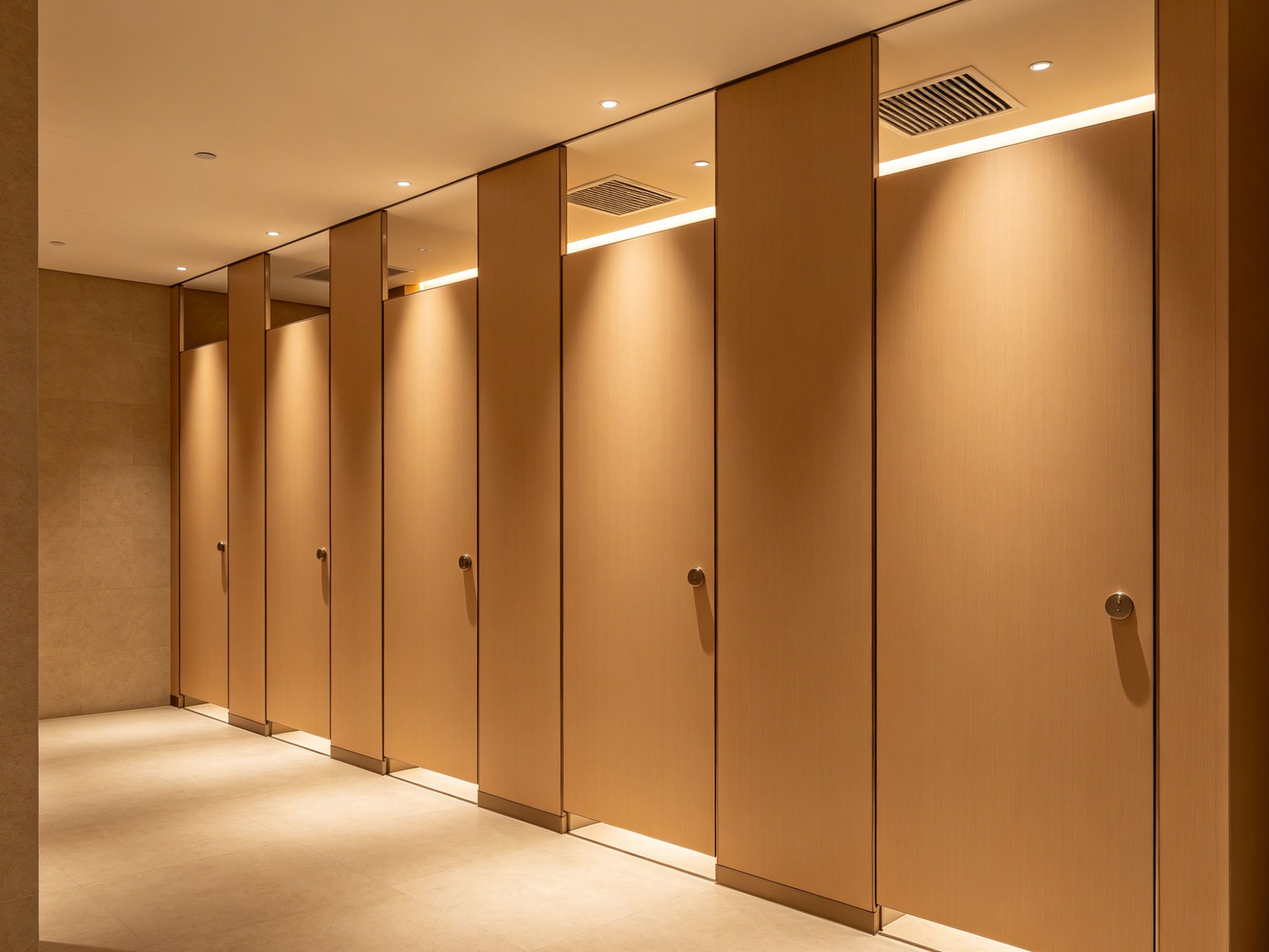
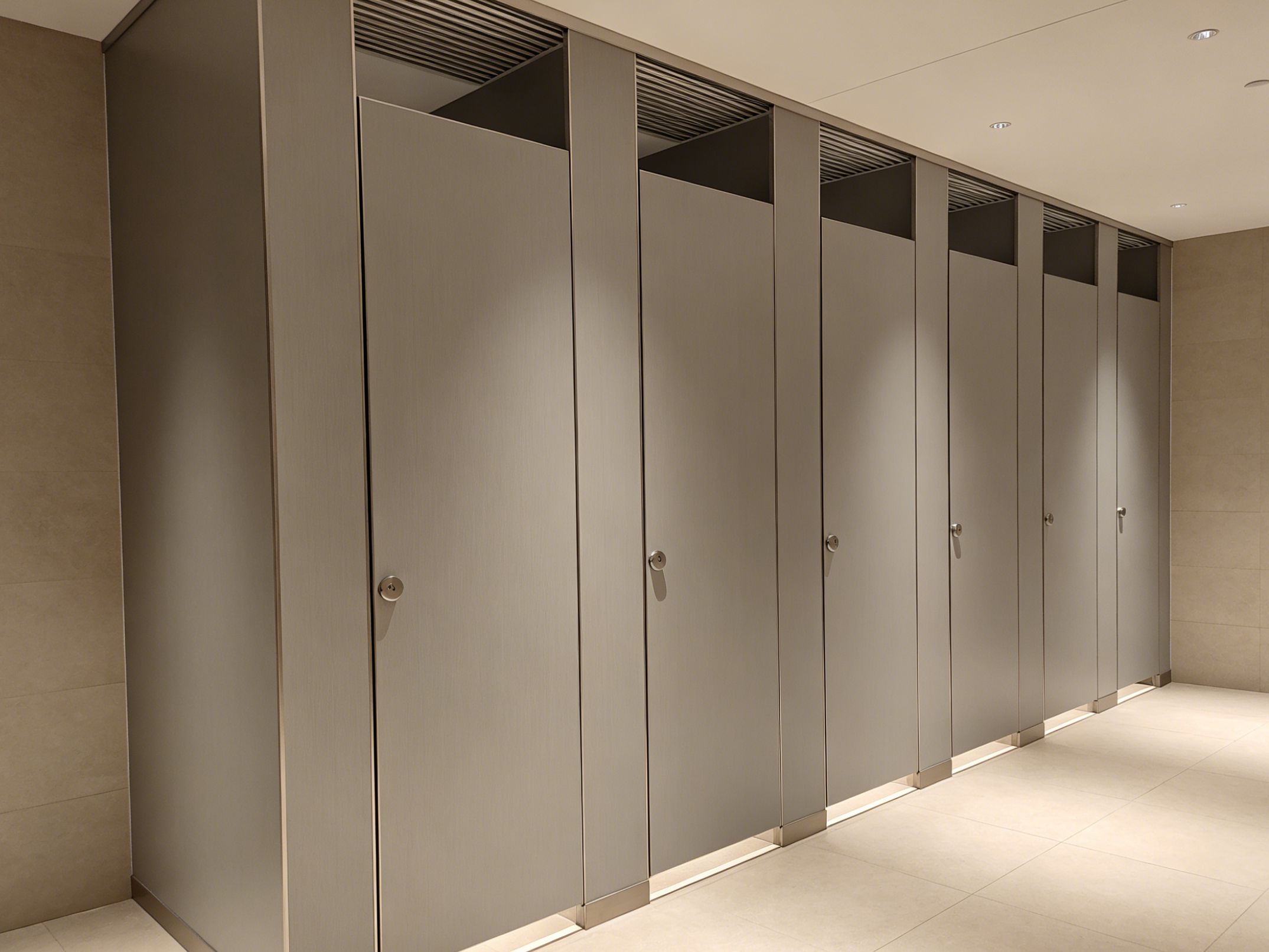
HPL Toilet Partitions for Airports in Malaysia: High-Traffic Design and Maintenance Guide
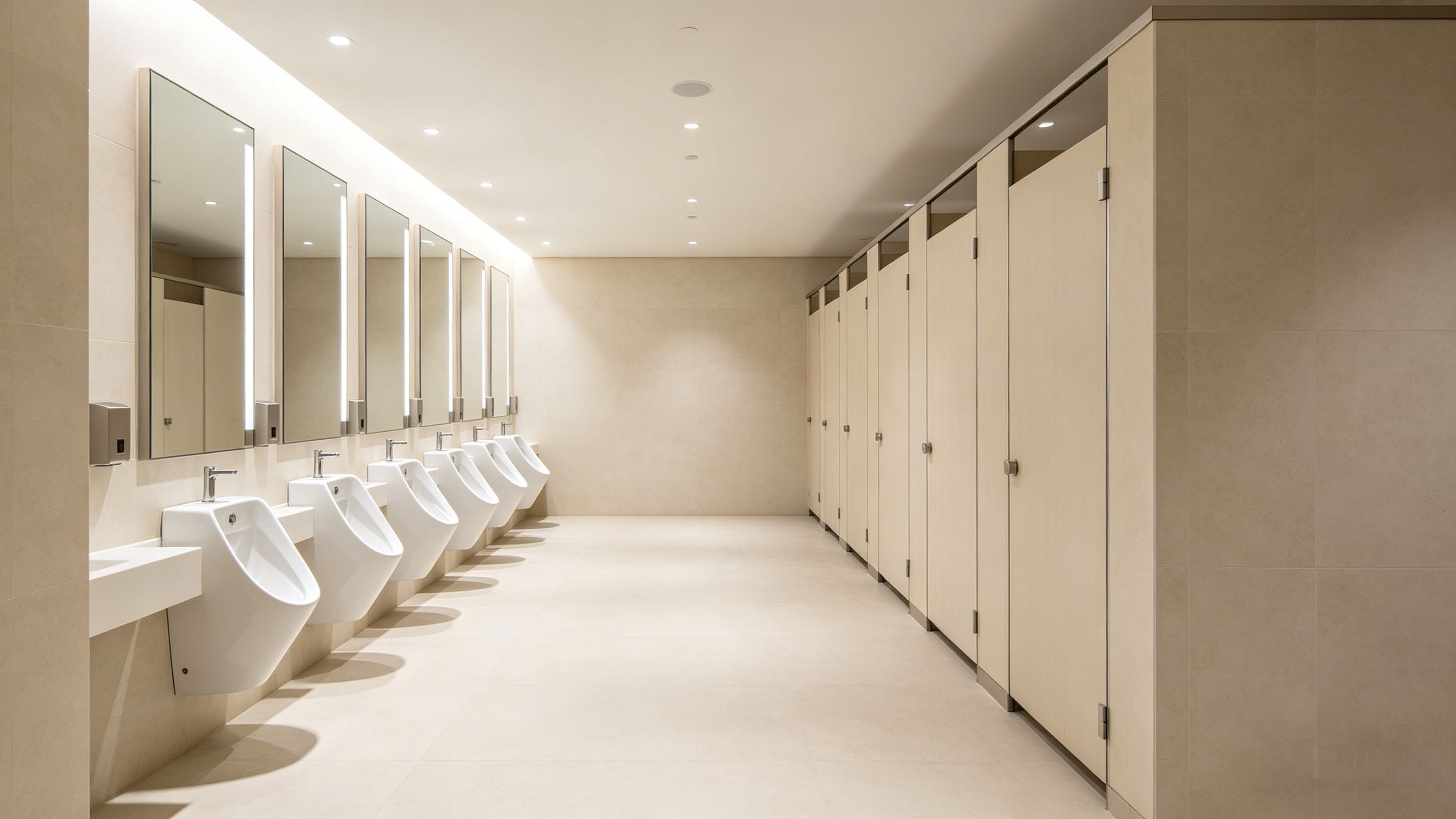
HPL Toilet Partitions for Airports in Malaysia
Airport restrooms operate under demanding conditions, with passengers, airport staff, airline crews, contractors, and visitors using facilities throughout the day. Selecting suitable HPL toilet partitions requires careful consideration of high traffic, frequent cleaning, humidity, privacy, durability, hardware performance, and installation efficiency.
For contractors, architects, airport developers, and fit-out companies, restroom partition specifications should reflect actual passenger flow and operating conditions. A coordinated system can help reduce installation rework while supporting easier maintenance throughout the facility's service life.
This guide explains the key factors to consider when specifying restroom partitions for airport projects in Malaysia.
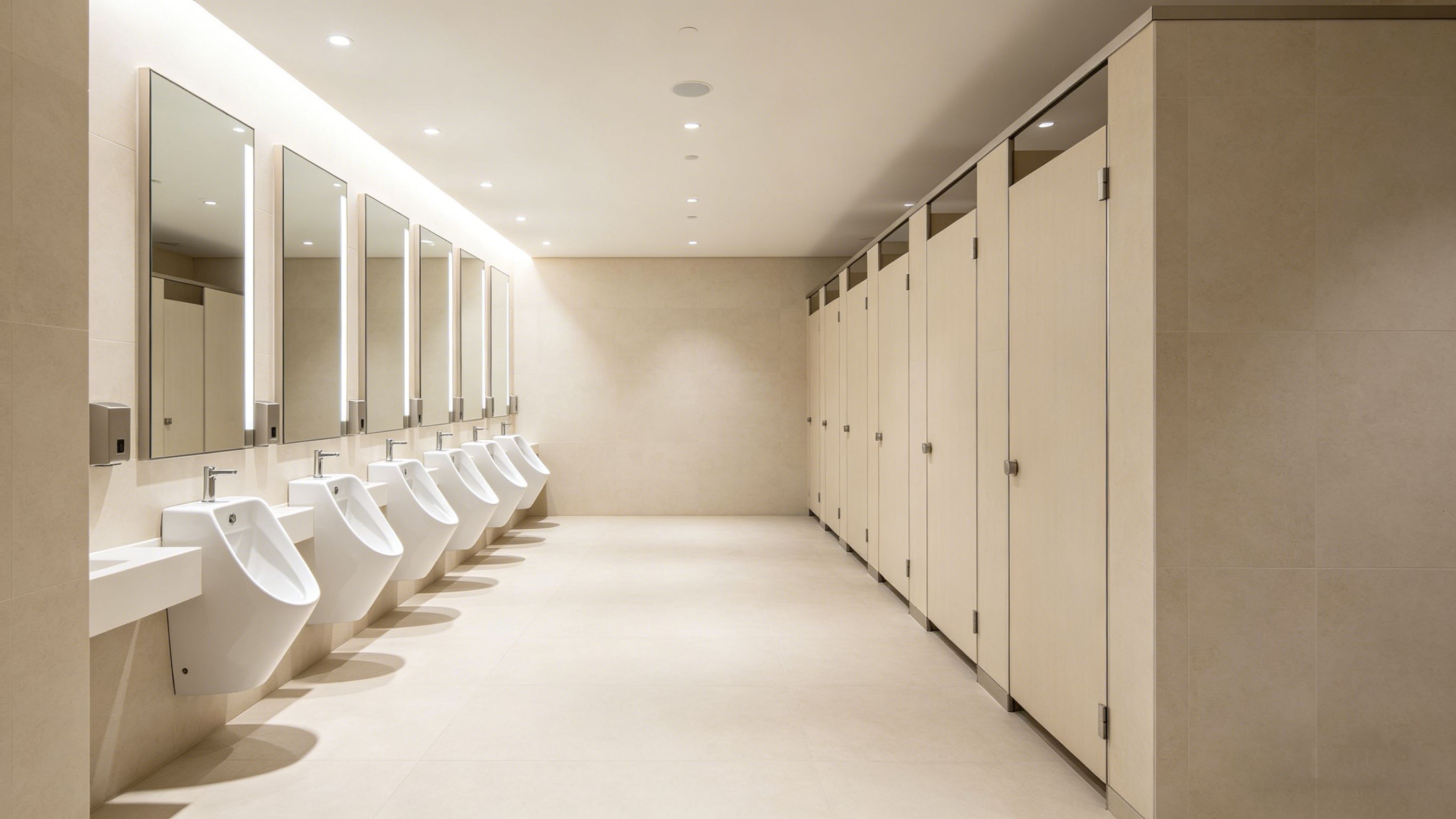
Why Airport Restrooms Need High-Performance Partition Systems
Airport restrooms can experience concentrated traffic during flight arrivals, departures, boarding periods, and peak travel hours.
Unlike many commercial facilities, airport users may include people carrying luggage, children, elderly passengers, and users with different mobility requirements. Partition doors and hardware can therefore experience frequent operation and accidental contact.
The selected partition system should balance durability, privacy, accessibility, appearance, cleaning, and long-term maintenance.
1. Impact-Resistant Structural Durability
Airport restroom partitions need to withstand repeated daily use.
Luggage, cleaning carts, and passenger movement can create additional opportunities for accidental impact. Doors, hinges, locks, brackets, and support feet are also operated frequently.
A suitable partition system should provide appropriate structural rigidity for the expected traffic level.
Hardware should be selected together with the panels so that the complete system is properly coordinated.
2. Moisture Management in Malaysian Airports
Airport restrooms are regularly exposed to water from handwashing, cleaning, wet floors, and plumbing fixtures.
Malaysia's humid climate adds another factor that project teams should consider when specifying restroom materials.
Particular attention should be given to:
- Panel edges
- Floor connections
- Support feet
- Hardware
- Drainage
- Ventilation
- Cleaning procedures
- Areas exposed to frequent water
Proper drainage and prompt correction of plumbing problems can help reduce unnecessary moisture exposure.
3. Easy Cleaning for High Passenger Traffic
Airport restrooms may require frequent cleaning throughout operating hours.
Partition surfaces should be practical to maintain and compatible with the facility's cleaning procedures. Cleaning teams should follow the manufacturer's recommendations for cleaning products and methods.
Routine cleaning can also provide an opportunity to inspect door alignment, hinges, locks, panel surfaces, and other frequently used components.
HPL Toilet Partitions for Different Airport Areas
Airports contain different types of restroom facilities, and each may require a different specification.
Passenger Terminal Restrooms
These areas can experience high and unpredictable passenger traffic throughout the day.
Departure Areas
Passenger flow can increase significantly before boarding periods, making durability and efficient maintenance important.
Arrival Areas
Arriving passengers may use restrooms while carrying luggage, creating additional considerations for circulation and impact exposure.
Airport Staff Restrooms
Employee facilities may require standardized specifications to simplify maintenance and future replacement.
VIP and Premium Lounges
These facilities may place greater emphasis on appearance, finish quality, privacy, and interior coordination.
Accessible Restrooms
Accessible facilities require careful coordination of dimensions, circulation, doors, fixtures, and supporting hardware.
The final partition specification should be based on the actual use of each airport area.
4. Privacy and Passenger Comfort
Privacy is an important consideration in airport restroom design.
Partition height, cubicle dimensions, door positions, sightlines, and circulation should be coordinated during the architectural planning stage.
Project teams should confirm:
- Cubicle dimensions
- Partition height
- Door dimensions
- Door opening direction
- Sightlines
- Fixture locations
- Circulation
- Accessible restroom layouts
- Wall and floor conditions
Accurate CAD coordination can help identify conflicts before customized components enter production.
5. Hardware Selection for High-Traffic Airport Restrooms
Airport restroom hardware can be operated continuously throughout the day.
Typical components include:
- Hinges
- Privacy locks
- Handles
- Indicator bolts
- Brackets
- Support feet
- Floor fixings
- Wall fixings
The selected hardware should match the panel construction and door configuration.
For large airports, standardized hardware across different terminal areas can simplify spare-parts management and future maintenance.
6. Custom Colors and Finishes
Airport interiors often follow a carefully controlled architectural design.
Partition finishes can be coordinated with:
- Airport branding
- Terminal interiors
- Flooring
- Wall finishes
- Lighting
- Signage
- Sanitary fixtures
Customization may include solid colors, wood-grain finishes, decorative patterns, and different surface textures.
For large terminal projects, physical sample approval before mass production can help maintain consistent appearance across different restroom zones.
Installation Planning for Airport Projects
Airport construction and renovation projects often require detailed coordination because other terminal operations may continue during the work.
Restroom partition installation should be coordinated with flooring, walls, plumbing, sanitary fixtures, electrical work, and other interior trades.
Factory processing can reduce unnecessary cutting and drilling at the project site.
Before installation begins, contractors should verify actual site dimensions and confirm that the latest approved drawings are being used.
How to Reduce Installation Labor
Large airport projects may involve multiple terminals, floors, and restroom areas.
Installation efficiency can therefore directly affect labor requirements and project schedules.
Contractors can improve installation efficiency through:
- Accurate CAD drawings
- Final site measurements
- Factory-processed panels
- Pre-confirmed hardware
- Standardized installation details
- Clear component labeling
- Coordinated delivery
- Early technical review
Reducing unnecessary site modifications can help installation teams complete restroom areas more efficiently.
Maintenance Planning for Airport Restrooms
Airport facilities require preventive maintenance because restroom downtime can quickly affect passenger experience.
Maintenance teams should periodically inspect:
- Panel surfaces
- Panel edges
- Door alignment
- Hinges
- Locks
- Handles
- Brackets
- Support feet
- Floor drainage
- Moisture exposure
Minor hardware problems should be addressed before a cubicle becomes unavailable.
Keeping commonly required replacement components available can also help reduce repair time.
How to Control Airport Project Costs
The lowest initial partition price does not necessarily represent the lowest total project cost.
Airport contractors and developers should consider:
- Material cost
- Hardware
- Customization
- Packaging
- Transportation
- Installation labor
- Maintenance
- Replacement components
- Potential rework
- Project coordination
Accurate drawings and early technical review can reduce avoidable installation costs.
For airports with multiple terminals, standardized specifications can also simplify procurement and future maintenance.
How to Choose an HPL Toilet Partitions Manufacturer
Airport projects can involve large quantities, customized layouts, strict delivery schedules, and detailed coordination.
Before selecting a manufacturer, buyers should evaluate:
- Factory production capability
- Product consistency
- Custom dimensions
- CAD review
- Hardware options
- Sample approval
- Quality control
- Packaging
- Production capacity
- Lead time
- Export experience
- Technical support
A factory-direct manufacturer with customized production capabilities can help contractors coordinate partition systems according to approved project drawings.
Common Procurement Mistakes
Choosing Only by Unit Price
A low quotation may not include equivalent hardware, finishes, packaging, or technical support.
Underestimating Passenger Traffic
Airport restroom usage can fluctuate significantly depending on flight schedules and passenger volumes.
Ordering Before Final Drawing Approval
Customized panels should only be manufactured after dimensions and specifications are confirmed.
Treating Hardware as an Afterthought
Hinges, locks, brackets, and support feet should be coordinated with the panel and door specifications.
Ignoring Maintenance During Procurement
Replacement hardware and inspection procedures should be considered before project handover.
People Also Ask (FAQ)
Q1: Are HPL toilet partitions suitable for airports?
Yes. They can be specified for airport restroom applications when the partition construction, hardware, cleaning procedures, and maintenance requirements match the expected traffic and operating conditions.
Q2: What should airport contractors consider when selecting toilet partitions?
Important factors include passenger traffic, impact resistance, moisture exposure, privacy, accessibility, cleaning, hardware performance, customization, installation, and maintenance.
Q3: Can airport toilet partitions be customized?
Yes. Manufacturers can provide customized dimensions, colors, finishes, layouts, doors, and hardware according to approved architectural drawings.
Q4: Why is hardware important in airport restroom projects?
Airport restroom doors may be operated repeatedly throughout the day. Suitable hinges, locks, brackets, and support components can help maintain reliable daily operation.
Q5: How can contractors reduce airport restroom installation time?
Accurate CAD coordination, final site measurements, factory processing, standardized hardware, clear component labeling, and coordinated delivery can help reduce unnecessary site modifications.
Project Planning & Engineering Support
Successful restroom partition projects begin with accurate planning. If you're developing specifications for airports, passenger terminals, transportation facilities, commercial buildings, or other high-traffic projects in Malaysia, our engineers can help review your layouts and recommend suitable HPL toilet partition solutions before production begins.
- CAD & Specification Review: mrsalufcs@gmail.com (Submit your drawings or BOQ for engineering verification.)
- Technical Consultation: +86 15207652902 (Consult our team on partition layouts, hardware selection, and project coordination.)
HPL Toilet Partitions Cost in Malaysia: Pricing Factors and B2B Buying Guide
HPL Toilet Partitions for Shopping Malls in Malaysia: Durability, Design and Maintenance Guide